
Reviewed · OAHU
‘Auana by Cirque du Soleil at the Waikiki Beachcomber Hotel
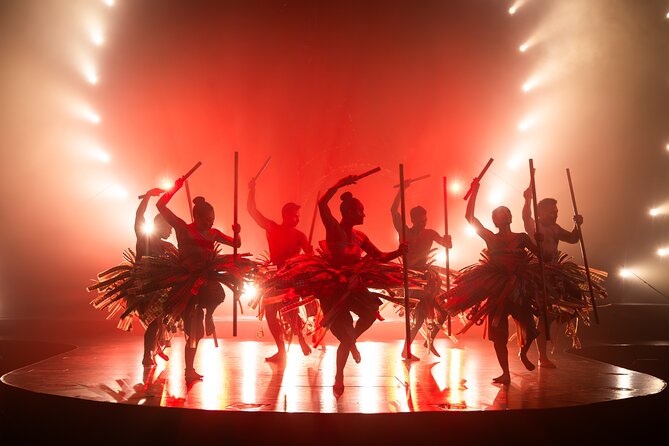
ʻAuana takes Cirque du Soleil’s familiar aerial tricks, comic timing, and daring acrobatics and gives them a distinctly Hawaiian heart. In about 80 minutes, you move from Maui pulling the islands from the sea to Surfriders dancing on waves, with hula, songs, and island stories guiding the show.
I like the small theater, where even seats farther from the stage can keep you close to the action. I also like the mix of local Hawaiian tradition and international circus skill. The main caution is seating: some front-row seats can face bright lights, while several reviewers felt that seats farther back gave a fuller view of the stage.
In This Review
- Key points
- A Hawaiian story told with circus muscle
- What happens during the 80-minute performance
- Maui, Surfriders, and the island stories
- Hula, music, comedy, and high-risk acts
- Why the small theater changes the experience
- Is the ticket worth the price?
- A good choice for families and mixed groups
- Planning your Waikiki evening
- What makes ʻAuana different from a regular Cirque show
- Who should book ʻAuana?
- FAQ
- How long is ʻAuana by Cirque du Soleil?
- Where does ʻAuana take place?
- What does the ticket include?
- Are food and drinks included?
- Is hotel transportation provided?
- Can children attend ʻAuana?
Key points
- Maui and Hawaiian folklore: The show draws on stories of Maui, legendary Surfriders, and other island figures.
- Hula with Cirque technique: Traditional movement shares the stage with aerial work, acrobatics, stunts, comedy, and live music.
- An intimate Waikiki theater: The compact room keeps the action near you, even in the farther seating sections.
- About 80 minutes: It fits neatly into an evening of Waikiki dining, shopping, or beach time.
- Strong family appeal: The comedy, audience interaction, music, and constant action suit a wide age range.
- Seat choice matters: The best view may not mean the closest seat, especially if you want to see the full stage picture.
A Hawaiian story told with circus muscle
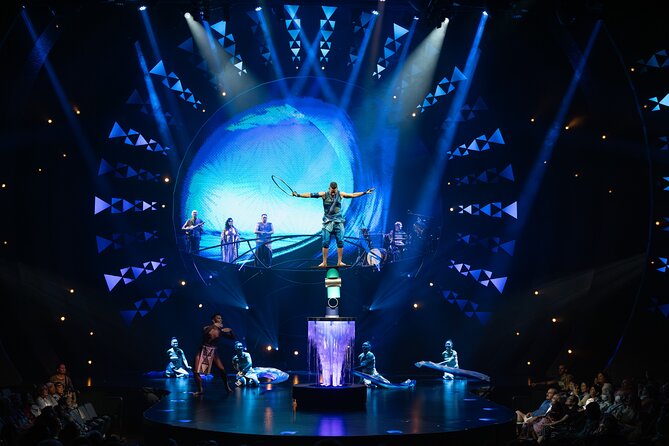
ʻAuana is not simply a standard Cirque du Soleil show with palm trees added. Its central idea is to present Hawaiʻi through songs, stories, hula, comedy, and physical theater, then give each part the scale and polish of a major circus production.
The story moves through several images tied to the islands. Maui appears as the clever figure who pulls the islands from the ocean floor. Surfriders bring the drama of the sea to the stage. The show also visits the Golden Age of tourism, when visitors were drawn to Hawaiʻi’s beaches and the islands became a dream destination.
That range gives the performance more shape than a string of unrelated stunts. You get folklore, nature, history, humor, music, and athletic feats in one short sitting. The Hawaiian setting is not just scenery. It supplies the themes and mood for the acts.
I appreciate that the production brings together local and international performers. That combination lets the show honor hula and Hawaiian music while still delivering the big physical feats that Cirque audiences expect. You can come for the acrobatics and still leave with a stronger sense of the stories the production wants to share.
Other Honolulu trips people book alongside this one:
- Oahu Grand Circle Island and Haleiwa Tour: 9-Hr Deluxe Experience
★ 5.0 · 17,387 reviews - Oahu: Grand Tour Around Island 16 Locations plus Snorkeling
★ 5.0 · 8,669 reviews - Salute to Pearl Harbor Including USS Arizona
★ 4.5 · 7,433 reviews
What happens during the 80-minute performance
The full experience is centered on one performance at the Waikiki Beachcomber Hotel. There is no sightseeing transfer or separate excursion component. You arrive at the theater, take your assigned seat in the category you selected, and watch the production unfold over roughly one hour and 20 minutes.
The opening sections establish the show’s Hawaiian setting through music, movement, and theatrical images. From there, the acts shift between hula, singing, comic scenes, acrobatics, aerial work, and high-risk stunts. The pace is brisk, with little sense of dead time.
This matters if you are deciding between a stage show and a longer cultural program. ʻAuana gives you a concentrated evening performance rather than a lengthy presentation. You will not spend hours moving between stops, and you do not need to arrange transportation outside Waikiki.
The show also uses audience interaction. That can make the performance feel less distant, particularly in a small room. It also means the evening is not entirely passive. You might find the comedians and performers working directly with the crowd, though the exact moments will vary.
Maui, Surfriders, and the island stories
The Maui section draws from one of Hawaiʻi’s best-known legendary figures. Maui’s act of pulling the islands from the ocean floor gives the production a natural way to connect acrobatics with creation stories and the power of the sea.
The Surfriders bring another side of Hawaiʻi to life. Their movement suggests people riding waves and responding to the ocean, giving the performance a strong physical rhythm. This is where the show’s hula and circus elements can feel especially well matched: both rely on controlled movement, balance, timing, and the ability to communicate without long explanations.
The Golden Age of tourism shifts the mood. Instead of focusing only on ancient folklore, the show also looks at the image of Hawaiʻi that drew visitors to its beaches. That creates a bridge between traditional culture and the modern island experience you see around Waikiki today.
I find this mix useful for anyone who wants more context than a purely acrobatic production offers. It is still entertainment first, not a formal history lesson. But the themes give the spectacle a sense of place and help keep the Hawaiian material at the center.
Hula, music, comedy, and high-risk acts
The strongest feature is variety. You can watch a hula sequence, then see an aerial or acrobatic act, then shift into comedy or live music. The show does not ask you to focus on one style for too long.
The hula dancers bring a different quality from the acrobats. Their work is grounded, expressive, and tied to story. The acrobats rely on speed, strength, balance, and exact timing. Putting those forms together creates contrast, rather than making the entire show one long succession of stunts.
Music and singing help hold the pieces together. Hawaiian songs give the production its local character, while the circus score and stage effects add power. If you mainly want a traditional hula performance, this will be more theatrical and physically intense than that. If you mainly want Cirque-style action, the Hawaiian music and cultural themes give it a more specific identity.
The comic performers provide a welcome change of pace. Their work also helps make the show accessible to children and mixed-age groups. Parents looking for a family activity will find plenty of action, but the adults in the group are not left with a children-only program.
Same island, a completely different kind of day:
- Majestic Circle Island Tour with Lunch
★ 5.0 · 7,014 reviews - Oahu’s Ultimate Tour: Dole, Turtle Snorkel, Pali Lookout & More
★ 4.5 · 5,461 reviews - Oahu Circle Island Tour with Turtle Snorkeling— Small-Groups
★ 5.0 · 5,214 reviews - Oahu: Pearl Harbor USS Arizona Memorial
★ 4.5 · 5,209 reviews
Why the small theater changes the experience
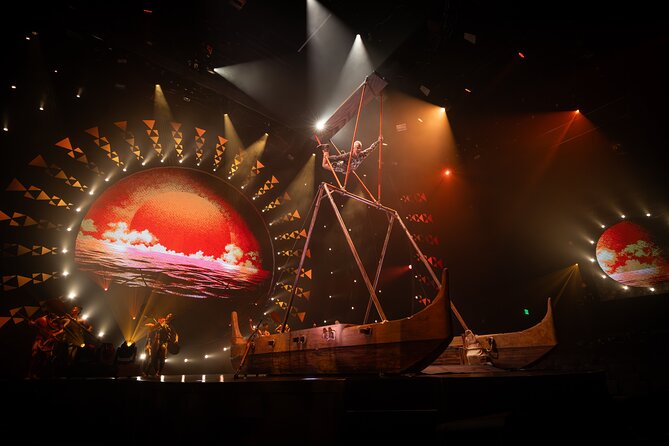
The Waikiki Beachcomber Hotel setting is a major part of the appeal. The theater is described as small and intimate, which keeps the performers physically close to the audience. That closeness can make aerial work, stunts, and comic interaction feel more immediate than they would in a huge arena.
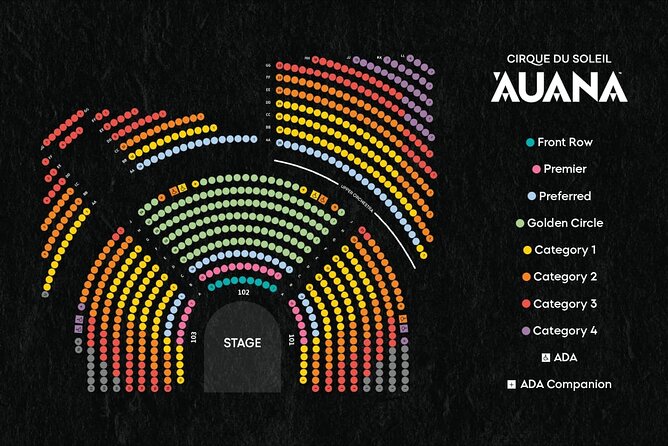
The room also makes the farther seating sections more appealing. Several people felt that seats in the 200 sections gave them a better overall view than some seats in the 100 sections. From a little distance, you may be able to take in the full stage design, group choreography, lighting, and action happening at once.
This is a useful reminder not to equate premium seating with the best experience. A close seat can put you near the performers, but it can also limit your view of the complete production. One person seated in the second row on the left side found the lights uncomfortable and could not move after the show began.
At the same time, many people felt there were no truly bad seats because the theater is compact and the sound is strong. I would still pay attention to the seating category and any seat map offered at booking. If you want a broad view, consider a section farther from the stage. If you want maximum proximity, choose closer seats but accept that lighting and viewing angles may be less forgiving.
Is the ticket worth the price?
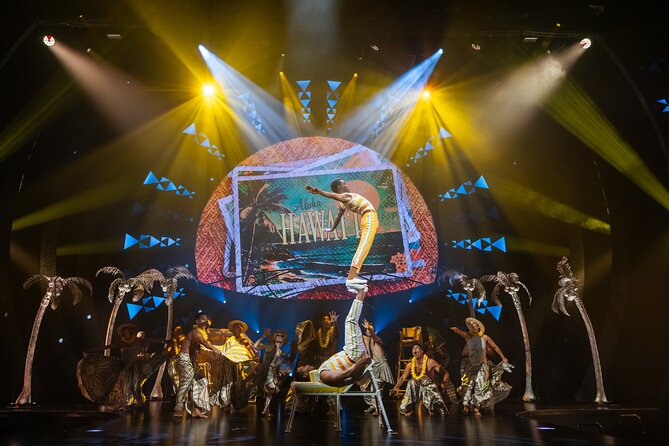
The exact cost depends on the seating category selected at booking, so the value question comes down to what kind of evening you want. Your ticket includes admission, all fees, and taxes, but not food, drinks, or transportation.
For a Waikiki-based show lasting about 80 minutes, the ticket can be a sensible splurge if you value polished live entertainment and want something beyond a beach day. You are paying for a professional production with acrobatics, aerial work, music, singers, hula, comedy, and stage technology in one compact package.
The value is strongest for people who want a special evening without leaving Waikiki. You do not need hotel pickup or drop-off, and the central hotel location can make it easy to pair the show with dinner or a walk through the area. Those who prefer a low-cost cultural performance may find the price harder to justify, especially if they are interested only in traditional hula.
I would compare the categories rather than automatically buying the most expensive option. Because the theater is small, a less costly section may still provide a close and satisfying view. The seating advice is unusually important here: a broader sightline may give you more of the production than a front-row position.
A good choice for families and mixed groups
The show is family-friendly and welcomes a wide range of ages. Children have the comedy, fast action, audience interaction, and visual spectacle. Adults can pay attention to the hula, music, folklore, and production design.
The duration also works well for families. Eighty minutes is long enough to feel like a complete event, but short enough to hold attention better than a much longer stage production. Keep in mind that anyone under 18 must be accompanied by someone 18 or older.
The show also suits couples and groups of friends. Couples can treat it as an easy Waikiki date-night activity, while friends may appreciate the mix of humor and high-risk acts. Solo visitors can attend comfortably too, since the performance itself supplies the focus and energy.
I would be more cautious if your group dislikes loud theatrical effects, bright stage lighting, or circus-style suspense. The production includes heart-racing stunts and aerial acts, not just gentle music and dance. Anyone hoping to record the show should also know that video recording is not allowed. Photographs may be available for purchase, but that is separate from admission.
Planning your Waikiki evening
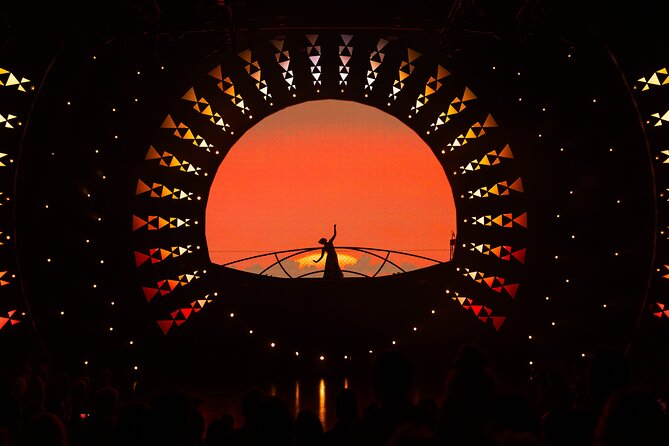
The experience is simple to fit into an Oahu schedule. It takes place at the OUTRIGGER Waikiki Beachcomber Hotel, so you can plan around it without setting aside a full day. The mobile ticket makes entry convenient, and confirmation is provided when you book.
Because food and beverages are not included, plan those separately. You can eat before or after the performance, but allow yourself enough time to reach the theater and find your seat without rushing. Hotel pickup and drop-off are also not included, so arrange your own way there.
I would avoid booking this as a last-minute flexible option if your dates might change. The ticket is non-refundable and cannot be changed for any reason. That firm policy makes it especially important to check your schedule, seating category, and party details before paying.
The experience is designed for most people to participate, with no special restriction listed for ordinary audience members. The main practical limits are the age rule, the fixed ticket terms, and the need to choose your seats with the stage view in mind.
What makes ʻAuana different from a regular Cirque show
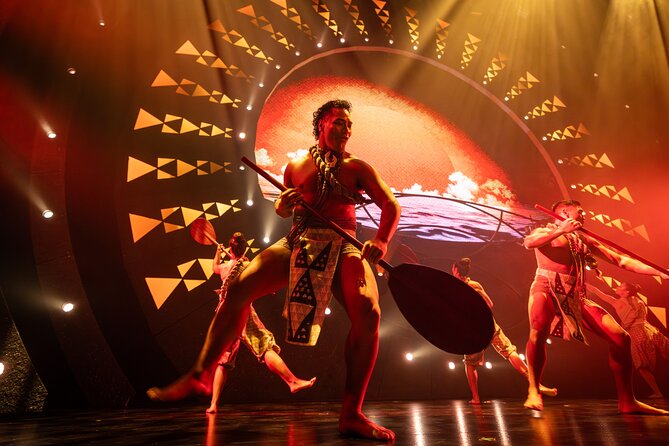
A typical Cirque du Soleil production can take you into a fantasy world with little connection to the place where you see it. ʻAuana keeps returning to Hawaiʻi. Maui, the sea, hula, Hawaiian music, beach culture, and the islands’ appeal to visitors all shape the production.
That local focus gives the show a stronger reason to exist in Waikiki. You are not simply watching the same circus format in a different city. The acts are framed through Hawaiian stories and images, and local talent shares the stage with performers from elsewhere.
I would not treat the show as a substitute for visiting cultural sites, learning directly from Hawaiian cultural practitioners, or seeing a traditional hula performance. It is a theatrical interpretation, shaped by Cirque du Soleil’s style. Its value is in bringing those elements together for a broad audience in an energetic stage production.
That balance is worth keeping in mind. The show is respectful in its approach, but it is also designed to thrill, amuse, and surprise. The Hawaiian material is presented through spectacle, not through a quiet or academic format.
Who should book ʻAuana?
Book this if you want a polished night of live entertainment in Waikiki, especially if your group enjoys acrobatics, aerial stunts, music, comedy, and dance. It is a strong pick for families, couples, friends, and solo visitors who want a memorable break from beach time.
I would give extra weight to it if you have already seen Cirque du Soleil and want a production with a clear Hawaiian identity. I would also consider it if your group has different tastes. The hula may appeal to one person, the music to another, and the high-risk acts to someone else.
Think twice if you want a quiet cultural show, need a flexible cancellation policy, or dislike fixed seating. And do not assume the closest seats are automatically best. In this intimate theater, a seat farther back may let you see more of the action and stage design.
For most people spending time in Waikiki, ʻAuana is a worthwhile evening choice. Its best qualities are the Hawaiian themes, the constant variety, the close theater, and the level of physical skill on display. Choose your seating carefully, confirm your date before booking, and you should get a lively, distinctive show rather than a generic night out.
FAQ
How long is ʻAuana by Cirque du Soleil?
The performance lasts approximately one hour and 20 minutes.
Where does ʻAuana take place?
The show takes place at the OUTRIGGER Waikiki Beachcomber Hotel in Honolulu.
What does the ticket include?
The ticket includes admission to ʻAuana in the seating category selected at booking, along with all fees and taxes.
Are food and drinks included?
No. Food and beverages are not included in the ticket.
Is hotel transportation provided?
No. Hotel pickup and drop-off are not included, so you must arrange your own transportation to the Waikiki Beachcomber Hotel.
Can children attend ʻAuana?
Yes. Most people can participate, and the show is suitable for families. Anyone under 18 must be accompanied by a person who is at least 18 years old.
Just added around Honolulu
- Waikiki: Sunset Swim & Sailing Experience★ 4.5 · 3 reviews
- Diamond Head Hike [Starts at 7:00 a.m.]★ 3.5 · 3 reviews
- Oahu : Hanauma Bay Reservation+Equipment Rental★ 3.3 · 3 reviews
- Self Guided Hike Trail to Nature Walk & Waterfall★ 3.2 · 3 reviews
- Private Transfer waikiki to HNL airport * 1-12 passenger*★ 4.7 · 3 reviews
- Kevo’s Beach Bus★ 5.0 · 3 reviews
- Half-Day Waterfall Tour – Hike, Scenic, Food and Photo★ 5.0 · 3 reviews
- Private Transfer Honolulu Airport HNL to Waikiki by Sedan★ 4.5 · 3 reviews