Reviewed · GUIDED
Hangar Guided Tour
Pearl Harbor Aviation Museum’s Hangar Guided Tour takes you into two surviving World War II hangars, including one still marked by bullet holes from the December 7, 1941 attack. That physical evidence gives the visit more force than a row of aircraft behind polished glass.
I like the combination of a docent-led hour and full museum admission. I also like the sharp focus on the Pacific War, with Japanese weapons, American aircraft, and the people connected to them sharing the same story. The main consideration is simple: if you already know a great deal about World War II aviation, the museum’s excellent signs may cover much of the basic information without the extra tour.
In This Review
- Key points at a glance
- Why Hangar 37 gives Pearl Harbor a human scale
- Hangar 79 preserves the scars of the attack
- The Pacific War makes more sense through aircraft
- East Wind, Rain adds a concise film account
- What the $40.98 price really buys
- Allow more than an hour on Ford Island
- How to get the most from the docent
- Who should book the Hangar Guided Tour
- Should you book it?
- FAQ
- How long does the Hangar Guided Tour last?
- Where does the tour begin?
- Does the tour end at the same location?
- Is general admission included?
- Are the flight simulators included?
- Can I watch the Pearl Harbor documentary with this ticket?
- Are children allowed on the tour?
- How many people can join a tour?
- Can I cancel for a full refund?
Key points at a glance
- Two original WWII hangars: Walk through Hangars 37 and 79, including a restoration space that still bears attack damage.
- A focused Pacific War story: The museum connects aircraft to Pearl Harbor, the Flying Tigers, Doolittle’s raid, Midway, and the wider war.
- A live docent adds context: Guides such as Steve, Chris, Laughlin Tanaka, and Tomoko have been praised for turning aircraft into personal stories.
- Admission is included: Your $40.98 ticket covers the guided tour and the museum’s regular exhibits.
- The documentary fills in the attack: Watch the 12-minute film East Wind, Rain as part of your visit.
- Extra attractions cost more: Combat flight simulators and the Top of the Tower Tour are not included.
Why Hangar 37 gives Pearl Harbor a human scale
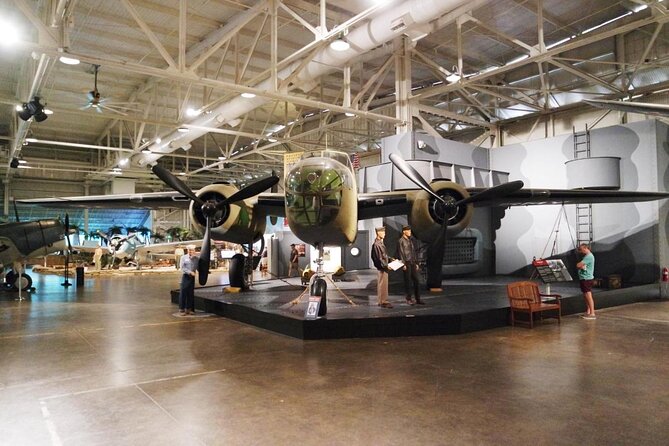
The tour begins in Hangar 37, the museum’s entry point and one of the most meaningful places on Ford Island. On the morning of the attack, this hangar served utility squadron VJ-1, whose personnel fired back at Japanese aircraft using machine guns mounted on amphibious biplanes.
That detail matters. You are not simply looking at an aircraft collection. You are standing in a wartime building where people reacted to an attack that began without warning. The setting helps connect the planes to the confusion, fear, and quick decisions of that morning.
A docent normally starts with an overview of the attack before leading you among the displays. The introduction is short enough to keep the tour moving, yet it gives you a basic timeline before you study the aircraft and objects in detail.
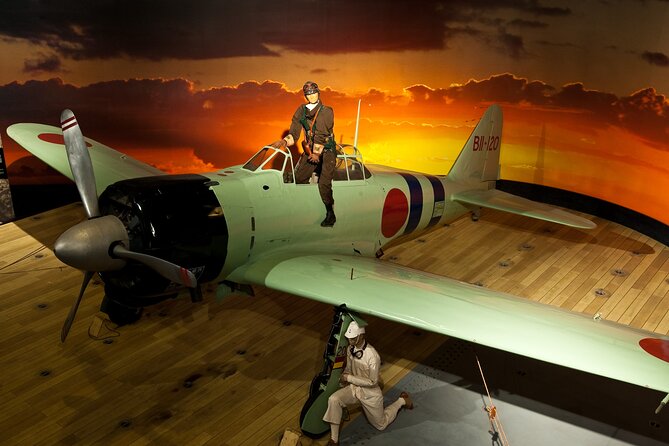
Inside Hangar 37, you can see an unrestored Japanese bomber similar to the type used during the attack. There is also an example of an armor-piercing shell designed to penetrate a battleship’s deck, along with an aircraft-launched torpedo of the kind used by Japanese forces.
One of the most affecting objects is a piece of the USS Arizona. The battleship lost 1,177 crew members during the attack, and a fragment of the ship makes that number less abstract. The display also explains how wartime materials were salvaged and reused whenever possible.
You may also see a mock-up of one of the few American aircraft that managed to get airborne on December 7. The museum includes a trainer similar to the biplanes used by Navy pilots, along with aircraft tied to later chapters of the Pacific War.
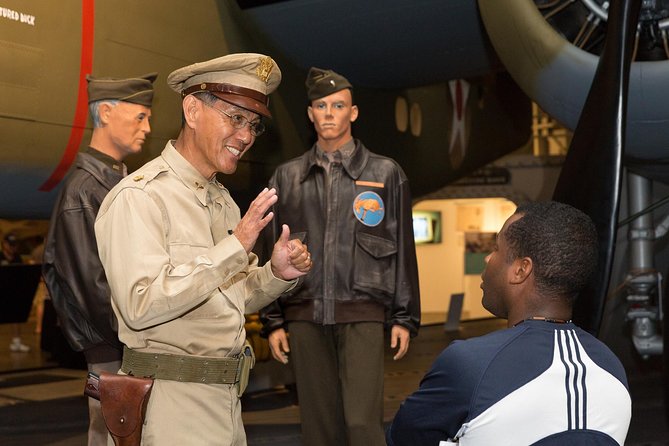
This is where a good guide earns the added fee. A docent such as Laughlin Tanaka has been praised for linking each aircraft to the wider war, rather than treating every plane as an isolated technical object. Guides including Chris, Steve, and Tomoko have also been noted for answering questions and adding personal stories that make the exhibits easier to grasp.
A few more Oahu trips worth weighing up
- Moana’s Waikīkī Grand Guided Turtle Snorkel & Sailing Adventure
★ 4.5 · 936 reviews - Honolulu: Oahu Island Full-Day Guided Tour by Bus with Lunch
★ 4.6 · 506 reviews - Kailua 2-Hour Guided Kayaking Excursion, Oahu
★ 5.0 · 442 reviews
Hangar 79 preserves the scars of the attack
From Hangar 37, the tour continues to Hangar 79, also known as the Restoration Shop. The building served as a maintenance and engine-repair facility during the war. Fighters, bombers, and patrol aircraft passed through it on their way to service in Pearl Harbor or at forward bases.
The hangar remains a battlefield survivor. Bullet holes from the Japanese attack are still visible, giving you a direct connection to December 7 that no replica can quite match.
Today, Hangar 79 contains a 1940s Carrier Aircraft Service Unit rebuilt with wartime accuracy. You can see aircraft under restoration, historic tools, and the working environment that supported naval aviation. Some machines are finished and ready for display. Others remain incomplete, which can be just as interesting because you see the process of preserving an aircraft rather than only the final result.
The restoration area also helps explain the scale of wartime maintenance. A famous fighter may get the attention, but engines, spare parts, mechanics, and ground crews kept entire squadrons in the air. This hangar puts that less glamorous work in view.
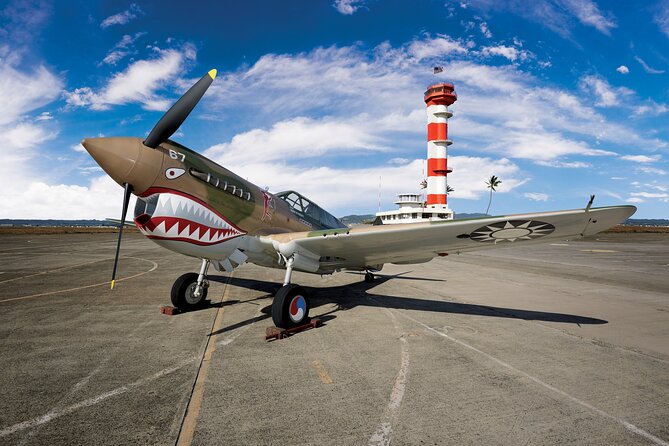
The aircraft collection extends beyond the Pearl Harbor attack. Depending on the displays available during your visit, you can encounter aircraft such as the P-40 Warhawk, Hellcat, Dauntless dive bomber, and B-25 Mitchell associated with Doolittle’s raid. Later American jets include F-14, F-15, F-16, and Blue Angels F-18 aircraft, while an Australian F-111 adds an international dimension.
The mix can feel broad, especially if you arrive expecting only early World War II aircraft. I see that as a strength, provided you allow time beyond the one-hour guided portion. The museum uses aviation to tell more than one chapter of Pacific history, from the attack and carrier battles to the jet age.
The Pacific War makes more sense through aircraft
This museum’s central idea is sound: aircraft help you understand how the Asia-Pacific War was fought. Reconnaissance aircraft searched for enemy forces, transports moved people and supplies, bombers struck bases and ships, and carrier aircraft allowed naval battles to take place hundreds of miles from land.
The displays connect planes to major events rather than presenting a purely mechanical collection. You may find references to the Flying Tigers in China, Japanese aircraft used in the first wave against Pearl Harbor, Doolittle’s B-25 bombers, and the SBD Dauntless aircraft that attacked Japanese carriers at Midway.
For a first-time visitor, that structure makes the museum approachable. You do not need to know every aircraft designation before arriving. A docent can explain why a particular plane mattered and how it fit into the sequence of the war.
For an aviation enthusiast, the appeal is more technical. You can study the aircraft types, restoration work, and changing design priorities. The guided tour is most useful here when you want details that signs may not provide.
There is also a personal side to the exhibits. One trainer is connected to former President George H. W. Bush, who served as a Navy pilot. The museum displays aircraft related to his training and combat service, including the type he flew during 58 missions. He was shot down during one mission and later rescued by the submarine USS Finback after the other two members of his flight crew were killed.
That story gives you a way to see the war through one person’s experience, while the surrounding aircraft remind you that thousands of pilots, mechanics, sailors, and support workers were involved.
East Wind, Rain adds a concise film account
Your admission includes the award-winning documentary East Wind, Rain. The film runs for 12 minutes and explains the events of the December 7 attack.
I would watch it before or after the guided portion, depending on the schedule. Before the hangars, it can give you a quick framework. After the tour, it can help arrange the objects and stories in your mind.
The film is brief, so it will not replace the museum exhibits or a longer Pearl Harbor program. Its value is that it gives you a clear introduction without taking a large part of your visit. If you are visiting with children or relatives who have limited background, this is an efficient way to establish what happened before examining the aircraft.
The museum also includes signs throughout the galleries. They are detailed enough that independent visitors can learn a great deal on their own. That creates the tour’s main value question: if you read carefully and already understand the Pacific War, you may not need a guide. If you want stories, connections, and answers to questions as you walk, the docent is a sensible upgrade.
Same island, a completely different kind of day:
- Oahu Grand Circle Island and Haleiwa Tour: 9-Hr Deluxe Experience
★ 5.0 · 17,387 reviews - Oahu: Grand Tour Around Island 16 Locations plus Snorkeling
★ 5.0 · 8,669 reviews - Parasailing Experience in Waikiki, HI
★ 5.0 · 7,692 reviews - Salute to Pearl Harbor Including USS Arizona
★ 4.5 · 7,433 reviews
What the $40.98 price really buys
At $40.98 per person, the ticket is not just payment for a one-hour talk. It includes the docent-led Hangar Guided Tour and general admission to Pearl Harbor Aviation Museum, including the main exhibits, MiG Alley, the documentary, and the museum store.
That is a fair price if you plan to spend more than the scheduled hour. One person described spending about three hours at the museum, which is realistic if you read the signs, examine the aircraft, watch the film, and take your time in both hangars.
The value is strongest for first-time visitors, families with mixed interests, and anyone who wants help making sense of the collection. A guide can keep children engaged, answer questions, and show why an aircraft mattered instead of leaving you to absorb a long technical label.
The value is less certain for experienced aviation enthusiasts who prefer self-guided visits. The signs are substantial, and the guided portion does not include every special attraction. Combat flight simulators cost extra, and the Top of the Tower Tour is separate.
The flight simulator can add a playful element for children and adults. It is not part of the $40.98 ticket, so treat it as an optional extra rather than an unexpected inclusion. The museum also has a restaurant, useful if you are building a longer Pearl Harbor visit, but food and drinks are not included.
Allow more than an hour on Ford Island
The formal tour lasts about 60 minutes, but I would not schedule your entire Ford Island visit around that figure. The guided route gives you a strong introduction, while general admission lets you continue through the museum afterward.
The museum is at 319 Lexington Boulevard on Ford Island. If you are visiting the larger Pearl Harbor complex, free shuttle buses connect the main area with Ford Island and the aviation museum. The shuttle route also serves the USS Missouri. Allow time for the transfer, security procedures, and finding your meeting point.
The tour starts and ends at the museum. Departure times are offered several times during the day, which makes it easier to fit the visit around other Pearl Harbor sites. Since the activity averages booking about 21 days ahead, reserving early is wise for a preferred time, especially during a busy Oahu trip.
The maximum group size is 25 people. That is small enough for a docent to answer questions, though the experience will feel more personal if your departure has fewer participants. Some of the strongest guide experiences described involved very small groups, but that is not guaranteed.
Children must be accompanied by an adult. Children under four enter free, and service animals are allowed. Most people can participate, but the supplied information does not promise a fully step-free route or specify seating, so contact the museum directly if you need detailed accessibility information.
How to get the most from the docent
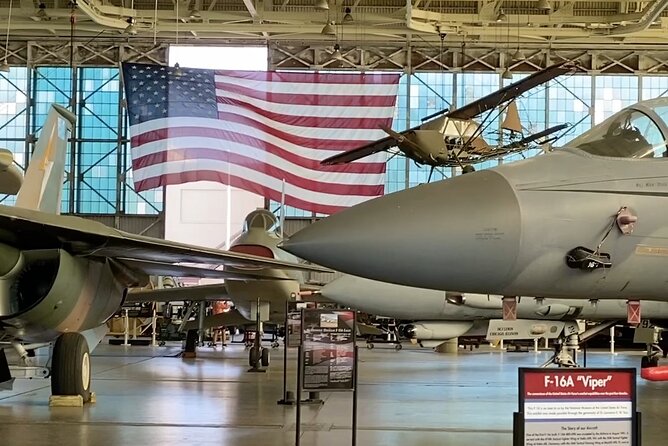
Come with one or two questions in mind. You might ask which aircraft are original, how the restoration work is done, or which planes played a role in the Pearl Harbor attack itself.
Listen for the connections between the buildings and the aircraft. Hangar 37 gives you the attack setting. Hangar 79 shows the maintenance and repair system that kept the war effort moving. The modern aircraft then extend the story beyond 1945.
A docent may bring a personal style to the hour. Chris has been praised for keeping a narrative moving while handling questions. Steve has been described as especially effective with a three-generation group ranging from age nine to 76. Laughlin Tanaka has been noted for presenting aircraft stories with the energy of a stage performance, while Tomoko has been praised for adding emotional and human context.
Those names are useful examples of the museum’s guide-led approach, but you should not expect a particular person unless your booking specifically confirms one. The quality of the experience depends partly on your assigned docent and partly on how much you ask.
After the guided hour, walk back through the areas that caught your attention. The first pass gives you the story. The second lets you look more closely at cockpit details, weapons, restoration tools, and aircraft markings.
Who should book the Hangar Guided Tour
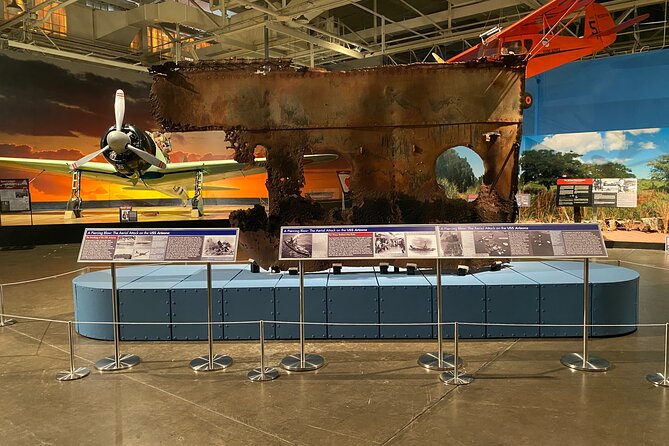
I would choose this tour if you want Pearl Harbor to feel like more than a set of famous names and dates. The damaged hangars, the USS Arizona fragment, and the objects connected to the attack give the visit a serious, reflective tone.
It is also a good match for families. The aircraft are visually engaging, the film is short, and the interactive elements and flight simulator can give younger visitors a break from reading. Remember that the simulator costs extra.
History newcomers will gain the most from the docent. The guide can explain the sequence of events and make the aircraft easier to understand. Aviation fans may prefer the freedom of the general museum, unless they want restoration details or stories that are not obvious from the signs.
I would be less eager to pay for the tour if I had already visited the museum, knew the Pacific War well, and preferred to read independently. In that case, general admission may be enough, though the guided hour can still add a different human angle.
Should you book it?
Book the Hangar Guided Tour if this is your first visit to the Pearl Harbor Aviation Museum, if you are bringing children, or if you want the buildings and aircraft tied into one clear story. The $40.98 price is reasonable because it includes admission and can anchor a longer museum visit.
Skip the guided add-on only if you are comfortable learning from detailed signs and would rather spend your time with the aircraft at your own pace. Either way, I would make room for Ford Island. The two surviving hangars, attack damage, restoration work, and Pacific War aircraft provide a side of Pearl Harbor that the USS Arizona visit alone cannot show.
FAQ
How long does the Hangar Guided Tour last?
The guided tour lasts approximately 60 minutes.
Where does the tour begin?
The tour begins at Pearl Harbor Aviation Museum, 319 Lexington Boulevard, Honolulu, Hawaii 96818.
Does the tour end at the same location?
Yes. The activity ends back at the museum meeting point.
Is general admission included?
Yes. The ticket includes the docent-led Hangar Guided Tour and general admission to the museum and its exhibits.
Are the flight simulators included?
No. Combat flight simulators are not included in the tour price. The Top of the Tower Tour is also separate.
Can I watch the Pearl Harbor documentary with this ticket?
Yes. General admission includes the 12-minute documentary East Wind, Rain, which covers the December 7, 1941 attack.
Are children allowed on the tour?
Yes. Children must be accompanied by an adult, and children under four years old are free.
How many people can join a tour?
The tour has a maximum group size of 25 participants.
Can I cancel for a full refund?
Yes, if you cancel at least 24 hours before the experience start time. Cancellations within 24 hours are not refunded, and changes made within 24 hours are not accepted.
Just added around Oahu
- Koko Head E-Bike Ride and Hike Tour★ 5.0 · 3 reviews
- Waikiki: Sunset Swim & Sailing Experience★ 4.5 · 3 reviews
- Oahu : Hanauma Bay Reservation+Equipment Rental★ 3.3 · 3 reviews
- Diamond Head Hike [Starts at 7:00 a.m.]★ 3.5 · 3 reviews
- Honolulu’s Waikiki Self-Guided Walking Audio Tour★ 4.5 · 3 reviews
- Oahu: Half-Day Sunrise Semi-private Tour from Waikiki★ 3.0 · 3 reviews
- Private Whale Watching Safari from North Shore Oahu★ 5.0 · 3 reviews
- Self Guided Hike Trail to Nature Walk & Waterfall★ 3.2 · 3 reviews
Guided, compared.
Moana’s Waikīkī Grand Guided Turtle Snorkel & Sailing Adventure
Read our review →
Oahu Island Full-Day Guided Tour by Bus with Lunch
Read our review →



Self guided Hike Trail to Nature Walk & Waterfall
Read our review →