
Reviewed · OAHU
Hawaii Volcanoes National Park Experience from Oahu
The best part of this day is the chance to see the Big Island’s volcanic south without renting a car or spending a night away from Oahu. You fly to Kona, then cross a large section of Hawaii Island by road, from coffee country to black sand and the steaming craters of Hawaii Volcanoes National Park.
I like the way the tour packs several very different places into one day, and I like having a guide explain the geology, Hawaiian culture, and local stories as you go. Guides such as Mel and Henry have earned especially strong praise for their clear explanations and easy conversation.
The tradeoff is time. This is a long day with inter-island flights and plenty of driving, and the planned lunch stop can become crowded. You should bring snacks, a light rain jacket, and patience for a busy schedule.
In This Review
- Key points to know before you book
- Why this Big Island day trip works from Oahu
- Greenwell Farms and the story of Kona coffee
- Manuka State Wayside Park and native forest
- Punaluʻu Bake Shop and the practical lunch question
- Punaluʻu Black Sand Beach and sea turtles
- Hawaii Volcanoes National Park in two focused hours
- The long drive across Hawaii Island
- What the guides add to the day
- Price, group size, and what you really receive
- What to pack for the volcano day
- Booking, cancellation, and flight disruption
- Should you book this Hawaii Volcanoes tour?
- FAQ
- Is airfare from Oahu included?
- Where do I meet the tour at Kona Airport?
- How long does the experience last?
- Is transportation to Honolulu Airport included?
- Is lunch included?
- Can I see an active lava eruption?
- What should I wear to Hawaii Volcanoes National Park?
- Is cell phone service available throughout the tour?
Key points to know before you book
- Round-trip flights are included: Airfare from Honolulu International Airport to Kona International Airport is part of the $589.99 price.
- The south side gets the most attention: You visit Greenwell Farms, Manuka State Wayside Park, Punaluʻu Bake Shop, Punaluʻu Black Sand Beach, and the national park.
- Volcanic activity changes: You may see steam, glowing lava, or an active eruption, but no eruption can be promised.
- Guides make the difference: Mel and Henry are frequently singled out for their explanations of volcanoes, island history, and local life.
- Expect a full road day: The tour lasts about 8 to 10 hours, with several hours in a vehicle.
- Bring practical gear: Closed shoes, layers, water, sunscreen, snacks, and a rain jacket will make the day much easier.
Why this Big Island day trip works from Oahu
Hawaii Island is much larger than Oahu, and its sights are spread far apart. If you have only one day, planning the route yourself can mean juggling flights, a rental car, fuel, park timing, and long stretches of unfamiliar road.
This experience handles the major pieces for you. Your airfare, airport meeting, air-conditioned vehicle, park admission, and guide are included. You still need to get yourself to Honolulu Airport, and meals are extra, but the most complicated part of the day is taken care of.
The tour begins at Kona International Airport at about 8:00 a.m. after your flight from Honolulu. You meet in the lot behind Alaska Baggage Claim B-2. From there, the route heads south and east through coffee country, forest, the southern coast, and the national park.
I see this as a sightseeing sampler rather than a relaxed island holiday. You will cover a lot of ground, but you will also get a useful first look at parts of the Big Island that are difficult to combine in a single self-guided day.
More park trips on Honolulu:
- Hawaii Volcanoes National Park Experience Departing from Oahu
★ 5.0 · 240 reviews
Greenwell Farms and the story of Kona coffee
Greenwell Farms is a smart first stop because it gives you an introduction to the Kona side of the island before the day turns toward volcanoes. The farm dates to 1850 and sits on the slopes of Mauna Loa, where volcanic soil, sunny mornings, afternoon cloud cover, and regular rain help support coffee growing.
You have about 30 minutes here, with admission included. That is enough time to learn about the farm and taste or see the coffee operation, though it is not a long farm visit.
This stop is useful even if you are not a serious coffee enthusiast. Kona coffee is one of Hawaii’s best-known products, and understanding where it comes from gives the rest of the drive more local context. The volcanic ground is not just a dramatic backdrop. It is part of the reason agriculture developed here.
One practical note: one family felt the coffee stop lasted too long compared with the time available at the craters. That is a fair concern. If your main goal is the national park, you may wish this stop were shorter. If you enjoy food, farming, and island history, you will likely find it worthwhile.
Manuka State Wayside Park and native forest
Manuka State Wayside Park is a quieter stop along Highway 11. The 13-acre park sits on Mauna Loa’s slopes and brings together wet and dry forest. You have around 30 minutes here, usually enough for a short walk or a look at the interpretive signs.
The Manuka Nature Trail is about two miles, so you will not complete the entire route during a brief stop. Still, the park offers a welcome change from the vehicle. You might see native plants, volcanic features, and, if conditions are right, native birds such as the Hawaiian hawk or honeycreepers.
I like this part of the route because it shows that the Big Island is not simply beaches and lava. The island shifts quickly between forest types, elevations, and weather zones. The short stop also helps break up the drive before the bakery and black sand beach.
Wear proper shoes here. The trail can be uneven, and closed-toe footwear is a better choice than sandals.
Punaluʻu Bake Shop and the practical lunch question
Punaluʻu Bake Shop in Naʻālehu is known as the southernmost bakery in the United States. It is best known for Hawaiian sweet bread, with flavors such as taro, guava, and mango, along with sandwiches, Hawaiian plate lunches, Kalbi beef, sourdough options, and other baked goods.
The tour uses the bakery as its lunch stop, and you pay for your own meal. The garden and shop offer a pleasant local-food break, but you should plan for crowds. One person found the bakery overloaded and suggested carrying snacks instead. That advice makes sense, especially if you are traveling with children or have dietary needs.
Bring cash for roadside stands, food trucks, and small local shops. Some accept cards, but the tour information specifically warns that many do not.
Do not count on a leisurely restaurant lunch. This is a functional meal stop during a packed day. I would buy something promptly, keep water with you, and save time for the beach and national park.
Same island, a completely different kind of day:
- Oahu Grand Circle Island and Haleiwa Tour: 9-Hr Deluxe Experience
★ 5.0 · 17,387 reviews - Oahu: Grand Tour Around Island 16 Locations plus Snorkeling
★ 5.0 · 8,669 reviews - Salute to Pearl Harbor Including USS Arizona
★ 4.5 · 7,433 reviews - Majestic Circle Island Tour with Lunch
★ 5.0 · 7,014 reviews
Punaluʻu Black Sand Beach and sea turtles
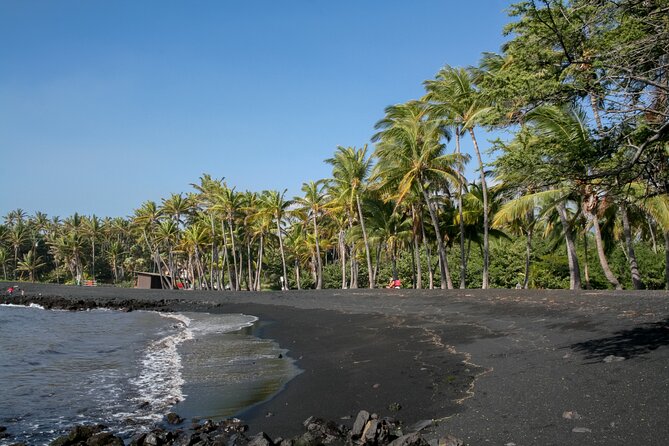
Punaluʻu Black Sand Beach is one of the most memorable stops because the shore is made from dark volcanic basalt. Coconut palms and green vegetation frame the black sand, creating a sharp contrast that feels unlike the beaches on Oahu.
You have about 30 minutes here. That is enough to walk the shoreline, take photographs, and look for Hawaiian green sea turtles resting on the beach. Several accounts of the day call the turtles a major bonus, and seeing them can be one of the tour’s most rewarding moments.
You must keep a respectful distance from the turtles and avoid touching or crowding them. The beach is a place to observe, not handle wildlife.
Swimming is not the main attraction. The water can be rough, and conditions are not always suitable for a casual dip. Bring shoes you can walk in, since volcanic sand and rocky areas are not ideal for bare feet.
This stop often feels more special than its short schedule suggests. It connects the geology you hear about at the coffee farm and national park with something you can see directly under your feet.
Hawaii Volcanoes National Park in two focused hours
The national park is the heart of the day. About two hours are allocated here, with admission included. Your guide may begin at the visitor center, then take you to several key areas depending on current conditions, road access, and volcanic activity.
The planned sights include:
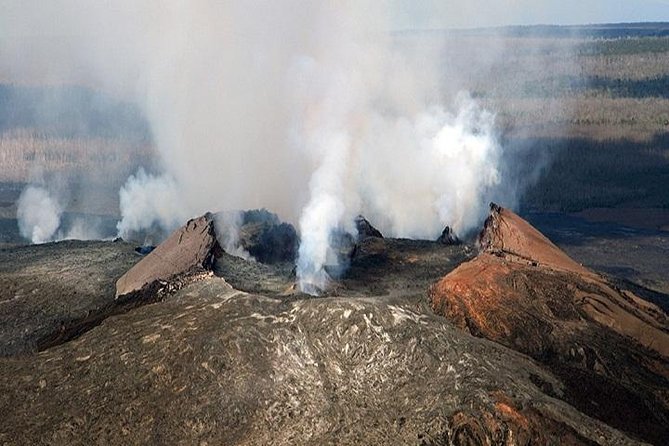
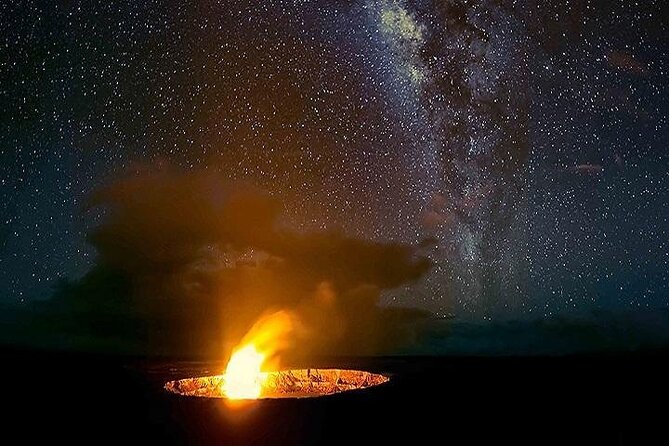
- Halemaʻumaʻu Crater, where conditions may reveal steam, volcanic glow, or an active eruption
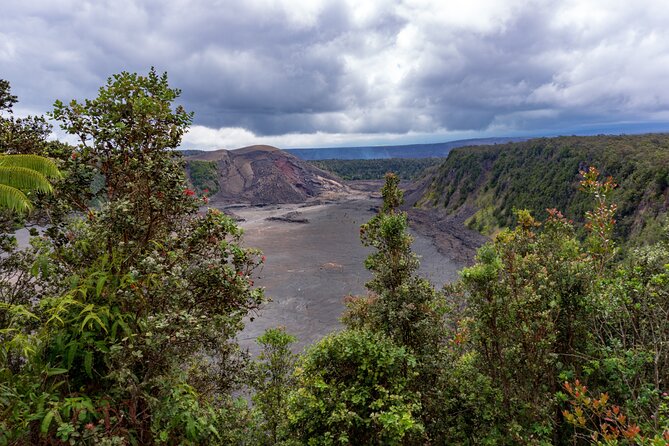
- Kīlauea Iki Rainforest Lookout, with views into a large crater surrounded by forest
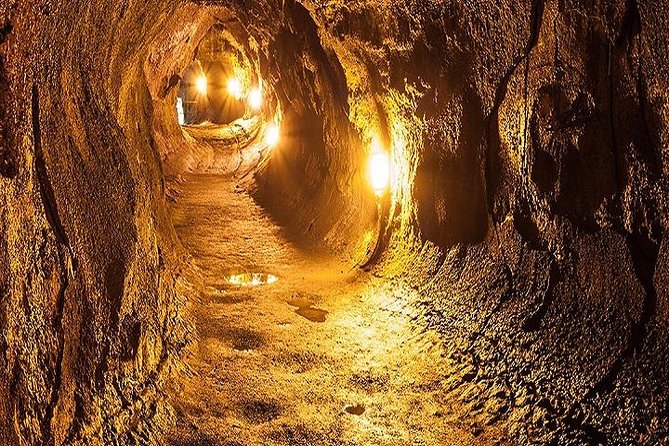
- Thurston Lava Tube, a natural tunnel formed by flowing lava
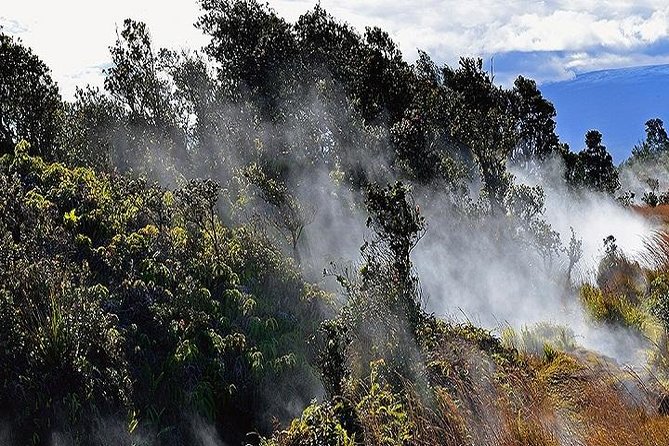
- Steam vents, where heat rises from the ground
The lava tube is often a favorite because it turns volcanic science into a physical experience. You walk through a tunnel created when the outside of a lava flow cooled while molten material continued moving below. It is a simple stop, but it makes the island’s past eruptions easier to picture.
The crater views offer a different experience. Even without visible lava, the scale of Kīlauea’s craters and the contrast between rainforest and bare volcanic ground can be striking. If an eruption is active, the day can become extraordinary, but volcanic activity is unpredictable. You should book this tour for access to the park and its geology, not on the promise of seeing molten lava.
The park is an active volcanic area. Sulfur dioxide and other volcanic gases can affect people with asthma or other breathing problems. Follow your guide’s instructions, remain on marked paths, and be ready for a route change if conditions shift.
Two hours is enough for an introduction, but not enough for a long hike. If you want to spend half a day on trails, this is not the right format. The advantage is that you can see several headline sights without planning the route yourself.
The long drive across Hawaii Island
The route also takes in areas connected with Mauna Kea, the Kohala Coast, and Hilo. These names help explain the scale and variety of the island, but the supplied schedule does not promise extended sightseeing stops at each one.
Mauna Kea Access Road climbs from Saddle Road toward the summit of Mauna Kea. The road passes through changing conditions, with cooler temperatures and thinner air at higher elevations. You should not assume this tour goes to the summit. It is better to view this as part of the broader route and guide narration.
The Kohala Coast is drier than much of the island and is known for beaches, resorts, and views. Hilo offers a different side of Hawaii, with places such as Liliʻuokalani Gardens, the Hilo Historic District, the Lyman Museum, the Pacific Tsunami Museum, and the Hilo Farmers Market. These are useful points of reference, but they are not all listed as dedicated stops on this day.
This distinction matters. The tour gives you a broad sense of Hawaii Island, but the main scheduled stops are on the southern route and at the national park. If you want substantial time in Hilo or a full Mauna Kea summit visit, plan a separate day.
What the guides add to the day
The strongest part of this experience is often the guiding. Mel is praised for explaining volcano science, Hawaiian culture, and island history in a way that keeps the drive interesting. Henry is also noted for sharing island stories and giving clear explanations at the volcanic sites.
That matters on a day with long stretches in the vehicle. Without a good guide, the route could feel like a series of quick photo stops. With strong narration, the drive becomes part of the experience.
The style can be structured and energetic. One family found a guide’s military background made his approach feel too strict, especially when caring for a sick passenger and communicating with people who spoke limited English. Most of the other comments describe the guides as friendly, funny, organized, and easy to follow, but you should know that the tone may be more directive than relaxed.
Guides also keep the group moving. Several comments praise the airport timing and organized transfers, while another notes frustration when people arrived late. This is a schedule where one delayed person can reduce everyone’s time at the park.
Price, group size, and what you really receive
At $589.99 per person, this is not a cheap excursion. The price includes round-trip airfare from Honolulu to Kona, airport coordination, an air-conditioned vehicle, park admission, and a full day with a local guide.
That can be good value if you have only one day on Hawaii Island. Renting a car and arranging flights yourself may look cheaper at first, but you would also take on driving, navigation, parking, route planning, and the risk of losing time between far-flung sights.
The tour may carry up to 22 people, so do not assume a completely private outing in the usual sense. The description emphasizes a customized Big Island experience and a private vehicle, but the stated maximum means the group can be fairly large. Ask for clarification if a small private party is essential to you.
The day is best for people who value coverage and convenience over slow exploration. It suits first-time visitors, families with limited time, and anyone who wants the national park without handling the logistics.
What to pack for the volcano day
The weather can change quickly, especially at higher elevations. Pack a light rain jacket and layers because the park may be cool and wet even when Kona feels warm.
Bring:
- Closed-toe walking shoes with good grip
- Water and snacks
- Sunscreen and a hat
- Cash for food stands and local shops
- Any medication you need for the day
- Downloaded maps or information, since cell service can be limited
Car seats are available for children age four and under. Most people can take part, and service animals are allowed, but the uneven volcanic ground may be difficult for anyone who has trouble walking.
Treat the park and its culturally important places with care. Do not remove rocks, plants, or other objects, and carry out your trash.
Booking, cancellation, and flight disruption
You can cancel up to 24 hours before the start time for a full refund. Changes made within 24 hours are not accepted, and cancellations inside that window are not refunded.
The experience depends on suitable weather and a minimum number of participants. If the operator cancels for either reason, you are offered another date or experience, or a full refund.
Flight and airport problems are the main practical risk. A past disruption involved rescheduling, delays, and a runway issue at Kona. That sort of problem is outside the guide’s control, but it shows why you should avoid booking an important same-day connection after the tour.
Should you book this Hawaii Volcanoes tour?
I would book it if you have one free day, want to see Hawaii Volcanoes National Park, and prefer a guide to manage the flights and driving. The combination of a coffee farm, quiet forest, black sand, sea turtles, and volcanic sites gives you a strong introduction to Hawaii Island.
I would skip it if you dislike long vehicle days, need unhurried meals, or want serious hiking time. You should also think twice if volcanic gas is a health concern or if you need a very small group.
For the best experience, pack food, wear sturdy shoes, and treat any visible lava as a bonus rather than a guarantee. The national park, the black sand beach, and the guide’s interpretation are the real reasons to go.
FAQ
Is airfare from Oahu included?
Yes. Round-trip airfare from Honolulu International Airport to Kona International Airport is included.
Where do I meet the tour at Kona Airport?
Meet at the lot behind Alaska Baggage Claim B-2 at Kona International Airport, 73-200 Kupipi Street, Kailua-Kona.
How long does the experience last?
The experience lasts approximately 8 to 10 hours.
Is transportation to Honolulu Airport included?
No. You must arrange and pay for your transportation to Honolulu International Airport.
Is lunch included?
No. Meals are at your own expense. The route stops at Punaluʻu Bake Shop, where you can buy sandwiches, plate lunches, baked goods, and other food.
Can I see an active lava eruption?
You may see an eruption, volcanic glow, steam, or crater views depending on current conditions. An active eruption is not guaranteed.
What should I wear to Hawaii Volcanoes National Park?
Wear comfortable, closed-toe shoes suitable for uneven volcanic ground. Bring layers and a rain jacket because weather can change quickly.
Is cell phone service available throughout the tour?
No. Cell service is limited or nonexistent in many parts of the park, so download maps or guides before you go.
Just added around Honolulu
- Waikiki: Sunset Swim & Sailing Experience★ 4.5 · 3 reviews
- Diamond Head Hike [Starts at 7:00 a.m.]★ 3.5 · 3 reviews
- Oahu : Hanauma Bay Reservation+Equipment Rental★ 3.3 · 3 reviews
- Self Guided Hike Trail to Nature Walk & Waterfall★ 3.2 · 3 reviews
- Private Transfer waikiki to HNL airport * 1-12 passenger*★ 4.7 · 3 reviews
- Kevo’s Beach Bus★ 5.0 · 3 reviews
- Half-Day Waterfall Tour – Hike, Scenic, Food and Photo★ 5.0 · 3 reviews
- Private Transfer Honolulu Airport HNL to Waikiki by Sedan★ 4.5 · 3 reviews