
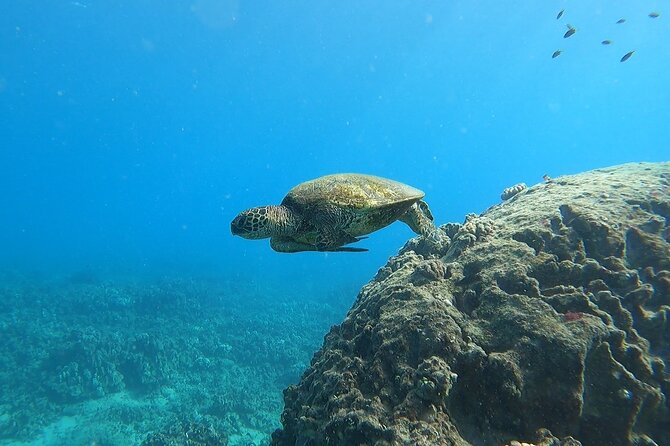
Reviewed · OAHU SNORKELING TOURS
Marine Ecology Snorkel from Electric Beach Oahu with Photos
Electric Beach is more than a place to spot fish. This small-group marine ecology snorkel turns the reef into an in-water classroom, with a marine biologist explaining coral, endemic species, and sea turtle ecology as you float above it. The group never exceeds five people, so you can ask questions without shouting across a crowd.
I like the real-time nature lessons and the included photo package. You learn why the animals matter, not just what they are, then leave with pictures of the outing. Guides Talia and Randy have also been singled out for clear explanations, kindness, and careful support for less confident swimmers.
The main consideration is the ocean itself. You need a moderate fitness level, and motion sickness can be an issue before you get used to the water. This is a weather-dependent snorkel, not a guaranteed wildlife show, although the possibilities include reef fish, turtles, monk seals, and eagle rays.
In This Review
- Key points at a glance
- Why Electric Beach works as an outdoor classroom
- What happens at Kahe Point Beach Park
- The animals you might see below the surface
- A personal lesson instead of a crowded snorkel
- What the guide adds to the experience
- Equipment, photos, and the $125 price
- Who will enjoy this snorkel most
- Practical planning for a comfortable outing
- Is the small-group reef lesson worth booking?
- FAQ
- Where does the Marine Ecology Snorkel meet?
- Where does the activity end?
- How long does the snorkel last?
- How many people can join the tour?
- Is snorkeling equipment included?
- Are photos included?
- What marine life might I see?
- What happens if the weather is poor?
Key points at a glance
- Groups capped at five: You get a quieter, more personal outing than a large boat-based snorkel.
- A marine biologist leads the lesson: Expect explanations of coral reef ecology, Hawaiian species, geology, and animal behavior.
- About one hour in the water: The two-hour experience includes a briefing, questions, and exploration of several habitats.
- Kahe Point Beach Park is the only stop: Electric Beach gives you a shore-based way to explore Oahu’s reef.
- Equipment and photos are included: You do not need to arrange basic snorkel gear separately, and a complimentary photo package comes with the tour.
- Wildlife is never promised: Fish are likely to be part of the experience, while turtles, monk seals, and eagle rays depend on conditions and luck.
Why Electric Beach works as an outdoor classroom
The appeal here is not simply getting wet and looking down. Your guide uses the reef as a living lesson, pointing out how coral, fish, turtles, and other animals fit together. That makes the hour in the water more meaningful than a quick checklist of species.
The tour begins with a short briefing at 92-301 Farrington Highway in Kapolei. You learn about the snorkel site and the basic workings of Hawaii’s reefs before entering the water. This is also your chance to ask questions and explain what interests you, such as fish identification, coral, geology, or sea turtles.
That opening matters. Snorkeling can feel like a rush of unfamiliar sights during the first few minutes. A good orientation gives you a way to sort what you see. Instead of noticing only bright fish, you may begin watching how animals use different habitats and how the reef functions as a connected system.
The guides also bring local context into the lesson. One outing included discussion of geology, geography, plant and animal life, and Hawaiian names and uses for species. The focus is not just scientific. It also recognizes the place as part of Hawaii, with cultural meaning alongside its natural value.
More Oahu snorkel trips:
- Oahu: Grand Tour Around Island 16 Locations plus Snorkeling
★ 5.0 · 8,669 reviews - Oahu’s Ultimate Tour: Dole, Turtle Snorkel, Pali Lookout & More
★ 4.5 · 5,461 reviews - Oahu Circle Island Tour with Turtle Snorkeling— Small-Groups
★ 5.0 · 5,214 reviews
What happens at Kahe Point Beach Park
Kahe Point Beach Park, commonly called Electric Beach, is the tour’s meeting point and snorkel site. The experience begins and ends here, so you do not spend the outing moving between several locations or boarding a boat.
Once the briefing is finished, you spend roughly one hour snorkeling. The guide leads you through multiple habitats and explains the marine life as you encounter it. The exact route and sightings can change from one outing to the next, which is part of the appeal of a wild reef.
This setting gives you a close look at how varied one coastal area can be. You may see reef fish in one section, then notice a turtle or another larger animal in a different habitat. The guide’s job is to help you slow down and pay attention to those changes.
The stop is also practical for anyone who prefers a focused activity. There is no long itinerary of attractions competing for your attention. You arrive, learn the basics, snorkel, and return to the meeting point. The tradeoff is that all the marine action depends on conditions at this one site.
The animals you might see below the surface
Reef fish are among the most likely sights, and the guide can help you understand how they fit into the larger reef community. The value is in learning to look beyond color and shape. A fish is not just a photo subject. It occupies a place in the reef’s food web and habitat.
Hawaii’s endemic species add another layer. The briefing and in-water explanations cover native marine life, including species found only in Hawaii. That gives you a better reason to pay attention to small details instead of treating the reef like an aquarium.
Sea turtles are another possible highlight. The tour includes sea turtle ecology, so the guide can explain more than basic identification. You may learn how turtles relate to the surrounding reef and why respectful viewing matters.
Monk seals and eagle rays are also listed as possible sightings. These are wild animals, so no guide can promise that they will appear during your hour in the water. That uncertainty is worth keeping in mind when you compare this experience with an attraction built around guaranteed animal viewing.
One especially successful outing included many fish, a turtle, and a monk seal. That is an excellent combination, but you should book for the quality of the teaching and the small group rather than for a particular animal.
A personal lesson instead of a crowded snorkel
The maximum group size is five people. That limit changes the feel of the experience. You can ask a question, point out something you notice, or tell the guide that you need a moment without competing with a large group.
A small group is also useful for families. Some children may be nervous at first, especially in open ocean water. Talia and Randy have been praised for helping children settle in, while Randy took extra care with less strong swimmers. That does not remove the physical demands of snorkeling, but it does provide a more attentive setting.
The tour is not advertised as private, and the exact guide team may vary. Still, the format is semi-private and guaranteed to have fewer than five participants. If you dislike mass-market water activities, this is one of the strongest reasons to consider it.
You should still be honest about your comfort in the ocean. The stated requirement is a moderate level of physical fitness. One participant experienced motion sickness before adjusting to the water. If you are prone to that problem, plan your day with it in mind and ask questions before the snorkel begins.
More photo sessions on Oahu:
- From Waikiki: Best of Oahu Photo Tour with Pickup
★ 4.9 · 274 reviews - Beautiful Colors of Hawaii Photo Tour
★ 5.0 · 165 reviews - Private 1-on-1 Surf Lesson with Videos and Photos
★ 5.0 · 107 reviews - Flying Dress Photoshoot on Oahu
★ 5.0 · 92 reviews
What the guide adds to the experience
The best part of a marine biology tour is the interpretation. Without a guide, you may see coral, fish, and a turtle but miss the relationships between them. Here, the goal is to explain the reef as a working community.
Talia is a marine biologist, and her role includes explaining the species and habitats in detail. The teaching covers coral reef ecology, endemic species, and turtle ecology, with room for questions based on your own interests.
The explanations also include geology and geography. That broadens the experience beyond marine biology and helps place the reef within the physical setting of Oahu. You are not only looking at animals. You are learning why this particular coast supports the life you see.
I also appreciate the respectful tone toward Hawaiian names and uses for species. It gives the outing a sense of place without turning the lesson into a generic nature talk that could happen anywhere.
A good guide will not make every moment feel like a lecture. The strength of this format is that the teaching happens while you are looking at the subject itself. You see a fish, coral area, or turtle, then receive useful context at the right moment.
Equipment, photos, and the $125 price
The cost is $125 per person. That is not the cheapest way to look at a reef, but the price includes snorkeling equipment, the marine biology instruction, a small group capped at five, and a complimentary photo package.
The value depends on what you want from the outing. If you only need a mask and a place to swim, you can find simpler options. If you want a guided lesson, personal attention, and help understanding what you see, the cost becomes easier to justify.
The photo package is a useful extra. You can focus on the water rather than trying to manage a camera throughout the snorkel. The available information does not specify the number, format, or delivery method of the photos, so ask the provider if those details matter to your booking decision.
The tour lasts about two hours, but only about one hour is spent snorkeling. The rest covers arrival, the site briefing, questions, and preparation. That is a sensible structure for a lesson-based outing, especially if you want time to understand the site before getting into the water.
Because the group is so small, you are paying partly for access to the guide’s attention. This is a better value for someone who likes asking questions than for someone who plans to swim off alone and ignore the explanation.
Who will enjoy this snorkel most
I would choose this experience if you want your Oahu snorkeling to have a clear purpose. It suits curious adults, families who want a gentle introduction to reef science, and anyone who would like to recognize more than the biggest animal in sight.
It also fits people who prefer a short, focused activity. The two-hour length leaves room for other plans, while the single location keeps the day simple.
Families should consider the needs of each person in the group. Children may enjoy the lesson and wildlife, but ocean comfort varies. The guides have shown care with nervous children and less strong swimmers, yet the moderate fitness requirement still applies.
This may be less suitable if you want a party atmosphere, a large social group, or a full-day water excursion. It may also disappoint anyone who measures success only by seeing a turtle, seal, or ray. Nature does not follow a schedule.
The experience is offered in English. A mobile ticket is provided, and the meeting point is near public transportation. You are responsible for getting to 92-301 Farrington Highway in Kapolei, then return there when the activity ends.
Practical planning for a comfortable outing
Give yourself enough time to reach the meeting point without rushing. The activity starts at Kahe Point Beach Park and ends at the same place, so your transport plan is straightforward.
Arrive ready to listen during the briefing. Tell the guide what you want to learn and mention any concerns about swimming, ocean conditions, or motion sickness. The small group makes this sort of conversation easier and helps the guide tailor the lesson.
Use the briefing to understand the site before entering the water. You will get more from the snorkel if you know what habitats to look for and how to behave around marine life.
The tour requires good weather. If poor weather forces a cancellation, you can choose a different date or receive a full refund. You can also cancel for a full refund if you do so at least 24 hours before the local start time. Changes or cancellations made inside that 24-hour window are not accepted and are not refunded.
The activity is often booked well ahead, with an average booking time of 22 days in advance. That pattern suggests you should reserve early if your Oahu schedule is fixed, especially since only five spaces are available per outing.
Is the small-group reef lesson worth booking?
I would book this tour if you want to understand Hawaii’s reef rather than simply swim over it. The combination of a marine biologist guide, a maximum of five people, several habitats, included equipment, and photos gives the $125 price a clear purpose.
Choose it especially if you are traveling with curious children, prefer personal instruction, or want help identifying species and understanding their role in the ecosystem. The care shown by Talia and Randy with nervous and less confident swimmers is encouraging, though you still need moderate fitness and basic comfort with ocean activity.
Skip it if you want guaranteed sightings, a long day on the water, or the lowest-cost way to snorkel. For everyone else, Electric Beach offers a focused and thoughtful look at Oahu’s underwater world, with enough wildlife possibility to keep the hour exciting and enough explanation to make it stick with you.
FAQ
Where does the Marine Ecology Snorkel meet?
The meeting point is 92-301 Farrington Highway, Kapolei, Hawaii 96707, at Kahe Point Beach Park.
Where does the activity end?
The activity ends back at the meeting point.
How long does the snorkel last?
The full experience lasts approximately two hours. About one hour is spent snorkeling in the water.
How many people can join the tour?
The activity has a maximum of five participants and is guaranteed to have fewer than five people.
Is snorkeling equipment included?
Yes. Snorkeling equipment is included in the price.
Are photos included?
Yes. A complimentary photo package is included.
What marine life might I see?
You may see reef fish, sea turtles, monk seals, eagle rays, and other marine life. Sightings can vary because this is a wild reef experience.
What happens if the weather is poor?
If the experience is canceled because of poor weather, you can choose a different date or receive a full refund. You can also cancel at least 24 hours before the start time for a full refund.
Just added around Oahu
- Koko Head E-Bike Ride and Hike Tour★ 5.0 · 3 reviews
- Waikiki: Sunset Swim & Sailing Experience★ 4.5 · 3 reviews
- Diamond Head Hike [Starts at 7:00 a.m.]★ 3.5 · 3 reviews
- Honolulu’s Waikiki Self-Guided Walking Audio Tour★ 4.5 · 3 reviews
- Oahu : Hanauma Bay Reservation+Equipment Rental★ 3.3 · 3 reviews
- Private Whale Watching Safari from North Shore Oahu★ 5.0 · 3 reviews
- Oahu: Half-Day Sunrise Semi-private Tour from Waikiki★ 3.0 · 3 reviews
- Self Guided Hike Trail to Nature Walk & Waterfall★ 3.2 · 3 reviews
Oahu Snorkeling Tours, compared.
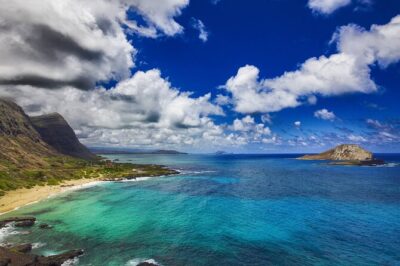
Grand Tour Around Island 16 Locations plus Snorkeling
Read our review →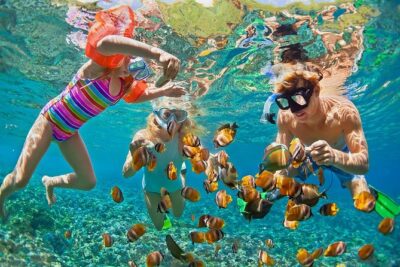
Oahu’s Ultimate Tour: Dole, Turtle Snorkel, Pali Lookout & More
Read our review →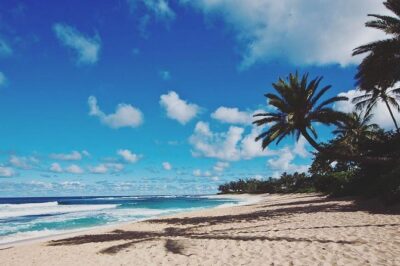
Oahu Circle Island Tour with Turtle Snorkeling— Small-Groups
Read our review →
Turtle Canyon Snorkel Adventure in Waikiki, Oahu
Read our review →
Waikiki Catamaran Snorkel Sail with Lunch: Turtles Guaranteed
Read our review →
Oahu Dolphin and Snorkel Tour with Waikiki Pickup & Lunch
Read our review →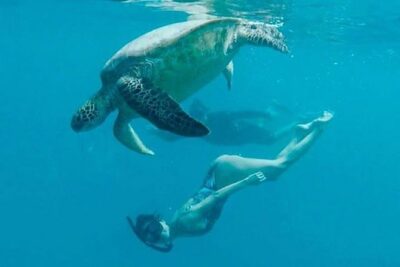
Waikiki Turtle Snorkel and Sail on Hawea Catamaran
Read our review →Browse the lists this tour appears in