
Reviewed · SCUBA DIVING
Oahu: Shallow Reef Scuba Dive for Certified Divers
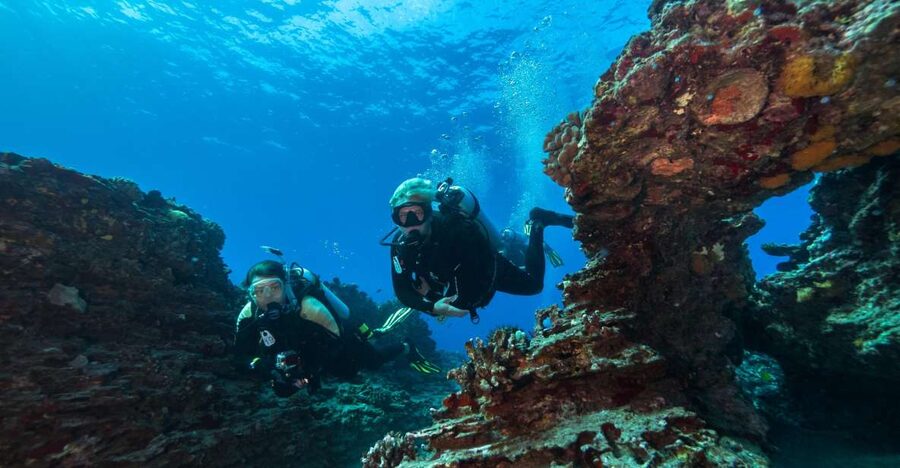
Southern Oahu’s shallow reefs give you a close look at Hawaii’s underwater life without committing to a full-day boat trip. At Turtle Canyons, volcanic reef formations create a natural setting for Hawaiian green turtles, while Kaiser’s offers another chance to see tropical fish, rays, octopus, and possibly white-tip reef sharks. The short boat outing includes two guided scuba sessions and a PADI-certified instructor.
I like the careful start, with a 25-minute safety briefing and equipment fitting before you enter the water. I also like the practical setup: two separate 75-minute reef sessions, snacks, refreshments, and a boat with room for the gear you need. The main consideration is certification: you must show proof from PADI or another approved course, swim confidently, and avoid flying for 24 hours afterward.
In This Review
- Key points to know before booking
- Two shallow reefs, one useful half-day
- Starting at Dive Oahu in Ala Moana
- The 25-minute safety briefing matters
- Kaiser’s and Turtle Canyons from the water
- What the guides add to the experience
- Equipment, snacks, and the real value of $248
- The rhythm of the two water sessions
- Marine life to watch for
- Who will enjoy this Oahu scuba outing
- Practical timing and health rules
- Should you book this Southern Oahu reef trip?
- FAQ
- Where does the scuba activity meet?
- How long does the activity last?
- Which reef sites may I visit?
- Do I need scuba certification?
- What marine life might I see?
- What should I bring?
- How early should I arrive?
- Can I fly after the activity?
Key points to know before booking
- Two 75-minute reef sessions: You get two guided outings in the water, not one rushed underwater visit.
- Turtle Canyons and Kaiser’s: These Southern Oahu sites bring volcanic reef scenery and a strong chance of seeing Hawaiian green turtles.
- Experienced PADI supervision: Instructors guide the group, watch for sea life, and help keep the pace organized.
- Recent equipment and onboard basics: Rental gear, snacks, and refreshments are part of the $248 package.
- Arrive 30 minutes early: You need time for waivers, equipment fitting, and boarding at Dive Oahu in Ala Moana.
- A good fit for certified adults: Children under 10 and pregnant women cannot take part, and all participants must understand spoken English.
Two shallow reefs, one useful half-day
This is a compact Southern Oahu scuba outing for certified participants who want meaningful time in the water without giving up most of a day. The total duration is three hours, including the safety talk, boarding, two 75-minute reef sessions, and the return to Ala Moana.
I see the value in that format. Two visits let you reset between sessions and see different reef areas, rather than spending the whole trip in one location. The sites can include Kaiser’s and Turtle Canyons, popular Southern Oahu reef areas with volcanic formations and tropical wildlife.
The word shallow matters here. These are not presented as demanding deep-water excursions. That can make the trip appealing if you want to focus on marine life, reef shapes, and photography rather than depth or technical skills. Still, you need current scuba ability and good health. This is a guided experience for certified participants, not a beginner lesson.
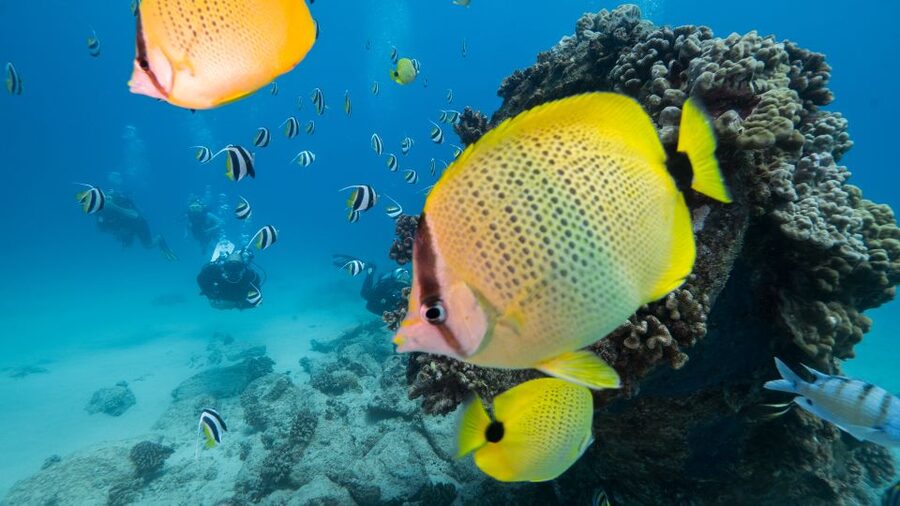
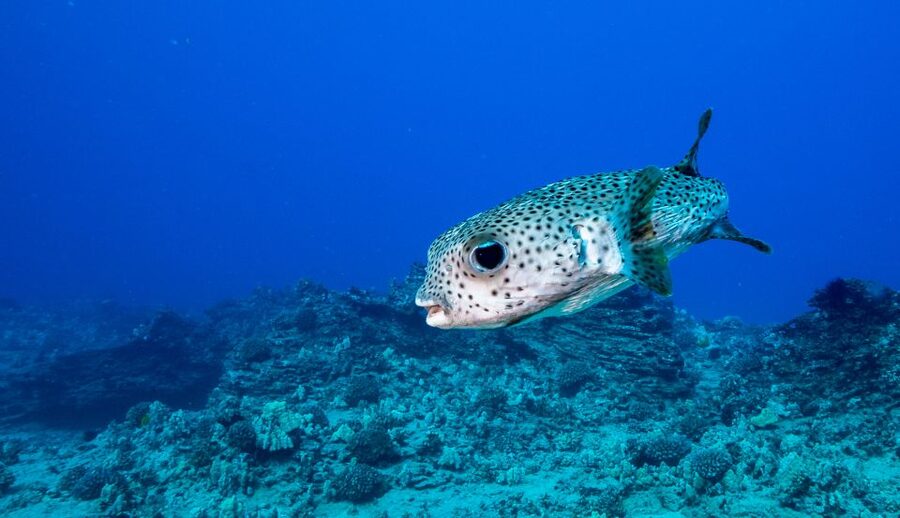
The exact animals you see will depend on conditions and luck. Hawaiian green turtles are a major attraction, and the outing may also bring sightings of white-tip reef sharks, rays, octopus, dolphins, and many reef fish. Possible smaller finds include Gold Ring Surgeon Fish, Saddleback Butterflies, and Flame Angels.
Do not treat the wildlife list as a guarantee. The strongest reason to book is the chance to explore two established reef sites with an instructor helping you notice what is easy to miss.
More dive trips off Oahu:
- First-Time Scuba Diving in Honolulu + Free Videos
★ 5.0 · 3,123 reviews - Shark Cage Diving on Oahu’s North Shore
★ 5.0 · 1,391 reviews - Beginner Scuba Diving Experience with Video Package in Honolulu
★ 5.0 · 877 reviews
Starting at Dive Oahu in Ala Moana
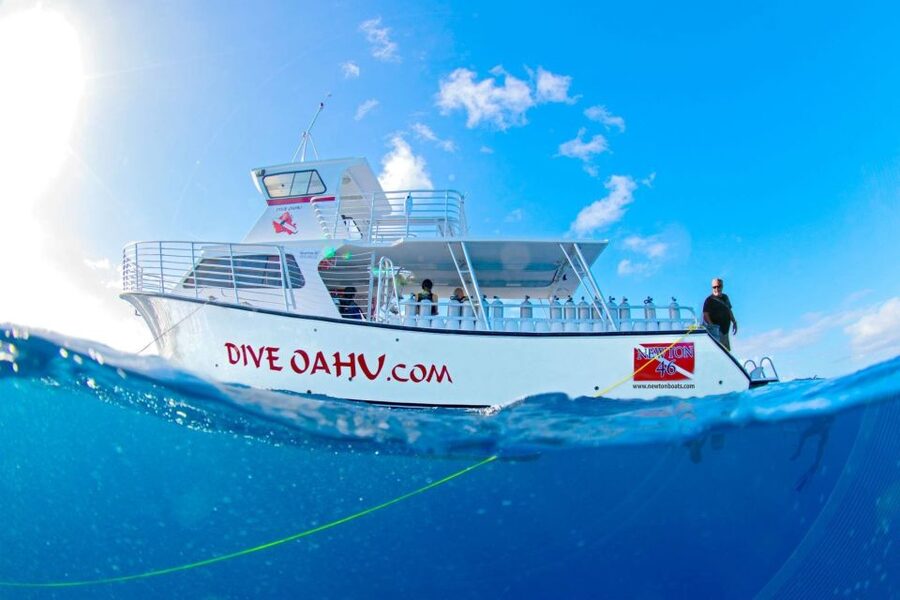
You meet at Dive Oahu, near Ala Moana. If you drive, Kewalo Basin parking costs $2 per hour, while Ala Moana Beach Park offers free parking. That makes the meeting point fairly manageable, though you should allow extra time to park, walk to the boat, and complete the required paperwork.
Arrive at the harbor 30 minutes before the stated start time. This is not a suggestion to ignore. You need time for waivers and equipment fitting, and a late arrival could create stress before an activity that depends on a fixed boat departure.
Bring swimwear, a towel, sunscreen, and your certification card or other proof of approved scuba training. You must also provide a valid email address when booking so the local operator can send confirmation details. Check your spam folder if the message does not appear promptly.
The activity is listed as wheelchair accessible. Because the outing uses a boat and scuba equipment, I recommend confirming any specific boarding or equipment needs with Dive Oahu before you book, even though accessibility is offered.
The 25-minute safety briefing matters
The first scheduled part is a 25-minute safety briefing in Honolulu. Expect this time to cover the basic procedures for the boat, equipment, and guided water sessions.
That briefing is useful even if you have years of scuba experience. Reef outings involve boat movement, shared space, changing conditions, and a group plan. Knowing how the instructors want you to enter, move, and regroup helps the actual water time feel calmer.
You must be able to understand verbal English. The instructor uses spoken directions, and you need to follow them for safety. You also need to be able to swim and be in good health.
This requirement rules out a casual tryout for someone who has never used scuba gear. The operator asks for certification before boarding, so bring proof from PADI or another approved course. Children under 10 cannot participate, and the activity is not suitable during pregnancy.
Kaiser’s and Turtle Canyons from the water
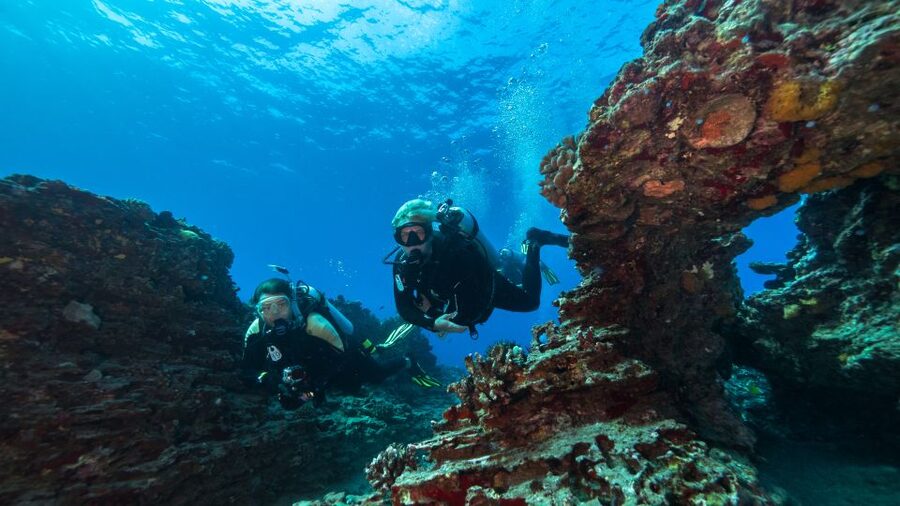
The main attraction is the pair of guided reef visits. Each scheduled water session lasts 75 minutes, giving you a substantial amount of time to look around rather than making a quick descent and return.
Kaiser’s is one of the named reef areas. The supplied details do not promise a fixed route or exact animal sightings, so you should think of it as one part of a flexible marine-life search. Your guide can help point out reef fish and other creatures as the group moves through the site.
Turtle Canyons has more clearly described scenery. Volcanic activity shaped the reef formations, creating channels and structures where Hawaiian green turtles may rest or pass through. The setting can make the session feel less like a simple swim and more like a tour through a natural underwater formation.
The water is described as clear and turquoise, but visibility can still change. Ocean conditions, weather, and animal behavior all matter. On a good outing, you may see turtles close to the reef, colorful fish moving through the formations, or a white-tip reef shark cruising farther away.
One verified booking from September 2022 recorded lots of turtles and two white-tip reef sharks. That gives you a useful sense of the possible payoff, but it should not be read as a promise for every departure.
Same island, a completely different kind of day:
- Oahu Grand Circle Island and Haleiwa Tour: 9-Hr Deluxe Experience
★ 5.0 · 17,387 reviews - Oahu: Grand Tour Around Island 16 Locations plus Snorkeling
★ 5.0 · 8,669 reviews - Parasailing Experience in Waikiki, HI
★ 5.0 · 7,692 reviews - Salute to Pearl Harbor Including USS Arizona
★ 4.5 · 7,433 reviews
What the guides add to the experience
A PADI-certified instructor leads the three-hour guided outing. That matters most when you are searching for small animals or trying to keep track of the group.
Dan is identified as an instructor, and Nacho is identified as the captain. The available feedback gives Dan particular credit for taking good care of the group and spotting sea life, while Nacho is described as a personable captain. You will not simply be left to wander around the reef alone.
That guiding role can improve the experience in two ways. First, an instructor can help you settle into the site and keep the group moving safely. Second, a good spotter can notice animals that blend into rock and coral.
I would still keep your expectations sensible. A guide can find wildlife, but no one can schedule a turtle, shark, dolphin, or octopus. The best approach is to enjoy the reef structure and treat larger animal sightings as a bonus.
The operator uses either of two 46-foot Newton Dive boats. The boats provide onboard space and amenities for the outing, but the available details do not specify group size, seating arrangements, or the exact boat assigned to your departure. If those points affect your decision, ask before booking.
Equipment, snacks, and the real value of $248
The price is $248 per person. That is not a bargain basement activity, but the package includes a PADI-certified instructor, two guided reef sessions, rental gear, snacks, and refreshments.
The two 75-minute sessions are the main value. You are not paying for a short introductory swim. You receive up to 150 minutes of scheduled reef time, plus the safety briefing and boat transport between the meeting point and the sites.
Equipment quality also matters. You do not need to pack or rent the main scuba setup separately, which simplifies a short stay in Honolulu. The available comments specifically describe the equipment as very good, and the operation as organized and safe. Those are useful points for anyone who wants a professional setup rather than a loose, do-it-yourself arrangement.
Add-ons can change the final cost. At booking, you may request GoPro rental, an underwater DPV scooter, a Nitrox tank, a private guide, or a private photographer. These are optional extras, not part of the stated $248 price.
I would compare the total cost with other certified scuba outings in Honolulu, especially if you already own gear or want a private session. For someone who values guided site visits, included rental equipment, and a three-hour schedule, the package is easier to justify.
The rhythm of the two water sessions
The first 75-minute session gives you the initial look at the reef. You may spend part of this time getting comfortable with the water, checking your gear, and learning how the group moves. That is normal, particularly if you have not been scuba diving recently.
A shallow site can help you concentrate on marine life rather than depth management. You can look closely at reef formations, scan ledges for octopus, and watch for fish such as Gold Ring Surgeon Fish, Saddleback Butterflies, and Flame Angels.
The second 75-minute session gives the trip its substance. It may take place at another reef area, such as Turtle Canyons or Kaiser’s, depending on the schedule and conditions. A second site adds variety and gives you another chance at animal sightings if the first session is quiet.
Between sessions, you have the chance to reset your equipment and attention. I like this arrangement because underwater wildlife viewing rewards patience. If you spend the first session learning the reef and the second looking more closely, you are likely to get more from the outing than from one long, hurried visit.
Snorkeling is also included in the listed activity plan. The main focus is certified scuba, but this can be useful if you need to spend a surface interval in the water or prefer a simpler way to observe the reef for part of the time. The supplied information does not explain exactly when snorkeling is used, so ask the crew if that option matters to you.
Marine life to watch for
Hawaiian green turtles are the star of this outing. They are closely associated with Turtle Canyons, and the volcanic reef shapes provide a memorable setting for seeing them in the ocean.
White-tip reef sharks are another possible highlight. One account recorded two, and the listed wildlife also includes sharks more generally. These sightings can be exciting, but you should follow the instructor’s directions and avoid treating wildlife as something to chase.
Rays and octopus offer a different kind of encounter. Rays may glide across open areas, while octopus can disappear into the reef and reward slow observation. Dolphins are listed as a possibility, though you should not book this trip solely for a dolphin sighting.
Small reef fish may provide much of the visual interest. The Gold Ring Surgeon Fish is an endemic Hawaiian species, and rarer sightings may include Saddleback Butterflies or Flame Angels. These smaller animals are easy to miss if you rush, so keep your attention on the reef as well as the open water.
The best habit is to scan slowly, listen to your guide, and give the animals space. You are visiting their habitat, not entering an aquarium with a scheduled show.
Who will enjoy this Oahu scuba outing
This trip suits certified scuba participants who want:
- Two guided reef sessions in Southern Oahu
- A short three-hour schedule
- A chance to see Hawaiian green turtles
- Included rental gear and refreshments
- Help from an English-speaking PADI instructor
- A boat outing focused on shallow reef sites
It is also useful for people staying near Honolulu who do not want a full-day ocean excursion. The Ala Moana meeting point keeps the activity tied to the city rather than requiring a long transfer.
It is less suitable if you are seeking a beginner lesson, a deep-water technical session, or a private experience by default. You must show certification, swim comfortably, understand spoken English, and meet the health requirements.
If you have not scuba dived in a long time, be honest with yourself before booking. The listing does not describe a refresher course. You may want to ask Dive Oahu if a recent practice session is wise for your situation.
Practical timing and health rules
Plan the rest of your day around the three-hour schedule, but do not treat the stated duration as a reason to squeeze in a tight appointment afterward. Boat activities can involve loading, equipment changes, and a return to shore at a set time.
The most important health rule is the 24-hour no-fly period after scuba. Do not schedule this activity close to your departure from Hawaii. Leave at least the required interval before flying, and build your vacation plan around that rule rather than trying to fit the scuba outing into your final day.
Cancellation is flexible if your plans change. You can cancel up to 24 hours in advance for a full refund, and the reserve now, pay later option lets you hold a place without paying at the time of booking.
Should you book this Southern Oahu reef trip?
I would book it if you are already certified, want two substantial reef sessions, and care more about guided marine-life viewing than a low price. The combination of Turtle Canyons, possible turtles and white-tip reef sharks, included equipment, and attentive instruction gives the outing a clear purpose.
The strongest reasons to choose it are the two 75-minute sessions and the organized support from the crew. Dan’s role as a careful instructor and sea-life spotter, along with Nacho’s work as captain, adds confidence for anyone who prefers a guided boat operation.
I would pause if $248 feels high, you need a private group, or you want guaranteed sightings. Wildlife is never scheduled, and optional extras such as a camera, DPV scooter, Nitrox, private guide, or photographer will cost more.
For a certified scuba participant staying in Honolulu, this is a well-focused way to spend three hours on the water. Bring your certification proof, arrive early, leave 24 hours before your flight, and book it for the reef experience rather than for a promise of any single animal.
FAQ
Where does the scuba activity meet?
You meet at Dive Oahu in Ala Moana, Honolulu.
How long does the activity last?
The full activity lasts three hours. It includes a 25-minute safety briefing and two guided water sessions of 75 minutes each.
Which reef sites may I visit?
The named reef areas include Kaiser’s and Turtle Canyons. The exact site plan may depend on the scheduled outing and conditions.
Do I need scuba certification?
Yes. You must show proof of certification from PADI or another approved diving course before boarding the boat.
What marine life might I see?
Possible sightings include Hawaiian green turtles, white-tip reef sharks, rays, octopus, dolphins, Gold Ring Surgeon Fish, Saddleback Butterflies, and Flame Angels. Sightings are not guaranteed.
What should I bring?
Bring swimwear, a towel, sunscreen, and proof of scuba certification.
How early should I arrive?
Arrive at the harbor 30 minutes before the activity start time for waivers and equipment fitting.
Can I fly after the activity?
You must not fly within 24 hours after scuba diving. Plan your flight accordingly.
Just added around Oahu
- Koko Head E-Bike Ride and Hike Tour★ 5.0 · 3 reviews
- Waikiki: Sunset Swim & Sailing Experience★ 4.5 · 3 reviews
- Diamond Head Hike [Starts at 7:00 a.m.]★ 3.5 · 3 reviews
- Honolulu’s Waikiki Self-Guided Walking Audio Tour★ 4.5 · 3 reviews
- Oahu : Hanauma Bay Reservation+Equipment Rental★ 3.3 · 3 reviews
- Oahu: Half-Day Sunrise Semi-private Tour from Waikiki★ 3.0 · 3 reviews
- Private Whale Watching Safari from North Shore Oahu★ 5.0 · 3 reviews
- Self Guided Hike Trail to Nature Walk & Waterfall★ 3.2 · 3 reviews
Scuba Diving, compared.
First-Time Scuba Diving in Honolulu + Free Videos
Read our review →
Beginner Scuba Diving Experience with Video Package in Honolulu
Read our review →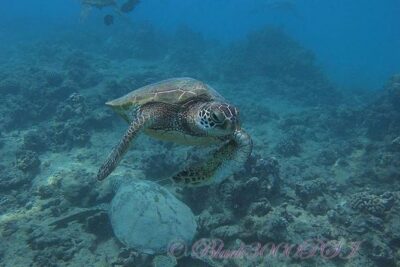
Incredibly Fun Coral Reef Giant Sea Turtles 4hour Boat Scuba Tour
Read our review →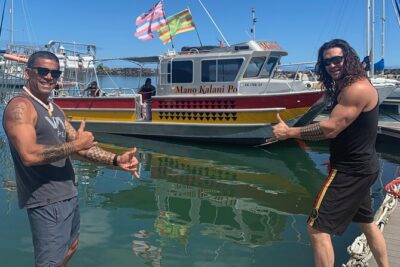
Shark Cage Diving On “The World Famous North Shore of Oahu”, Hawaii
Read our review →
Waikiki 2 Tank World Class Wreck SCUBA Diving – Certified Only
Read our review →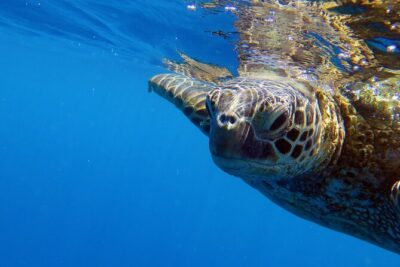
Browse the lists this tour appears in