
Reviewed · SCUBA DIVING
SCUBA Dive at Electric Beach with Photos -No Certification Needed
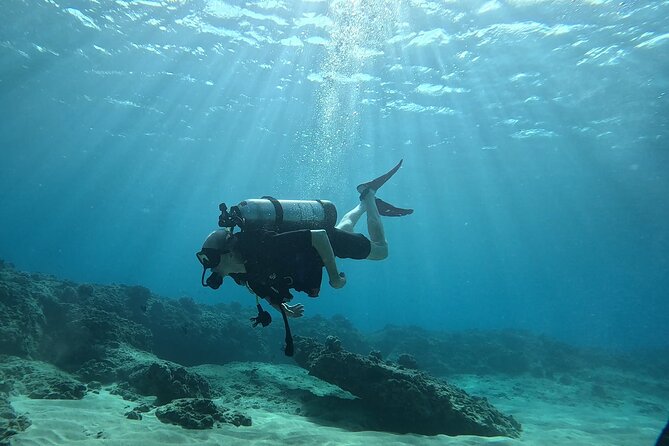
Oahu’s Electric Beach gives first-time scuba guests a chance to breathe underwater in the ocean, not a pool, with a PADI instructor close by. You learn the basic skills in the water, then explore the reef at a pace suited to your comfort.
I like the one-to-one instruction and the small group cap of four. I also like that the $130 price includes the full equipment setup and an edited photo package, so you are not left trying to take your own underwater pictures. The main drawback is that you must already know how to swim and have moderate physical fitness.
In This Review
- Key points to know before booking
- Breathing underwater at Kahe Point Beach Park
- Randy and Talia keep the first session calm
- What happens during the safety briefing
- Learning the skills one-on-one in the water
- Exploring the reef and looking for turtles
- The complimentary photo package adds real value
- Is $130 a fair price?
- Timing, swimming ability, and flight planning
- Who will enjoy this most
- What to bring and how to prepare
- Should you book the Electric Beach session?
- FAQ
- Do I need scuba certification?
- Do I need to know how to swim?
- Where does the activity begin?
- What equipment is included?
- Are underwater photos included?
- Can I fly after the activity?
Key points to know before booking
- A true first ocean scuba session: No certification is needed, but you must know how to swim.
- Personal instruction: Randy and Talia focus closely on comfort, hand signals, safety, and equipment.
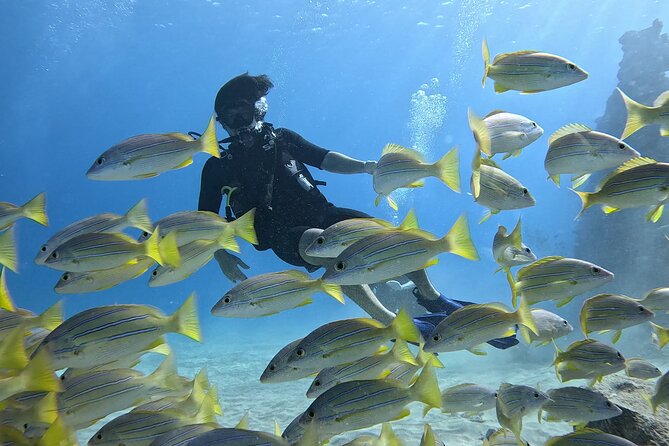
- Kahe Point wildlife: You might see sea turtles, rays, eels, and schools of fish near Electric Beach.
- Small groups matter: The maximum group size is four, which allows more individual attention than a large boat outing.
- Photos are included: Your underwater experience comes with a complimentary edited photo package.
- Plan around flights: You cannot fly for 24 hours after the activity.
Breathing underwater at Kahe Point Beach Park
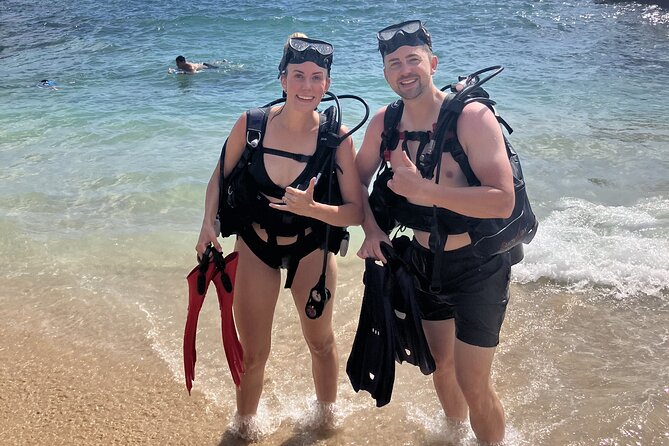
The appeal here is simple: you do not spend your first scuba experience surrounded by a crowd. You meet at 92-301 Farrington Highway in Kapolei, near Kahe Point Beach Park, then work directly with your instructor before entering the water.
This is a shore-based ocean session. That matters for beginners because there is no boat ride, no rolling deck, and no need to jump into deep water from a vessel. You begin at the beach and learn the process in stages.
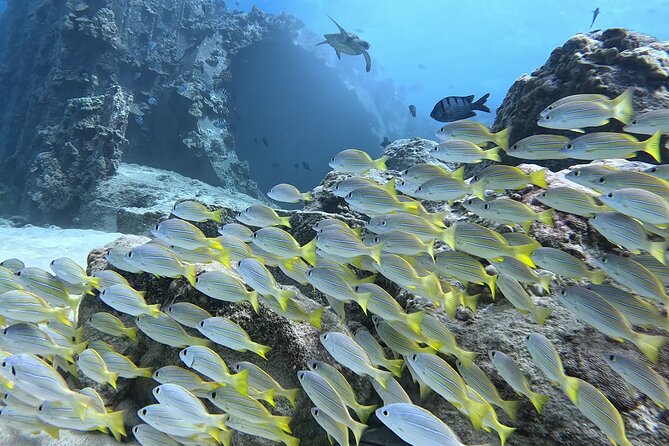
The setting is known as Electric Beach. Underwater, you may encounter sea turtles, rays, eels, and many fish. Turtles are the biggest draw in the available feedback, with sightings near the pipes described more than once. Wildlife is never guaranteed, of course, and sea conditions can change the experience from one day to the next.
The activity lasts about two hours. That includes the safety briefing, equipment preparation, in-water skills work, guided exploration, and getting out of the equipment at the end. The actual time spent looking around underwater can vary with your comfort, conditions, and how quickly you master the basic skills.
More dive trips off Oahu:
- First-Time Scuba Diving in Honolulu + Free Videos
★ 5.0 · 3,123 reviews - Shark Cage Diving on Oahu’s North Shore
★ 5.0 · 1,391 reviews - Beginner Scuba Diving Experience with Video Package in Honolulu
★ 5.0 · 877 reviews
Randy and Talia keep the first session calm
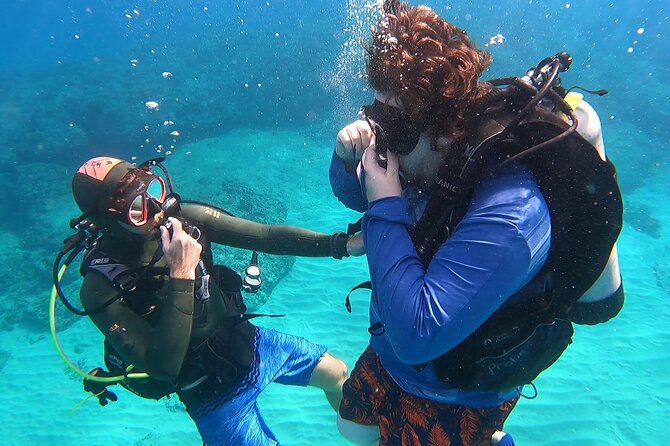
The instructor can make or break a first scuba outing. Here, Randy receives especially strong praise for his calm approach and clear explanations. Talia also works with first-time guests and handles underwater photography.
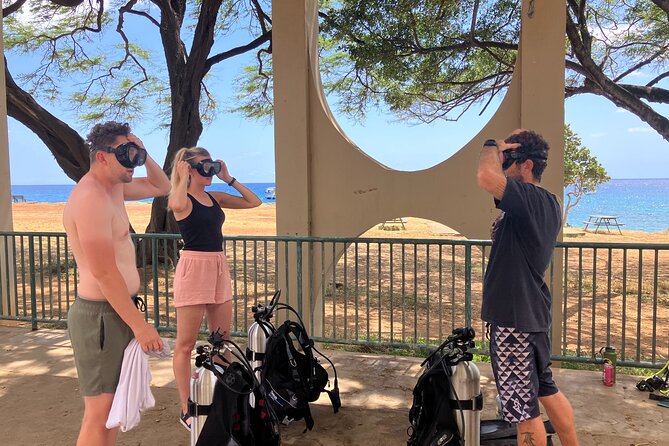
That combination is useful for nervous beginners. You are not expected to arrive already comfortable with a mask, regulator, buoyancy gear, or underwater hand signals. The instruction covers the equipment and the signals you need before the session begins.
The one-to-one format is another important feature. Even when more than one person is booked, the maximum group size is four. The instructor can stay near you while you practice, rather than moving a large group through the same checklist.
Several experiences described Randy remaining beside a beginner throughout the process, from land instructions to entering the water and returning to shore. That kind of close support is worth more than a long lecture when you are learning to breathe through a regulator for the first time.
If anxiety is part of your concern, this is where the experience earns its price. The goal is not simply to get you underwater. The goal is to help you feel calm enough to notice what is around you.
What happens during the safety briefing
Your session begins with a detailed briefing about the site and the activity. You learn how the equipment works, what to do if something feels wrong, and how to communicate underwater.
Pay attention to the hand signals. Once your head is underwater, you cannot rely on normal conversation. Simple signals for okay, stop, and problems help you and your instructor stay in contact.
The briefing is also the right time to speak up about nerves. First-time scuba is not a good place for silent embarrassment. If you do not understand a step, ask before you enter the water. The instructors are there to help you get comfortable, not to rush you through a script.
You should arrive ready for an active beach session. Bring your own swimwear and towel. Bottled water is not included, so pack water for before or after the activity. The equipment itself is supplied.
Learning the skills one-on-one in the water
After the briefing, you complete a skills session in the water with your instructor. This is the practical heart of the experience.
You may need time to adjust to the mask, regulator, fins, and tank. The supplied information does not promise a fixed depth or a set amount of underwater time, so it is better to judge the session by your comfort rather than by a number.
Some outings reached about 35 feet, and one beginner described roughly 45 minutes underwater. Treat those details as examples, not guarantees. Your own time and depth can depend on conditions, your breathing, and how quickly you become comfortable.
The instructor will help you work through the basics before leading you farther along the reef. For a first-timer, that gradual approach is valuable. You get to test the strange sensation of breathing underwater in a controlled way before your attention shifts to fish and turtles.
The physical side should not be underestimated. You need to know how to swim, and the activity recommends a moderate fitness level. Carrying scuba equipment from the meeting point into the water can feel demanding, especially if you are not used to it.
More photo sessions on Oahu:
- From Waikiki: Best of Oahu Photo Tour with Pickup
★ 4.9 · 274 reviews - Beautiful Colors of Hawaii Photo Tour
★ 5.0 · 165 reviews - Private 1-on-1 Surf Lesson with Videos and Photos
★ 5.0 · 107 reviews - Oahu Island Photography Tour
★ 5.0 · 92 reviews
Exploring the reef and looking for turtles
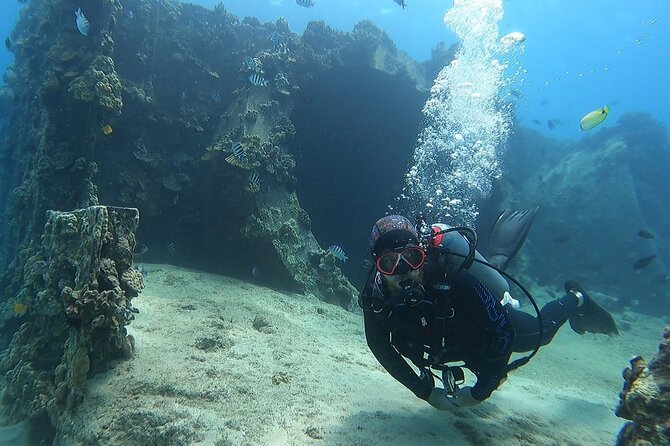
Once you complete the initial skills work, you follow your instructor on a guided reef tour. This is where the lesson turns into an actual ocean experience.
The wildlife can include sea turtles, rays, eels, and schools of fish. Several outings reported turtles near the pipes, and one described a turtle washing station as a favorite area. That gives you a useful mental picture, though you should not book this expecting a guaranteed turtle encounter.
Electric Beach is a good fit if you want wildlife without committing to a full certification course. You are learning enough to experience the underwater world, but you are not signing up for several days of classroom work and multiple training sessions.
The guide’s presence also helps you focus. Instead of worrying about where to go, you can watch your instructor, check your air supply as directed, and take in the reef. A good first session should leave you curious about more scuba, not exhausted from trying to manage every detail alone.
Conditions can affect visibility, current, and wildlife. One family outing encountered a strong current but still saw a turtle, rays, and hundreds of fish. That is a reminder to keep your expectations flexible. Ocean conditions are part of the experience, not a flaw in the booking.
The complimentary photo package adds real value
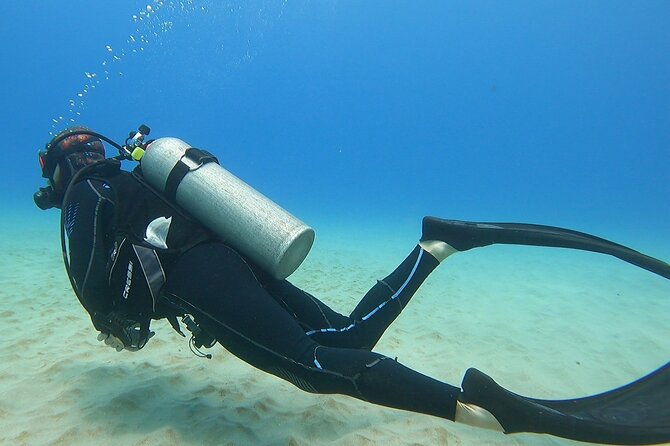
Underwater photos are one of the strongest practical extras here. A staff member photographs the experience, then provides an edited photo package at no additional charge.
That is helpful because taking pictures yourself during a first scuba session is not realistic. You are already learning to breathe, move, communicate, and stay aware of your equipment. Having someone else handle the camera lets you enjoy the reef.
The images also make the outing easier to share with family and friends who did not join you. One group received its pictures the same day, although the supplied details do not guarantee a same-day delivery for every booking.
I would still treat the photos as a bonus rather than the main reason to book. The wildlife, instruction, and small group setup are the core value. Photo quality and the number of final images can naturally depend on water conditions and what you encounter.
Is $130 a fair price?
At $130 per person, this is not the cheapest water activity on Oahu. But price comparisons need to account for what is included.
You receive scuba equipment, professional instruction, the guided reef session, and edited underwater photos. You also get a maximum group size of four, which is a meaningful difference from a crowded outing where one instructor has to watch many beginners at once.
For someone testing scuba for the first time, the value is strongest in the personal attention. A less expensive activity may give you water time, but not the same level of direct support. If you are nervous or unsure about scuba, the instructor’s calm supervision may be worth more than a small price difference.
The value is also good for a couple or small family group that wants a shared adventure without taking a full certification course. Certified divers can also book with this provider, according to the supplied experience details, though this particular activity is designed to work for people without certification.
You should remember the extra costs that are not included. Bring swimwear and a towel, and plan your own drinking water. Transportation to the meeting point is not listed as part of the activity, so check how you will reach 92-301 Farrington Highway in Kapolei.
Timing, swimming ability, and flight planning
The experience takes about two hours, but you should allow extra time around it. You will need time to reach the meeting point, prepare, and change afterward.
The most important health and scheduling rule is the flight restriction. You cannot fly for 24 hours after the activity. If Oahu is your last stop and you plan to fly home that afternoon or the next morning, book this for earlier in the trip.
You must know how to swim. The activity also calls for moderate physical fitness. That does not mean you need to be an athlete, but you should be comfortable in the ocean and able to handle the physical demands of scuba equipment.
The tour requires good weather. If conditions force a cancellation, you are offered another date or a full refund. Since the activity is in the ocean, this weather policy is sensible and worth considering when you build your Oahu schedule.
You can cancel for a full refund if you do so at least 24 hours before the start time. Changes or cancellations inside that window are not accepted for a refund.
Who will enjoy this most
I would recommend this activity to:
- First-time scuba guests who already know how to swim
- Couples looking for a shared ocean experience
- Families with members who want close instruction
- Solo visitors who prefer a small group and direct guidance
- Certified divers seeking a guided outing near Ko Olina, based on the provider’s ability to accommodate certified participants
It is less suitable if you dislike open-water activity, cannot swim, or want a completely passive boat excursion. It also may not fit a tight departure schedule because of the 24-hour no-flying rule.
The small group size makes it especially appealing for people who feel uneasy in a large class. A private booking is not promised in every case, but the cap of four keeps the group intimate. Couples and families may sometimes have the session largely to themselves, depending on bookings.
What to bring and how to prepare
Bring swimwear and a towel. Pack drinking water since bottled water is not included. Arrive ready to listen carefully and tell the instructor if you need more time with any skill.
Do not schedule your flight within 24 hours. I would also avoid placing this activity immediately before another demanding ocean outing. Give yourself time to enjoy the session without watching the clock.
Most of all, do not worry about arriving with scuba knowledge. The activity is built for people without certification. You do need swimming ability, but the equipment orientation and skills practice are part of the experience.
Should you book the Electric Beach session?
Book it if you want a first ocean scuba experience with close instruction, a small group, and photos included. The strongest reasons are Randy and Talia’s patient teaching style, the chance to see turtles and other sea life, and the support of an instructor throughout the water session.
I would skip it if you cannot swim, need to fly within 24 hours, or prefer a dry-land activity. For everyone else, $130 is a reasonable price for equipment, instruction, a guided reef tour, and edited photos in one compact Oahu outing.
This is not a certification course, and it does not promise a particular animal sighting or depth. It is something more approachable: a carefully guided first look at scuba in Hawaii, with enough personal attention to help you enjoy the underwater world rather than simply endure the lesson.
FAQ
Do I need scuba certification?
No. Scuba certification is not required for this activity.
Do I need to know how to swim?
Yes. You must know how to swim, and the activity recommends a moderate level of physical fitness.
Where does the activity begin?
It starts at 92-301 Farrington Hwy, Kapolei, Hawaii 96707, near Kahe Point Beach Park.
What equipment is included?
Use of scuba equipment is included in the $130 price.
Are underwater photos included?
Yes. A complimentary edited photo package is included.
Can I fly after the activity?
No. You cannot fly for 24 hours after the activity.
Just added around Oahu
- Koko Head E-Bike Ride and Hike Tour★ 5.0 · 3 reviews
- Waikiki: Sunset Swim & Sailing Experience★ 4.5 · 3 reviews
- Oahu : Hanauma Bay Reservation+Equipment Rental★ 3.3 · 3 reviews
- Diamond Head Hike [Starts at 7:00 a.m.]★ 3.5 · 3 reviews
- Honolulu’s Waikiki Self-Guided Walking Audio Tour★ 4.5 · 3 reviews
- Oahu: Half-Day Sunrise Semi-private Tour from Waikiki★ 3.0 · 3 reviews
- Private Whale Watching Safari from North Shore Oahu★ 5.0 · 3 reviews
- Self Guided Hike Trail to Nature Walk & Waterfall★ 3.2 · 3 reviews
Scuba Diving, compared.
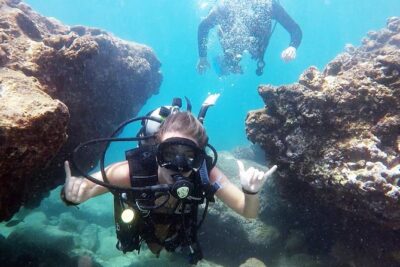
First-Time Scuba Diving in Honolulu + Free Videos
Read our review →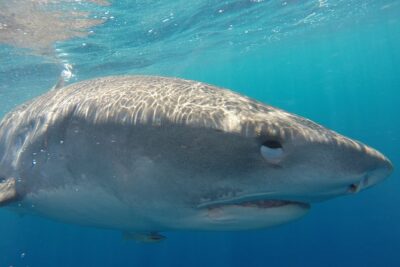
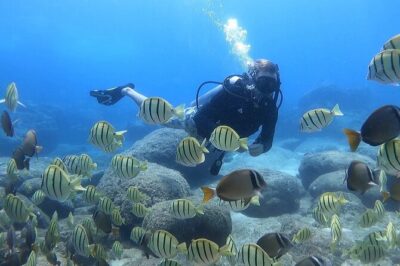
Beginner Scuba Diving Experience with Video Package in Honolulu
Read our review →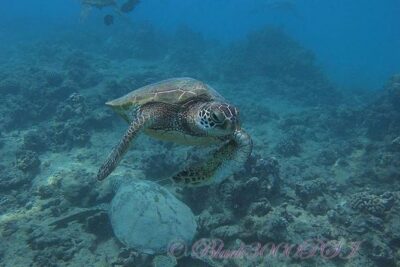
Incredibly Fun Coral Reef Giant Sea Turtles 4hour Boat Scuba Tour
Read our review →
Shark Cage Diving On “The World Famous North Shore of Oahu”, Hawaii
Read our review →
Waikiki 2 Tank World Class Wreck SCUBA Diving – Certified Only
Read our review →
Browse the lists this tour appears in