
Reviewed · MUSEUMS
Bishop Museum General Admission Ticket
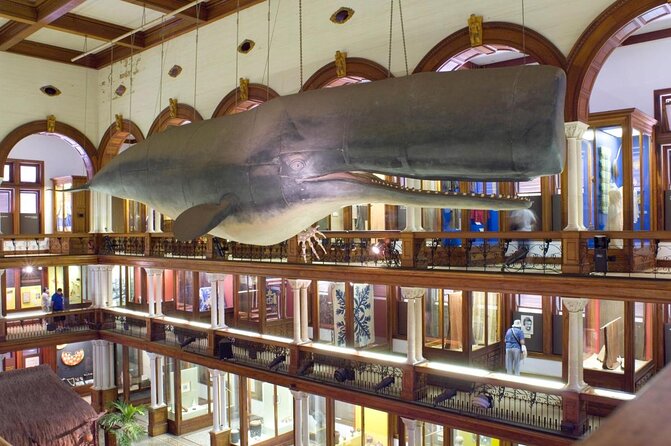
Bishop Museum gives you a much fuller picture of Hawai‘i than a quick stop at a historic palace or beachside cultural show. Founded in 1889, it brings together Hawaiian artifacts, Pacific migration stories, astronomy, volcano science, and changing exhibitions across a large Honolulu campus. Hawaiian Hall is the main draw, with carved woodwork, royal objects, feathered standards, fishing tools, woven mats, and displays about Hawaiian traditions.
I especially like two things here. First, the museum connects Hawai‘i to the wider Pacific, so you see how ocean voyaging, settlement, language, and custom fit together. Second, the Science Adventure Center gives families something hands-on, including exhibits about lava and the formation of the Hawaiian Islands. The drawback is simple: this is a big complex, and several popular features may cost extra or be closed on a particular day.
In This Review
- Key points at a glance
- Why Bishop Museum belongs on your Honolulu plans
- Hawaiian Hall, the museum’s essential first stop
- Pacific Hall and the story of ocean migration
- The Jhamandas Watumull Planetarium
- Science Adventure Center and the Hawaiian volcano story
- Castle Memorial Building and changing exhibitions
- How much time should you allow?
- Is the $38.95 ticket a good value?
- Practical details for your visit
- Who will appreciate Bishop Museum most?
- Should you book Bishop Museum?
- FAQ
- How much does general admission cost?
- How long does a visit take?
- Is the planetarium show included?
- Is parking included?
- Are special exhibitions included?
- What can I see at Hawaiian Hall?
- What is in Pacific Hall?
- Is the museum suitable for children?
- Can I cancel for a refund?
Key points at a glance
- Hawaiian Hall presents Hawaiian culture through artifacts, royal objects, art, and carefully marked displays in an ornate historic building.
- Pacific Hall places Hawai‘i within the wider story of Pacific migration, settlement, values, and island cultures.
- The Science Adventure Center offers interactive exhibits and a lava melting demonstration when operating.
- Planetarium admission is extra, so confirm show times and availability before counting on an astronomy presentation.
- Plan at least half a day if you like to read labels and take your time. Two hours gives you a useful introduction, not the full museum.
- The $38.95 admission price is easiest to justify when most buildings and included exhibits are open during your visit.
Why Bishop Museum belongs on your Honolulu plans
I see Bishop Museum as a place for understanding Hawai‘i, not merely photographing it. Many Honolulu activities present one part of island culture. Here, you can connect royal traditions, everyday tools, Pacific settlement, astronomy, geology, and modern efforts to preserve Hawaiian arts in one visit.
That range is the museum’s great strength. It also explains why some people find it overwhelming. The campus has several buildings, and each asks you to change subjects and pace. You may begin with an artifact from Hawaiian royalty, move to canoe navigation across the Pacific, then watch a science presentation about molten rock. Give yourself time to make those connections.
The museum is also a useful choice on a rainy or uncertain-weather day. Most of the visit takes place indoors, and the campus provides enough material for a few hours. The booking information says the experience operates in all weather, though its cancellation terms also allow a weather-related date change or refund. Because holiday closures and temporary building closures have caused problems for some ticket holders, check the museum’s current opening information before you commit your only available day.
More museums to visit on Honolulu:
- Pearl Harbor Aviation Museum Ticket with Audio Tour and Shuttle
★ 4.5 · 58 reviews - Honolulu: Bishop Museum General Admission Ticket
★ 4.7 · 20 reviews - Oahu: Pearl Harbor Aviation Museum Entry Ticket
★ 4.5 · 63 reviews
Hawaiian Hall, the museum’s essential first stop
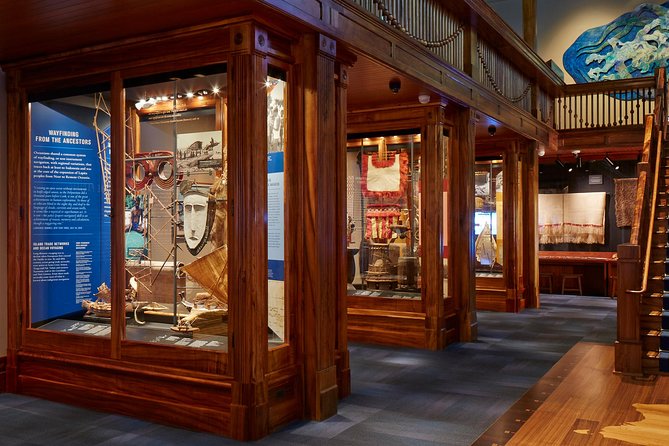
Start with the Hawaiian Hall Complex. It is the clearest introduction to the people, traditions, and political past of Hawai‘i, and it rewards a slow pace.
The building itself deserves attention. Its woodwork and ornate interior make the setting feel part of the exhibition rather than a plain container for objects. Inside, displays cover Hawaiian life and leadership through artifacts, images, art, and explanatory text. You might spend time with feathered kahili, woven mats, fishing hooks, stone objects, and items connected with Hawaiian rulers and ceremonies.
I recommend resisting the urge to rush through the first rooms. The labels help explain why an object mattered, how it was made, and what it tells you about Hawaiian values. A fishing hook, for example, is not just a small tool behind glass. It can point you toward the practical skill, materials, and relationship with the sea that shaped island life.
The building can be especially rewarding for teenagers who prefer to move at their own pace. It can be less successful for young children who need constant hands-on activity. Families should use Hawaiian Hall for a focused cultural introduction, then give children more time in the science building.
A separate display area connected with Hawaiian leaders and palace life can add another layer to the visit. The architecture and objects help place political history alongside daily customs. Because the museum contains so much written material, choose a few sections to read closely instead of trying to absorb every label.
Pacific Hall and the story of ocean migration
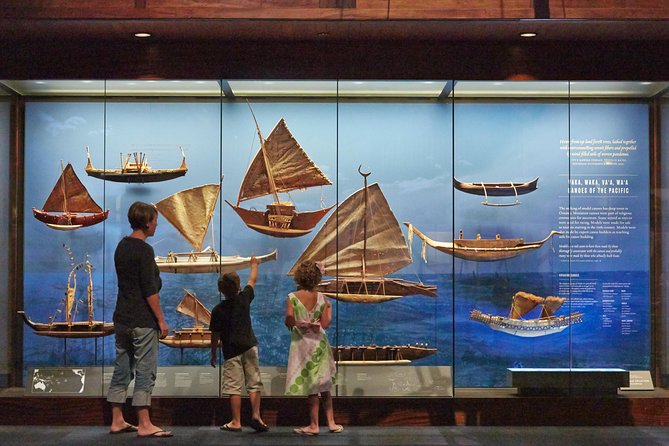
Pacific Hall widens the frame. Rather than treating Hawai‘i as an isolated destination, it explains the origins, values, cultures, and movement of Pacific peoples.
This is one of the most useful parts of the museum for first-time visitors. Maps and explanatory displays show how populations moved across a huge ocean area and how island communities became connected. The migration story gives context to Hawaiian culture without reducing it to a collection of tourist symbols.
Pay attention to the material culture. Woven mats, fishing equipment, navigation-related objects, and other practical items show how people adapted to island environments. The displays also make clear that Pacific cultures are distinct, even when they share broad connections.
I find this section valuable because it corrects a common mistake: thinking of Polynesia as one single culture. You leave with a better sense of both the links and the differences among Pacific peoples. If you enjoy maps, anthropology, or the history of seafaring, allow extra time here.
Pacific Hall is also a good stop before the planetarium. The two areas work together. One explains how people found and settled islands, while the other helps you consider the skies that guided ancient navigators.
The Jhamandas Watumull Planetarium
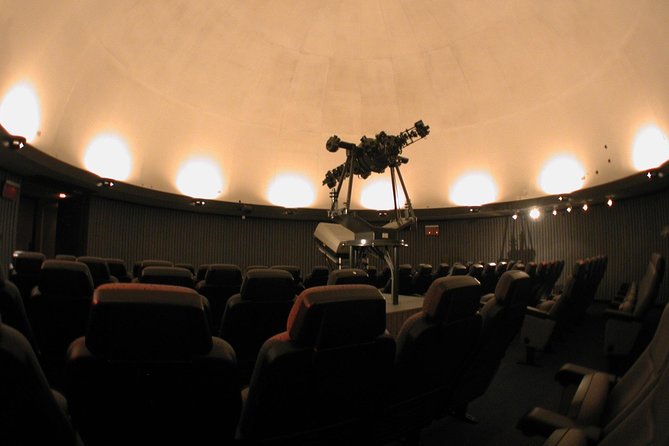
The Jhamandas Watumull Planetarium focuses on the skies above Hawai‘i and Polynesia. Its subject fits the museum perfectly, since stars, weather, ocean knowledge, and long-distance navigation were central to ancient Pacific voyaging.
A planetarium presentation can turn the migration displays into something easier to picture. Instead of seeing a route only on a map, you can consider how navigators used the night sky and read the natural world during ocean crossings.
There is an important catch: the planetarium show is not included in general admission. You pay an additional fee, and availability can change. Several people arrived hoping to see a show and found the planetarium closed, so I would not build your entire day around it without checking the schedule first.
The waiting area has received some criticism, but that is a minor issue compared with the show itself when it is running. If astronomy or Polynesian navigation is a main reason for your visit, confirm the presentation time before buying. If it is unavailable, Pacific Hall and the main cultural buildings still provide the core of the museum experience.
More Honolulu tickets to book ahead:
- Rock-A-Hula Ticket
★ 4.5 · 448 reviews - Diamond Head Hike Shuttle with Reservation Tickets Included
★ 5.0 · 223 reviews - Diamond Head Hiking Tour with Ticket and Reservation Inclusion
★ 4.5 · 103 reviews - Waikiki: Rock-A-Hula Show Ticket and Buffet Option
★ 4.5 · 51 reviews
Science Adventure Center and the Hawaiian volcano story
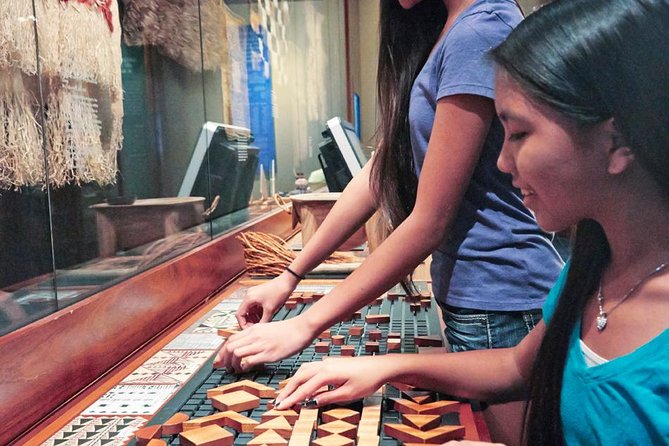
The Richard T. Mamiya Science Adventure Center is the museum’s liveliest building, especially for families. It shifts from artifacts and written interpretation to interactive learning about Hawai‘i’s natural environment.
The central subject is volcanic activity and the formation of the Hawaiian Islands. Exhibits explain how lava shapes land and how the islands developed over time. The live lava melting demonstration is a memorable feature when it is operating, but it is not wise to assume that every scheduled presentation will be available.
This building helps balance the slower pace of Hawaiian Hall and Pacific Hall. Children who might tire of reading labels can handle buttons, displays, and physical demonstrations. Adults also gain a clearer understanding of the geological forces behind the islands they are visiting.
I would allow more time here than you might expect. The science center is not simply a children’s annex. It gives useful context to the volcanic landforms and island setting you see throughout O‘ahu and the rest of Hawai‘i.
Still, check what is open. The lava demonstration has not always operated, and some parts of the science building have occasionally been unavailable. Since the ticket price covers general admission but not every special feature, closures can affect the value of your visit.
Castle Memorial Building and changing exhibitions
The Castle Memorial Building hosts temporary exhibitions. This is where the museum can feel different from one visit to the next, since displays change for limited periods.
A changing exhibition may be the reason to return, but its contents and access depend on the current schedule. Special exhibit fees are not included in the general admission price. If a temporary display is important to you, check its cost and opening dates in advance.
The building has received mixed reactions because the quality and appeal of a temporary exhibition can vary. I would treat it as an extra, not the main reason to buy the ticket. The Hawaiian Hall Complex and Pacific Hall provide the most dependable cultural foundation.
How much time should you allow?
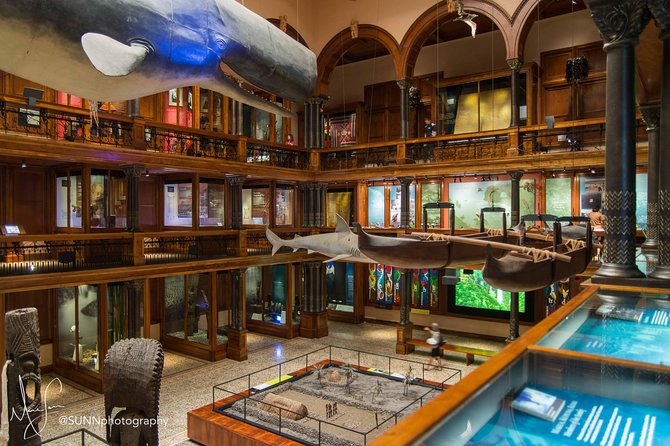
The stated visit length is one to eight hours, and that wide range is realistic. You can make a quick two-hour visit by concentrating on Hawaiian Hall and one additional building. That works if you have a packed Honolulu schedule or mainly want an introduction.
I think half a day is the better plan. With four hours, you can take your time in Hawaiian Hall, visit Pacific Hall, spend useful time in the Science Adventure Center, and fit in another building if the schedule works. If you read every label or add a planetarium show, you may need longer.
The museum is large enough that a late arrival can work against you. Arriving early gives you more choice and helps you avoid discovering that the café or restaurant has closed before you are ready for a break. It also gives you a better chance of fitting in scheduled shows.
Do not treat the museum as a quick rainy-hour backup unless you are comfortable seeing only a portion. One especially common mistake is allowing two hours for a collection that can easily fill half a day.
Is the $38.95 ticket a good value?
At $38.95 per person, general admission is not a small add-on to your Honolulu budget. The value depends heavily on your time and on how much of the campus is open.
For a serious look at Hawaiian culture, Pacific history, and island science, the price can make sense. The museum offers several different subjects rather than one narrow exhibition, and you can spend four or more hours there. The buildings, artifacts, explanatory displays, and science exhibits give you more substance than a short photo stop.
The calculation changes if the planetarium, a major building, or the lava demonstration is closed. Parking, planetarium shows, and special exhibitions are optional costs, so your final bill can rise. There have also been cases where the museum’s own admission price was lower on a particular day than the prepaid ticket price. That means I would compare the current direct admission price with the $38.95 advance option before booking.
The advance ticket does offer convenience, but it is not fully flexible. You receive confirmation at booking, and free cancellation is available up to 24 hours before the start time. Inside that 24-hour window, changes and refunds are not accepted. If you have only one possible day in Honolulu, verify that the museum will be open before paying.
Practical details for your visit
This is a self-guided general admission experience in English, with a mobile ticket. No guide name or group size is provided, so you should expect to set your own pace rather than follow a guided walking route.
The museum is near public transportation, and service animals are allowed. You should have a moderate level of physical fitness, though the supplied information does not give a detailed accessibility map or specify distances between buildings. Wear clothing suitable for the day, since the experience operates in all weather and you may move around the campus.
Parking is optional and not included. If you drive, add that cost to your budget. If you use public transportation, the museum’s location near transit can make the visit easier to fit into a Honolulu day.
Plan around the opening hours of the restaurant or café if you expect to eat on site. Arriving close to closing time can leave you with too little time for the buildings and no meal option afterward.
Who will appreciate Bishop Museum most?
I would recommend this museum to anyone who wants more than a postcard view of Hawai‘i. It suits couples who enjoy exhibits and cultural context, families with children old enough to use interactive displays, and anyone interested in Pacific migration, traditional arts, astronomy, or geology.
It is particularly good for:
- First-time visitors who want a broad introduction to Hawaiian culture
- Families seeking an indoor activity with a hands-on science component
- People interested in Pacific navigation and settlement
- Museum lovers who enjoy reading, artifacts, and historic architecture
- Visitors with a half-day available in Honolulu
I would be more cautious if you dislike museums, have less than two hours, or mainly want the planetarium and lava show. Those special features are not guaranteed by general admission, and the full campus can feel like too much if you are trying to squeeze it between other plans.
Should you book Bishop Museum?
Book it if you want a serious cultural stop and can give it at least half a day. Hawaiian Hall and Pacific Hall are the strongest reasons to come, while the Science Adventure Center adds welcome energy for families and anyone curious about volcanoes.
Before paying, confirm the museum’s opening date, check planetarium and lava demonstration schedules, and compare the $38.95 ticket with the current direct price. If the main buildings are open and you value Hawaiian and Pacific culture, the visit is well worth your time. If several sections are closed, the price becomes harder to defend, so flexibility matters.
FAQ
How much does general admission cost?
The listed price is $38.95 per person.
How long does a visit take?
The approximate visit length is one to eight hours. Allow at least two hours for a short introduction, or about half a day if you want to explore the main buildings carefully.
Is the planetarium show included?
No. The Jhamandas Watumull Planetarium show is optional and costs extra.
Is parking included?
No. Parking fees are optional and not included in general admission.
Are special exhibitions included?
No. Special exhibit fees are optional and separate from the general admission ticket.
What can I see at Hawaiian Hall?
Hawaiian Hall presents Hawaiian history and culture through artifacts, displays, art, architecture, and objects connected with Hawaiian traditions and leaders.
What is in Pacific Hall?
Pacific Hall explores the origins, cultures, values, migrations, and settlement of Pacific peoples and island communities.
Is the museum suitable for children?
Yes. The Science Adventure Center provides interactive exhibits focused on Hawai‘i’s science and environment. Some of the more text-heavy cultural areas may appeal more to older children and teenagers.
Can I cancel for a refund?
You can cancel at least 24 hours before the experience start time for a full refund. Cancellations or changes made less than 24 hours before the start time are not refunded or accepted.
Just added around Honolulu
- Waikiki: Sunset Swim & Sailing Experience★ 4.5 · 3 reviews
- Diamond Head Hike [Starts at 7:00 a.m.]★ 3.5 · 3 reviews
- Oahu : Hanauma Bay Reservation+Equipment Rental★ 3.3 · 3 reviews
- Self Guided Hike Trail to Nature Walk & Waterfall★ 3.2 · 3 reviews
- Private Transfer waikiki to HNL airport * 1-12 passenger*★ 4.7 · 3 reviews
- Kevo’s Beach Bus★ 5.0 · 3 reviews
- Half-Day Waterfall Tour – Hike, Scenic, Food and Photo★ 5.0 · 3 reviews
- Private Transfer Honolulu Airport HNL to Waikiki by Sedan★ 4.5 · 3 reviews