
Reviewed · MUSEUMS
Honolulu: Bishop Museum General Admission Ticket
Bishop Museum is where Hawaii’s royal past, Pacific cultures, and volcanic science meet under one roof. The Hawaiian and Pacific Hall Complex gives you the grandest cultural experience, while the Science and Adventure Center turns the islands’ geology into something you can watch and feel.
I like the museum’s unusual range: you can look at objects connected to Princess Bernice Pauahi Bishop and the Kamehameha family, then move on to native species and lava demonstrations. I also like that your ticket is good for the whole day, giving you time to take a break and return to exhibits without rushing.
The main drawback is that several worthwhile extras cost more. Parking is $15 per car, planetarium shows are $3 per person, and a special dinosaur exhibition may carry a separate charge. Plan your budget before you arrive.
In This Review
- Key points to know before you go
- Why Bishop Museum deserves time in Honolulu
- Entering the Hawaiian and Pacific Hall Complex
- Making sense of 25 million stories
- Lava, geology, and the Science and Adventure Center
- The planetarium: useful extra, not part of the basic ticket
- How much time should you allow?
- What the $38 admission is really worth
- Food, access, and practical rules
- Who will enjoy Bishop Museum most?
- Should you book this Bishop Museum ticket?
- FAQ
- How much does admission to Bishop Museum cost?
- How long is the Bishop Museum ticket valid?
- What exhibits are included with general admission?
- Are guided tours included?
- Do planetarium shows cost extra?
- Is parking included?
- What are Bishop Museum’s opening hours?
- Can I take photographs inside the museum?
Key points to know before you go
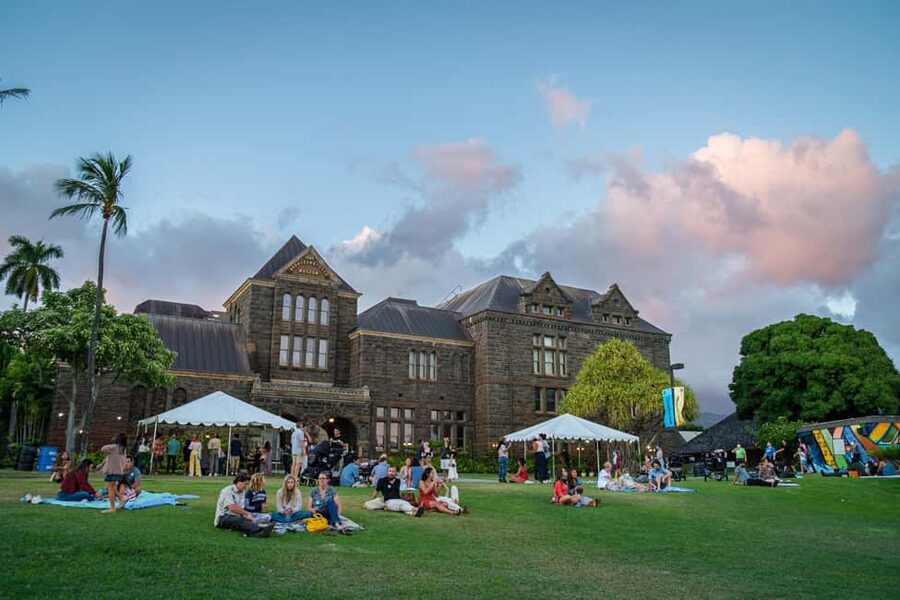
- See royal heirlooms in Hawaiian and Pacific Hall: The museum began with Princess Bernice Pauahi Bishop’s collection of Hawaiian objects and family treasures.
- Watch live-style geology demonstrations: The Science and Adventure Center includes lava pour demos and geology shows that give younger visitors a hands-on reason to pay attention.
- Use the 10am or 11am Hawaiian Hall tour: Public guided tours are included when a docent is available.
- Allow three to four hours: That is enough time for a solid visit, though the ticket remains valid for one day.
- Treat the planetarium as an optional add-on: The lobby is included, but shows cost an additional $3 per person.
- Wear comfortable shoes: The museum has several exhibit areas and involves a fair amount of walking.
Why Bishop Museum deserves time in Honolulu
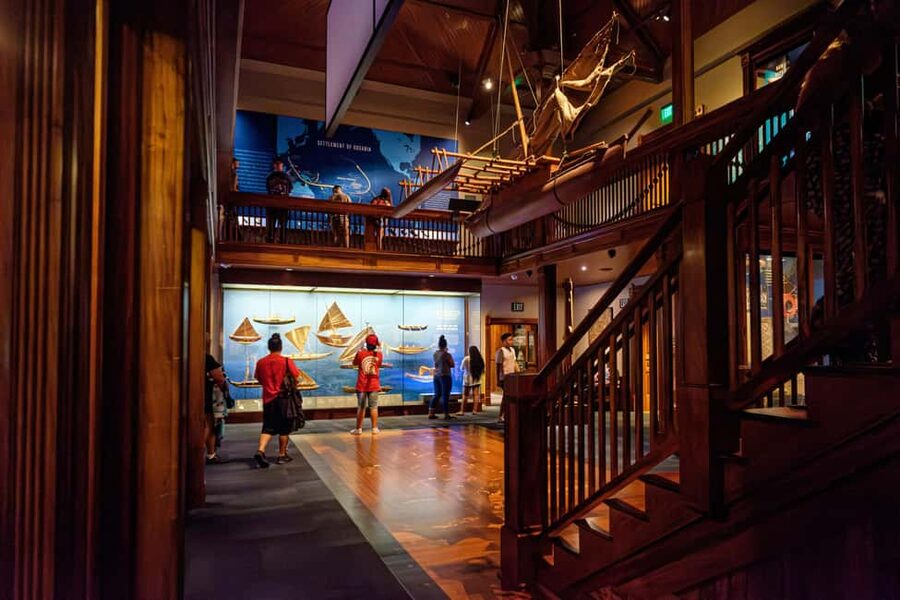
Bishop Museum is not a small attraction you squeeze in between lunch and the beach. It is the largest museum in Hawaii and a major natural and cultural history institution for the Pacific.
That scale matters. The collection reaches from Hawaiian cultural objects and royal family heirlooms to documents, photographs, native island species, and specimens from the surrounding oceans. You are not getting one narrow story about Hawaii. You are getting several connected stories, presented through culture, science, nature, and memory.
The museum was founded in 1889 by Charles Reed Bishop in honor of his wife, Princess Bernice Pauahi Bishop. She was the last descendant of the royal Kamehameha family, and her belongings formed the foundation of the museum’s collection.
That background gives the visit a strong sense of purpose. The museum is not simply displaying attractive old objects. It was created to protect Hawaiian material culture and continues to serve Native Hawaiian interests through its collections, research, consulting work, and public education.
If you have only seen Hawaii through beaches, resort towers, and scenic drives, this visit gives you a more grounded view of the islands. It explains the people, objects, species, and volcanic forces that make Hawaii distinct.
More museums to visit on Honolulu:
- Bishop Museum General Admission Ticket
★ 4.5 · 243 reviews - Pearl Harbor Aviation Museum Ticket with Audio Tour and Shuttle
★ 4.5 · 58 reviews - Oahu: Pearl Harbor Aviation Museum Entry Ticket
★ 4.5 · 63 reviews
Entering the Hawaiian and Pacific Hall Complex
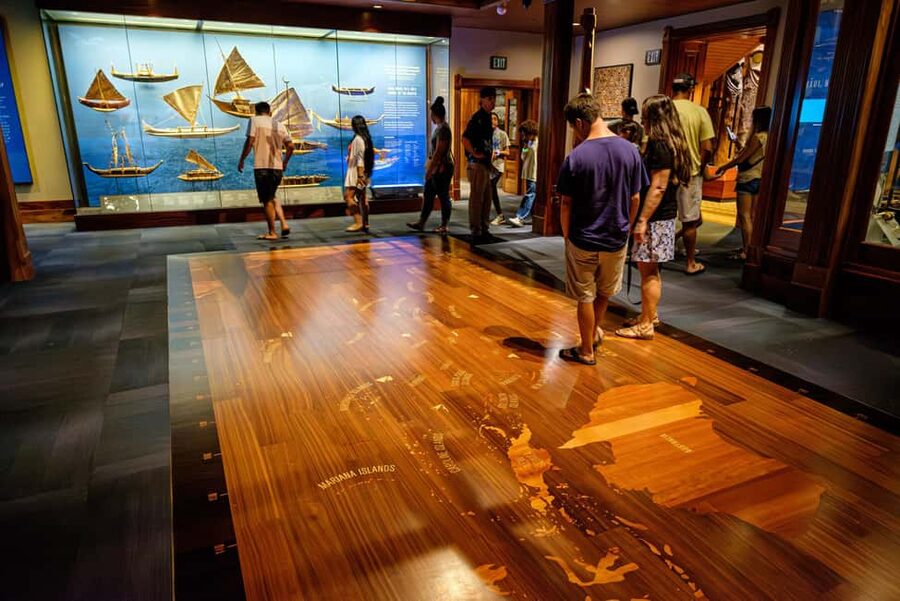
Start with Hawaiian and Pacific Hall, the heart of the cultural side of the museum. The interior is one of the main reasons to visit, with a grand setting that gives the collections room to make an impression.
You will encounter Hawaiian cultural objects alongside heirlooms linked to the royal family. The displays connect those objects to the story of Princess Bernice Pauahi Bishop and the Kamehameha line, making this more meaningful than a quick look at isolated artifacts.
I recommend beginning here even if geology is your main interest. The Hawaiian and Pacific Hall galleries give you the human context for the islands before the Science and Adventure Center explains the physical forces that formed them.
The Pacific focus is also important. Hawaii did not develop in isolation, and the museum’s broader collections cover other Pacific Island cultures. This wider view helps you see Hawaii as part of a large ocean region with shared connections and distinct traditions.
Public guided tours inside Hawaiian Hall are offered at 10am and 11am, subject to docent availability. If you want that extra explanation, arrive early enough to ask about the day’s schedule. A guided visit can help you notice details you might otherwise pass without understanding.
The museum does not identify a regular guide by name, so you should not plan around a particular docent. The tour is an included feature, but availability can change.
Making sense of 25 million stories
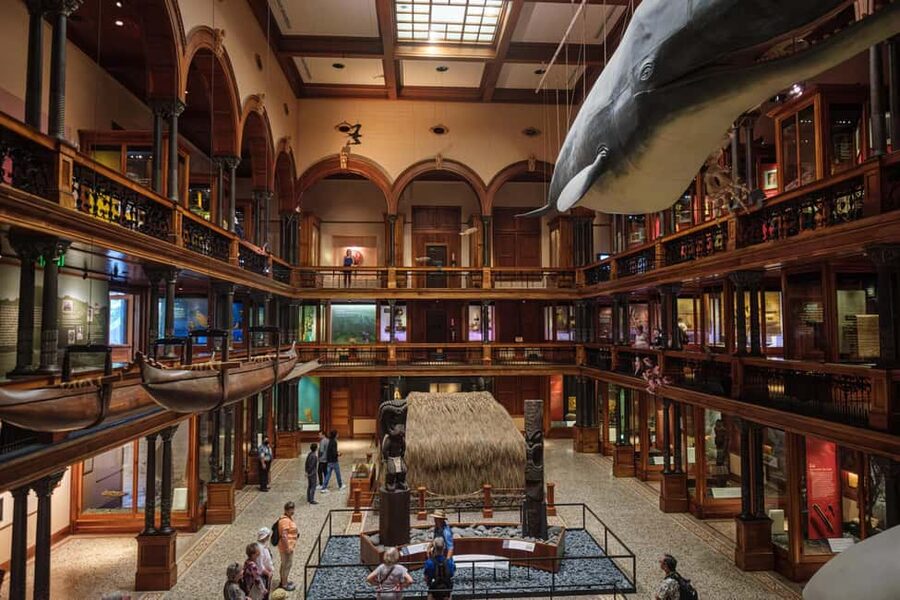
The museum describes its collections as containing 25 million stories. That phrase points to the sheer range of material here, but it also gives you a useful warning: you cannot absorb everything in one visit.
A one-day ticket lets you set your own pace. You might spend an hour in Hawaiian and Pacific Hall, move to the science exhibits, and then return to a gallery that deserves more attention. This is far better than trying to race through every room.
The documents and photographs add another layer to the museum’s work. They help preserve information about Hawaii and Pacific Island cultures beyond the objects themselves. Even if you are not normally drawn to archives, these materials show how a museum can protect memory as well as physical things.
The natural history collection is another major part of the institution. Native species from the islands and specimens from the oceans broaden the visit beyond human history. For families, this variety keeps the day from feeling like a long sequence of display cases. For adults, it shows how culture and nature are closely tied in an island environment.
Because the collection is so large, it helps to choose a few themes instead of trying to remember every label. You might focus on royal Hawaiian heritage, Pacific cultures, island species, or volcanoes. The museum gives you enough material for any of those approaches.
Lava, geology, and the Science and Adventure Center
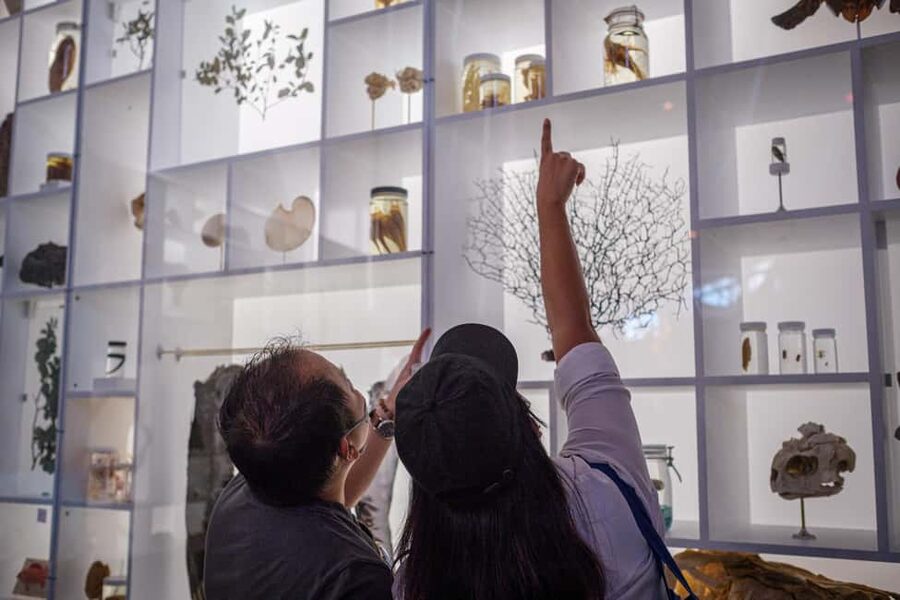
The Science and Adventure Center provides the most active part of the visit. Its lava pour demonstrations and geology shows turn Hawaii’s volcanic character into something you can see in action.
These demonstrations are especially useful for children, who may lose patience in a formal historical gallery. They also help adults connect the museum displays with the islands outside. Hawaii’s volcanoes are not just scenic backdrops. They shape land, create hazards, and explain why the islands look and feel so different from one another.
You should check the timing of demonstrations when you arrive. The supplied information confirms that lava pour demos and geology shows are part of the center, but it does not give a fixed daily schedule. Ask at the entrance so you can plan the rest of your visit around them.
The Science and Adventure Center works well after Hawaiian and Pacific Hall. First, you learn about people and culture. Then, you see the natural forces that created the setting in which those cultures developed.
The center can also make the museum a better choice on a rainy day. You are not relying on outdoor views or a beach schedule, and the mix of science and cultural exhibits gives you a full indoor plan.
Still, keep expectations sensible. This is a museum visit, not a full volcano tour or an outdoor lava expedition. The demonstrations explain geology inside a controlled setting. That is valuable, but it is a different experience from seeing volcanic terrain in the open air.
More Honolulu tickets to book ahead:
- Rock-A-Hula Ticket
★ 4.5 · 448 reviews - Diamond Head Hike Shuttle with Reservation Tickets Included
★ 5.0 · 223 reviews - Diamond Head Hiking Tour with Ticket and Reservation Inclusion
★ 4.5 · 103 reviews - Waikiki: Rock-A-Hula Show Ticket and Buffet Option
★ 4.5 · 51 reviews
The planetarium: useful extra, not part of the basic ticket
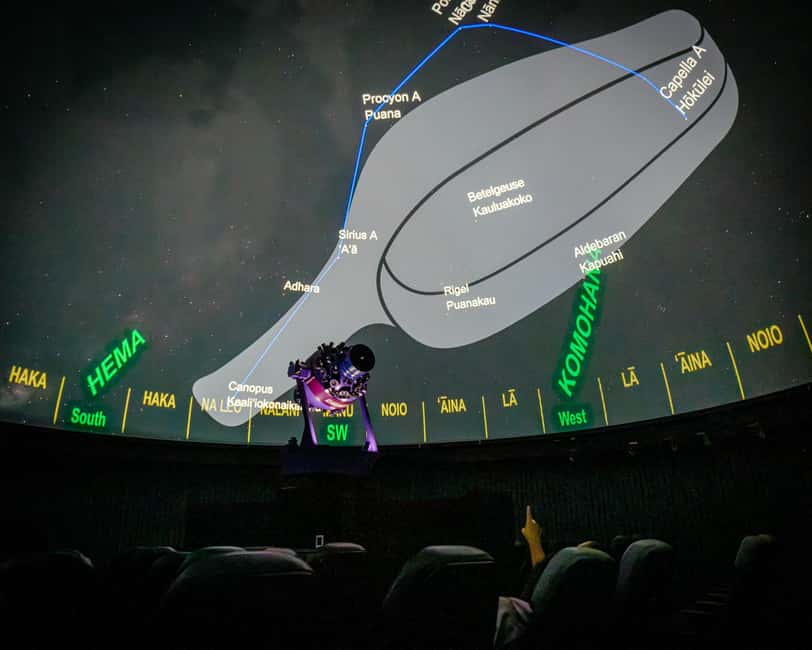
The planetarium lobby is included with general admission, but planetarium shows cost an additional $3 per person. That small charge can be worthwhile if a show fits your interests and schedule.
The available information does not provide a fixed show lineup or show times, so ask at the museum when you arrive. Do not assume a planetarium presentation is automatically included in the $38 admission price.
A planetarium show can add another way to understand the Pacific. The museum’s overall focus reaches from islands and oceans to the wider natural world, and the planetarium gives you an indoor change of pace after the main galleries.
If your time is limited, I would prioritize Hawaiian and Pacific Hall and the Science and Adventure Center first. Add the planetarium if you have several hours or want a quieter break from the larger exhibits.
How much time should you allow?
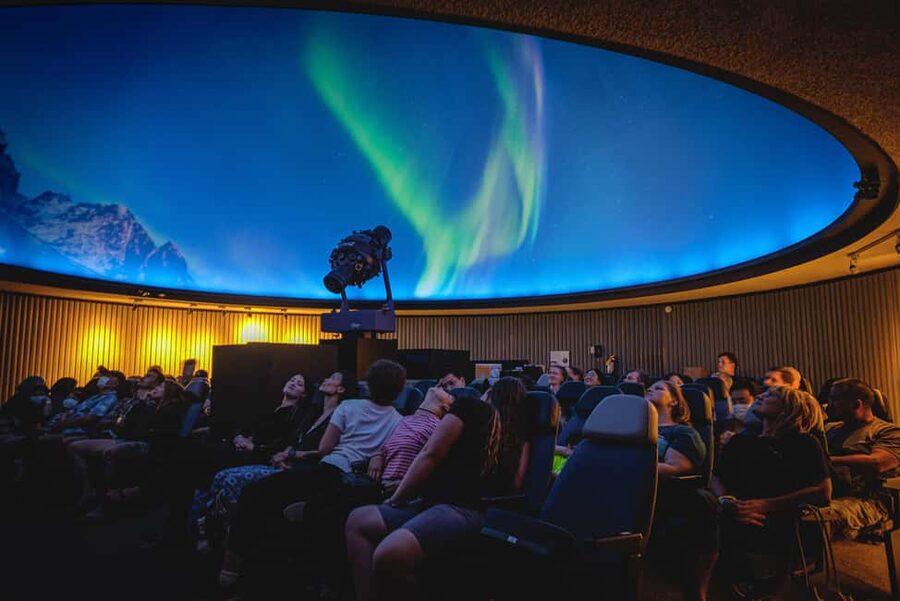
The museum is open from 9am to 5pm daily, seven days a week, with last admission at 4pm. Official closure days include Thanksgiving, Christmas Eve, Christmas Day, and New Year’s Day.
For a basic visit, allow at least three hours. That gives you time for the main cultural halls and the science center without treating every exhibit like a checkpoint.
A French-speaking visitor’s feedback described the museum as a place where it is easy to spend three to four hours, and that is a sensible target. You may need more time if you add a planetarium show, a public Hawaiian Hall tour, or a special exhibition.
Arriving in the morning has two advantages. You have the best chance of catching the 10am or 11am Hawaiian Hall tour, and you have more time to adjust your route if a geology demonstration or special presentation is scheduled later.
Comfortable shoes are important. The museum covers several areas, and there is a lot of walking. Food and drinks are not allowed inside the exhibit spaces, so plan a break outside the galleries rather than carrying a snack from room to room.
What the $38 admission is really worth
At $38 per person, this is not the cheapest indoor attraction in Honolulu. Its value depends on how much of the museum you use.
The basic admission covers Hawaiian and Pacific Hall, the Science and Adventure Center, and the planetarium lobby. It also includes public guided tours inside Hawaiian Hall at 10am and 11am when a docent is available. Since the ticket is valid for one day, you are paying for a broad visit rather than a short timed activity.
I think the price makes better sense for visitors who enjoy museums, families seeking a substantial rainy-day plan, and anyone who wants cultural context beyond Waikiki. It is less compelling if you only have one free hour or if your main goal is a quick look at one famous object.
Parking costs $15 per car for non-members. Museum members with a sticker park free. If you are arriving by car, include that fee in your calculation.
Planetarium shows cost $3 per person. From May 24, 2025 through January 25, 2026, admission to the special exhibition Expedition Dinosaurs: Into the Deep may be purchased for a discounted $5 per person through this activity. That offer is date-specific, so check that it applies to your visit.
One booking record also reported paying $38 at the museum and $43 online. Since prices and booking charges can change, check the final amount before paying rather than assuming every purchase route will cost the same.
Food, access, and practical rules
Bishop Museum is wheelchair accessible, which makes the large indoor site easier to plan for visitors with mobility needs. You should still expect a fair amount of movement between exhibit areas.
Photography is allowed, but flash photography is prohibited inside the museum. Food and drinks are not allowed inside the exhibits.
For a meal or drink, the Bishop Museum Cafe by Highway Inn is located to the right of the museum entrance doors. This gives you a convenient place to pause without breaking the exhibit rules.
The museum’s welcoming staff and friendly arrival experience are part of the appeal, especially for groups and older visitors. A senior group, the Lanakila Seniors, was specifically noted as having a pleasant visit, which suggests the museum can work well for mixed-age parties.
Plan around the weather and operating notices. A severe weather closure affected Sunday, February 8 and Monday, February 9, but conditions and closure notices can change. Check the museum’s website before setting out, especially during unusual weather.
Free cancellation is available up to 24 hours in advance, and you can reserve now and pay later. Those options help if your Honolulu plans depend on weather, but they do not remove the need to check opening information before you go.
Who will enjoy Bishop Museum most?
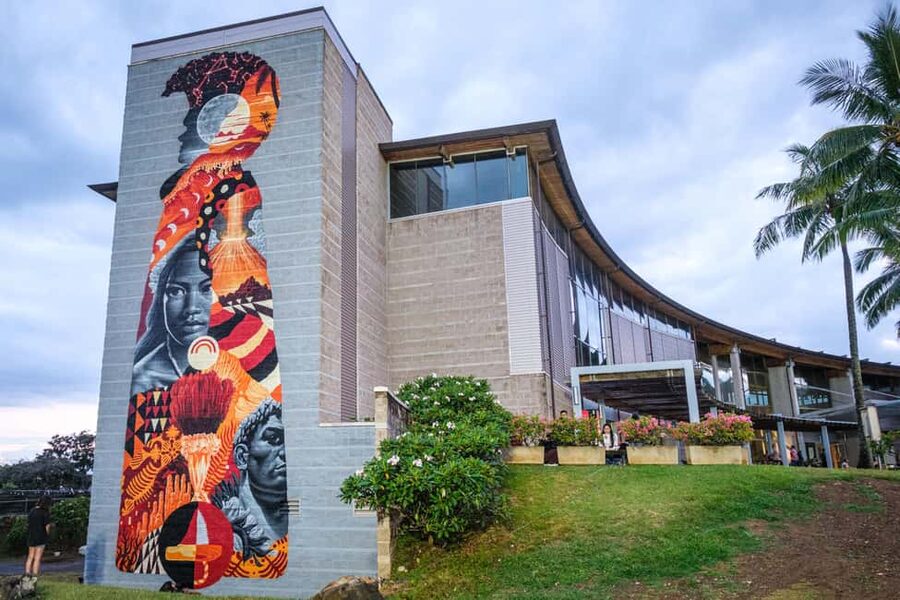
I would recommend this experience to families, museum fans, school-age children, first-time visitors who want more cultural background, and anyone looking for a substantial indoor activity.
It is also a good choice for older adults and multigenerational groups because the day can be paced slowly. You can choose cultural exhibits, science displays, a guided tour, or a planetarium show instead of forcing everyone through the same route.
The museum is less suited to someone who wants a short, purely visual attraction. Its strength is the amount of material it brings together, and that takes time.
If you are visiting Hawaii for several days, Bishop Museum gives you a useful foundation. Afterward, places, traditions, and natural features around the islands may make more sense because you have seen their cultural and scientific setting.
Should you book this Bishop Museum ticket?
Book it if you want to understand Hawaii beyond its beaches and scenery, and if you can spare three to four hours. The royal collections, Pacific focus, native species, and lava demonstrations give the visit enough variety to hold your attention.
Skip it if your schedule is extremely tight, or if you are unwilling to pay extra for parking, a planetarium show, or a special exhibition. For most visitors with a free half-day, though, the $38 admission offers a substantial indoor experience and a respectful introduction to Hawaii’s people, culture, and natural world.
FAQ
How much does admission to Bishop Museum cost?
The listed general admission price is $38 per person. Check the final price before booking, since one purchase record reported a higher online total.
How long is the Bishop Museum ticket valid?
The ticket is valid for one day from the first activation.
What exhibits are included with general admission?
Admission includes Hawaiian and Pacific Hall, the Science and Adventure Center, and the planetarium lobby.
Are guided tours included?
Public guided tours inside Hawaiian Hall are included at 10am and 11am, subject to docent availability.
Do planetarium shows cost extra?
Yes. Planetarium shows require an additional $3 per person. The planetarium lobby is included with general admission.
Is parking included?
No. Parking costs $15 per car for non-members. Museum members with a sticker park free.
What are Bishop Museum’s opening hours?
The museum is open from 9am to 5pm daily, seven days a week. Last admission is at 4pm. It closes on Thanksgiving, Christmas Eve, Christmas Day, and New Year’s Day.
Can I take photographs inside the museum?
Yes, photography is allowed, but flash photography is not permitted. Food and drinks are also not allowed inside the exhibit areas.
Just added around Honolulu
- Waikiki: Sunset Swim & Sailing Experience★ 4.5 · 3 reviews
- Diamond Head Hike [Starts at 7:00 a.m.]★ 3.5 · 3 reviews
- Oahu : Hanauma Bay Reservation+Equipment Rental★ 3.3 · 3 reviews
- Self Guided Hike Trail to Nature Walk & Waterfall★ 3.2 · 3 reviews
- Private Transfer waikiki to HNL airport * 1-12 passenger*★ 4.7 · 3 reviews
- Kevo’s Beach Bus★ 5.0 · 3 reviews
- Half-Day Waterfall Tour – Hike, Scenic, Food and Photo★ 5.0 · 3 reviews
- Private Transfer Honolulu Airport HNL to Waikiki by Sedan★ 4.5 · 3 reviews