
Reviewed · NORTH SHORE TOURS
North Shore Beginner Surf Lesson, Hawaii
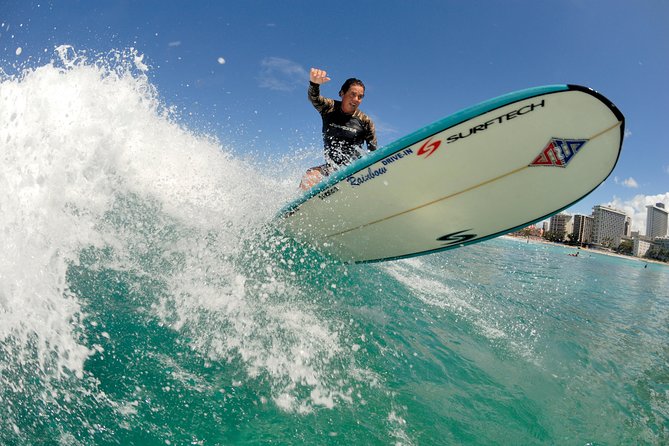
The best part of this North Shore lesson is that you learn surfing in the place that made the sport famous, while still starting on gentle, beginner-friendly water. I like the maximum group size of four, and I like that the lesson covers falling safely, wave timing, and ocean rules before you paddle out. The instruction is practical, not just a quick push onto a board.
I also like the choice of morning or afternoon times, plus the fact that the board and needed equipment are included. Instructors such as Henry, Travis, Eric, Tanner, and Mark are repeatedly praised for patient, clear coaching. The main catch is simple: you must drive yourself from Surf N Sea to the surf spot, and children under 13 need a private lesson instead of joining the group class.
In This Review
- Key points to know before booking
- Learning to surf on Oahu’s North Shore
- What happens during the two-hour lesson
- Why the small group matters
- Waialua Bay and the North Shore setting
- The instructors make the difference
- Equipment, clothing, and physical demands
- Is $104 a fair price?
- Who should book this lesson
- My recommendation
- FAQ
- Where does the surf lesson meet?
- Is transportation provided?
- Where does the lesson take place?
- How long is the lesson?
- What does the price include?
- Do I need to know how to swim?
- Can children join the group lesson?
- How many people are in the group?
- Are morning and afternoon times available?
- What happens if bad weather cancels the lesson?
Key points to know before booking
- Waialua Bay provides the lesson setting: You learn in a North Shore area used for beginner instruction rather than being thrown into powerful surf.
- The class is capped at four people: That gives your instructor time to help with paddling, wave choice, and standing technique.
- You must be able to swim: This is an ocean lesson, not a shallow-water introduction.
- The two-hour format includes land instruction: You practice how to fall, stand, catch waves, and follow surf etiquette before entering the water.
- Transportation is not included: Meet at Surf N Sea in Haleiwa, then drive to the surf location yourself.
- The price is $104 per person: The fee includes the surfboard and equipment, making it fair for a first lesson if you value small-group coaching.
Learning to surf on Oahu’s North Shore
Surfing here is more than a standard beach activity. Oahu’s North Shore is tied closely to Hawaiian surf culture, and learning in this part of the island gives the lesson a stronger sense of place than a generic resort beach class.
That said, the goal is not to turn you into a serious surfer in two hours. The useful aim is smaller: you should finish with a feel for the board, a basic understanding of wave timing, and enough confidence to know what to work on next.
Many beginners manage to stand and ride at least a few waves. Several people with no previous experience got up more than once, sometimes on the first or second wave. Conditions change, though. One person enjoyed the lesson even when the surf was less than ideal, while another noted that surfing is harder work than it looks. That is a fair warning. You will paddle, balance, fall, and repeat the same movement many times.
The lesson is offered in English, and the teaching style appears direct and encouraging. Henry is especially often singled out for explaining the basics, helping with wave timing, and keeping the session safe. Other instructors, including Travis, Eric, Tanner, and Mark, are also described as supportive and clear.
More things to do on the North Shore:
- Oahu Grand Circle Island and Haleiwa Tour: 9-Hr Deluxe Experience
★ 5.0 · 17,387 reviews - Tour of North Shore & Waimea Waterfall
★ 5.0 · 3,682 reviews - Oahu’s North Shore: 8-Line Zipline Adventure
★ 5.0 · 3,616 reviews
What happens during the two-hour lesson
Your session begins at Surf N Sea, located at 62-595 Kamehameha Highway in Haleiwa. The exact water location is part of the North Shore route, with Waialua Bay named as a stop. You then drive yourself to the surf spot, so allow enough time to find the shop and follow the staff’s directions.
The first part takes place on land. This is an important part of the class, even if you are eager to get wet. You learn how to lie on the board, move quickly from lying to standing, and choose the right type of board for a beginner.
You also cover how to fall safely. That matters because falling is not an occasional mistake in surfing. It is part of nearly every first lesson. Knowing how to avoid landing badly or getting tangled with the board helps you stay calm when a wave knocks you off balance.
Ocean etiquette is another useful part of the briefing. You learn basic rules about sharing waves and moving safely in the water. This is the sort of instruction that remains useful after the lesson, especially if you later rent a board and practice without an instructor.
Once you enter the water, your instructor helps you paddle out and identifies waves that suit your ability. Beginners do not need to judge every wave alone at first. The instructor can point out which waves to try, help you time your paddle, and offer corrections as you work on standing.
The most common breakthrough is not a graceful, long ride. It is simply getting both feet under you and staying upright for a few seconds. If you can do that, you have started to understand the basic motion. Some people ride waves all the way in, while others spend more time practicing the stand-up movement or paddling into position.
Why the small group matters
A class of up to four people is a strong feature for beginners. Surfing requires hands-on timing advice. You need someone to tell you when to paddle, which wave to take, and why you missed the last one. A very large class can turn those moments into guesswork.
With three or four people, you still share the instructor’s attention, but you should receive more useful feedback than in a crowded beach class. One family enjoyed the small group of three and the calm spot chosen for learning. Another family pointed out the one drawback of group instruction: time in the water must be shared.
That tradeoff is worth understanding before you book. You are not guaranteed constant one-on-one coaching for two hours. You will wait your turn for waves, listen while others try, and spend time paddling back into position. In a small class, that waiting can also be helpful. You can watch the technique, see common mistakes, and learn from the same advice before your next attempt.
Children under 13 cannot join the group lesson and must book a private lesson. Teenagers 13 and older can take the group class. This makes the activity a good fit for families with older children, but parents of younger children should plan on a different booking.
Waialua Bay and the North Shore setting
Waialua Bay is the named surf stop for the lesson. Its importance here is practical: it is presented as a place where beginners can learn rather than a setting reserved for advanced surfers.
The North Shore’s reputation can make the lesson sound more intimidating than it is. Not every day brings enormous waves, and beginners need suitable conditions. The operator can cancel when weather makes the session unsafe, and conditions may also affect how many waves you catch or how easy the lesson feels.
The setting adds value even when the surf is modest. You are not only practicing on a board. You are learning to read the water in an area associated with serious surfing, while an instructor explains how to do it responsibly.
Haleiwa is both the meeting point and the end point for the activity. You should treat the lesson as one part of a North Shore day rather than as a package that picks you up from Waikiki or another Oahu hotel. Since no private transportation is provided, the route and drive are your responsibility.
The details about Haleiwa and Waialua Bay also explain why you should not arrive at the shop expecting to walk straight onto the beach. Check in at Surf N Sea, receive directions, and drive to the water as instructed.
More surf lessons on Oahu:
- Open Group Surfing Lesson in Waikiki, Hawaii
★ 4.5 · 582 reviews - Oahu: Beginner-Friendly Waikiki Beach Surfing Lesson
★ 4.9 · 425 reviews - Surfing Lessons On Waikiki Beach
★ 4.5 · 317 reviews - Waikiki Private Group Surf Lesson
★ 5.0 · 298 reviews
The instructors make the difference
The strongest part of the teaching is the repeated focus on encouragement and safety. Henry is praised for being patient, friendly, and straightforward. He helps people catch waves, explains how waves break, and gives tips while the session continues.
Travis is noted for teaching etiquette and technique before helping the group find success in the water. Tanner is described as making the lesson personal by helping people choose waves. Eric is praised for detailed explanations and encouragement, while Mark helped a beginner feel safe and catch several waves.
Those details matter because a first surf lesson can quickly become frustrating. You may paddle for a wave that passes underneath you, stand too early, or lose balance just as the board begins to move. A calm instructor keeps those errors from becoming the whole story.
The staff at the shop also help with check-in and equipment. One person needed help after getting lost and arriving 20 minutes late, and the staff directed the group to the correct location. Do not rely on that as a reason to cut it close, but it suggests that asking for help quickly is better than trying to solve a location problem alone.
One water helper, Terrance, was also praised for assisting tired people who were paddling in and out. That points to an important reality: surfing takes effort. You may need short pauses, especially if you are not used to swimming and paddling in the ocean.
Equipment, clothing, and physical demands
The surfboard and required equipment are included. Beginner boards are generally selected for stability, and the lesson includes instruction on which board type is appropriate for a first attempt.
One useful clothing tip is to wear a rash guard or wet shirt. A foam surfboard can rub against your skin during repeated practice. The supplied information does not promise a particular wetsuit or clothing item, so you should not assume that every personal comfort item is included.
You need a moderate level of physical fitness. The class involves paddling, getting on and off the board, balancing, and swimming in the ocean. It is not recommended for people with back or knee problems, recent surgery, or similar physical limits.
The swim requirement is firm. You do not need to be an expert swimmer, but you must be able to swim before booking. This is not an activity where you can safely depend on the instructor for all water support.
The lesson can work well for a fit adult in their 50s or older, provided swimming and mobility are not concerns. One person in that age range described the lesson as a long-awaited first try and found the instruction encouraging. The key question is not your age. It is whether you can manage the physical work safely.
Is $104 a fair price?
At $104 per person, this is not the cheapest way to stand on a surfboard. The price makes more sense when you consider the two-hour lesson, the board, the equipment, and the small group limit.
If you rented a board and tried to teach yourself, you would save on instruction but lose the help that makes a first session productive. A surf instructor can choose a suitable wave, explain safety rules, and correct your standing position before bad habits settle in.
The small group is the main value point. If all four spaces are filled, you will not receive private coaching, but the ratio is still much better than a large introductory class. If your main goal is to catch a few waves and decide if surfing suits you, the price is reasonable.
A private lesson would be the better choice for a child under 13 or for someone who wants uninterrupted coaching. Families should also remember that the fee is per person. A group of four pays four separate prices, though each person receives equipment and instruction.
The free cancellation policy gives you some protection. You can cancel at least 24 hours before the start time for a full refund. Weather cancellations offer a different date or a full refund, but changes or cancellations inside the 24-hour window are not accepted.
Who should book this lesson
I would choose this class for a first-time surfer who can swim, wants an active North Shore morning or afternoon, and prefers instruction over simply renting a board.
It suits:
- Adults trying surfing for the first time
- Couples who want to learn together
- Families with children 13 and older
- Teenagers who are comfortable in the ocean
- Solo visitors who want a small class and direct coaching
- People who want basic skills for future independent practice
It is less suitable for anyone with back or knee problems, recent surgery, limited swimming ability, or a dislike of physical exertion. It is also not ideal if you need hotel pickup or want a fully planned excursion with transportation.
The lesson received a 4.7 out of 5 rating, with 93 percent of people recommending it. Weather can still cancel a session, and a good rating cannot guarantee perfect waves on your chosen day. Surfing depends on conditions, your fitness, and how quickly the standing movement clicks.
My recommendation
Book this North Shore lesson if you want a real first introduction rather than a quick photo opportunity. The strongest reasons are the four-person maximum, the safety briefing, and instructors who focus on helping you catch waves instead of leaving you to figure out the board alone.
Before you pay, confirm that everyone can swim, that all children are at least 13 for the group class, and that you have your own way to reach the surf spot after checking in at Haleiwa. Wear a rash guard or wet shirt, leave room for paddling and falls, and expect surfing to be tiring.
If you accept those limits, $104 is a sensible price for a well-supported first attempt in one of Oahu’s best-known surf areas. You may leave standing on several waves, or you may simply learn why surfing takes practice. Either result gives you a useful start.
FAQ
Where does the surf lesson meet?
The meeting point is Surf N Sea at 62-595 Kamehameha Highway, Haleiwa, Hawaii 96712.
Is transportation provided?
No. You must drive yourself from Surf N Sea to the surf spot location.
Where does the lesson take place?
Waialua Bay is named as a stop for the activity. The staff direct you to the surf spot after you meet at Surf N Sea.
How long is the lesson?
The lesson lasts approximately two hours.
What does the price include?
The $104 per-person price includes a surfboard and the equipment needed for the lesson.
Do I need to know how to swim?
Yes. You must be able to swim to take this lesson.
Can children join the group lesson?
Children 13 and older can join a group lesson. Children under 13 must take a private lesson.
How many people are in the group?
The activity has a maximum of four people.
Are morning and afternoon times available?
Yes. You can choose a morning or afternoon lesson.
What happens if bad weather cancels the lesson?
You will be offered another date or a full refund if the activity is canceled because of poor weather.
Just added around Oahu
- Koko Head E-Bike Ride and Hike Tour★ 5.0 · 3 reviews
- Waikiki: Sunset Swim & Sailing Experience★ 4.5 · 3 reviews
- Diamond Head Hike [Starts at 7:00 a.m.]★ 3.5 · 3 reviews
- Honolulu’s Waikiki Self-Guided Walking Audio Tour★ 4.5 · 3 reviews
- Oahu : Hanauma Bay Reservation+Equipment Rental★ 3.3 · 3 reviews
- Oahu: Half-Day Sunrise Semi-private Tour from Waikiki★ 3.0 · 3 reviews
- Private Whale Watching Safari from North Shore Oahu★ 5.0 · 3 reviews
- Walk The Deck of The USS Arizona Virtual Reality Experience★ 5.0 · 3 reviews
North Shore Tours, compared.
Oahu Grand Circle Island and Haleiwa Tour: 9-Hr Deluxe Experience
Read our review →
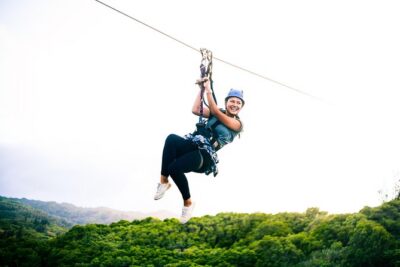
Oahu’s North Shore: 8-Line Zipline Adventure
Read our review →
Oahu North Shore Experience: Activities, Waterfall & Free Time
Read our review →
Full Day Oahu Circle Island -Turtle Beach Snorkel at North Shore
Read our review →
Roundtrip Shuttle From Waikiki to Dole Plantation & Haleiwa
Read our review →Browse the lists this tour appears in