
Reviewed · OAHU SURF LESSONS
Surfing Lessons On Waikiki Beach
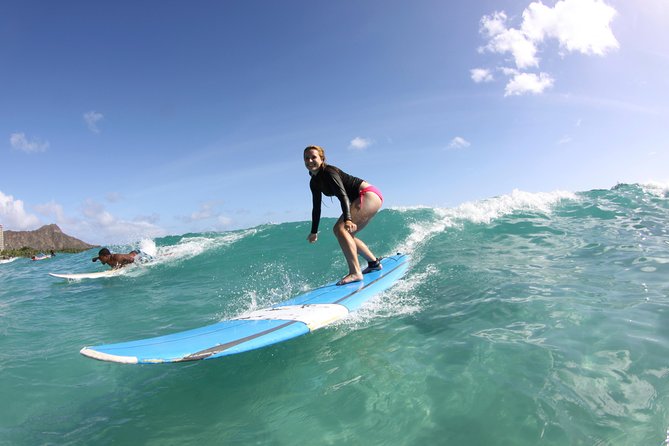
Waikiki is one of the easiest places to try surfing, thanks to its sandy bottom, shallow water, and beginner-friendly waves. This 90-minute lesson gives you the board, leash, locker, and instructor, so you can show up without hauling equipment across Honolulu. I especially like the 20-minute beach briefing and the small-group format, which can make a first attempt feel far less intimidating.
I also like that the lesson teaches more than the quick mechanics of standing up. You get basic water etiquette, paddling, board handling, and a little insight into Hawaii’s surfing culture. The main caution is consistency: some sessions have produced several successful rides, while others have felt crowded, hard to hear, and poor value for the price.
In This Review
- Key points to know before you paddle out
- Starting at Big Wave Dave Surf & Coffee
- Why Waikiki works for a first surfing lesson
- The 20-minute beach lesson
- About an hour in the water
- The instructors make or break the lesson
- What the $129 price really buys
- Who will enjoy this most
- Practical ways to improve your session
- Should you book the Waikiki lesson?
- FAQ
- How long does the surfing lesson last?
- Where does the lesson begin and end?
- Is surfing equipment included?
- Do I need to bring a rash guard or lock?
- Do I need to know how to swim?
- Can I cancel for a full refund?
Key points to know before you paddle out

- Waikiki’s sandy, shallow bottom gives beginners a forgiving place to fall and regain their footing.
- Equipment and a locker are included, but a rash guard costs $5 to rent and a lock costs $5 unless you bring your own.
- The advertised maximum is five people, though group size and staffing should be confirmed at booking.
- The lesson begins with about 20 minutes on land, covering safety, paddling, turning, and standing technique.
- Instructor quality matters greatly, with particularly strong praise for coaches including Josh, Derek, Alex, Tanner, and Mouse.
- Morning and afternoon conditions can differ, with one useful tip suggesting higher tides in the morning and smaller waves later in the day.
Starting at Big Wave Dave Surf & Coffee
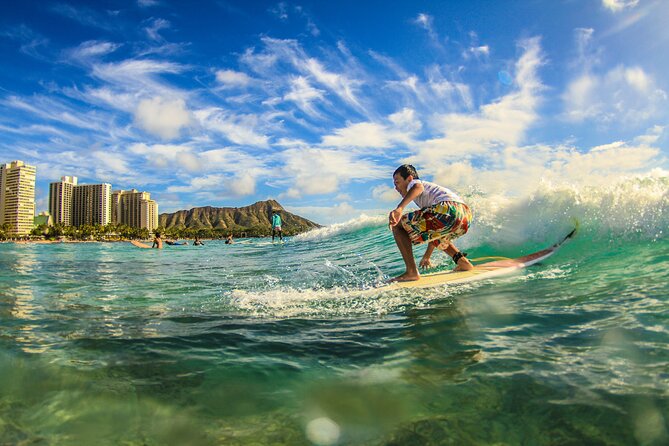
Your lesson begins at Big Wave Dave Surf & Coffee, at 226 Lewers Street, inside the Waikiki Beach Walk area. The shop is convenient if you are staying nearby, and it is close to public transportation. Plan to arrive about 20 minutes early. That gives you time to check in, sort out your belongings, and get ready without turning the first few minutes into a scramble.
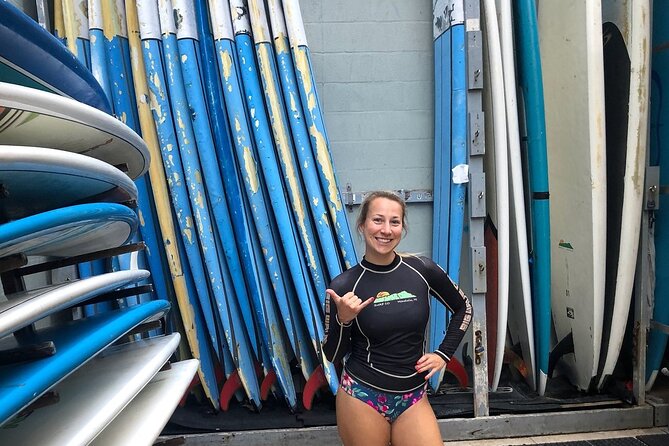
A locker is available for your things, which is useful in Waikiki, where carrying a phone, wallet, or hotel key into the water is a nuisance. The locker is part of the experience, but the lock may cost an additional $5. Bring your own lock if you have one. A rash guard is also not included. You can rent one for $5 or bring your own swim shirt.
The meeting point is not directly on the sand. You walk from the shop to the water, and that short transfer is worth knowing if you are traveling with children, carrying a towel, or trying to fit the lesson between other plans. The activity finishes back at the same meeting point.
The shop also serves coffee and food, making it a practical place to regroup afterward. Do not count on photography being included. Photos are available only with advance arrangements, so ask before the lesson if having pictures of your first ride matters to you.
More surf lessons on Oahu:
- Open Group Surfing Lesson in Waikiki, Hawaii
★ 4.5 · 582 reviews - Oahu: Beginner-Friendly Waikiki Beach Surfing Lesson
★ 4.9 · 425 reviews - Waikiki Private Group Surf Lesson
★ 5.0 · 298 reviews
Why Waikiki works for a first surfing lesson
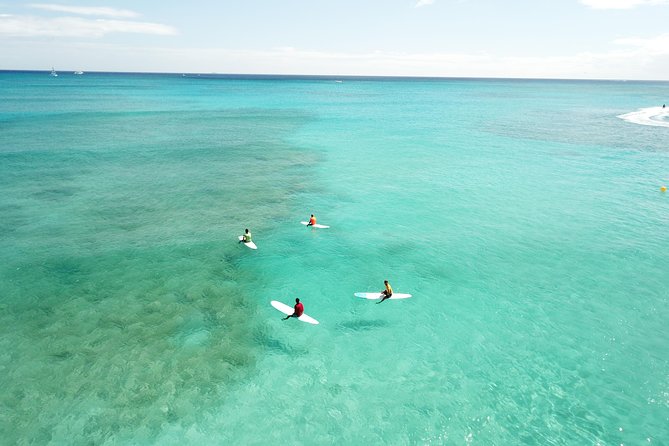
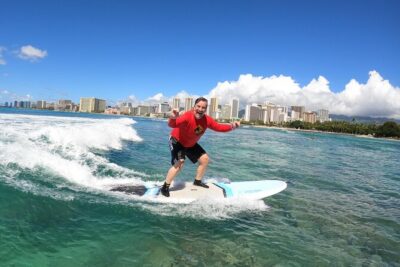
Waikiki’s south-facing shore is well suited to beginners. The bottom is soft and sandy in the lesson area, and the water is shallow enough that you can often stand after falling. That changes the whole mood of a first lesson. Instead of treating every fall as an emergency, you can reset, climb back on, and try again.
The beach is not empty. Surf schools, swimmers, catamarans, and other water users share the area. One part of the shore used for lessons can be small and close to a catamaran launch, so boat traffic may add stress while you are paddling out. A good instructor must manage the traffic and give each person a safe path.
Conditions also vary. A morning lesson may have a higher tide, while an afternoon session may offer smaller waves. Smaller waves can be kinder to a nervous beginner, though wave quality is never guaranteed. The ocean decides how many good rides you get, and that is one reason to keep your expectations realistic.
You may stand up several times. You may also spend much of the session paddling, falling, and trying to position your board. At $129 per person, this is not a cheap way to rent a board. You are paying for instruction, safety support, equipment, and the chance to get started with less guesswork.
The 20-minute beach lesson
The first section takes place on land and lasts about 20 minutes. This is not filler. It is where you learn the movements that make the water portion less confusing.
Your instructor covers basic water safety and surfing etiquette first. You learn how to handle the board, where to place your hands, how to paddle, how to maneuver, and how to respond when a wave approaches. The key motion is getting from lying on the board to standing in one quick, controlled movement.
The beach is also the best place to ask questions. If you are worried about falling, turning, or getting hit by your own board, say so before entering the water. You must be able to swim, and the activity calls for a moderate level of physical fitness. Surfing is short in duration, but it uses your arms, shoulders, stomach, legs, and balance. The effort can surprise people who expect a relaxed beach activity.
The quality of this explanation matters. Some instructors have been praised for clear demonstrations, patience, and positive energy. Josh has helped first-time surfers stand repeatedly, while Derek has been credited with getting beginners onto countless waves. Other named instructors, including Alex, Tanner, Mouse, and Cody, have also received strong praise for encouragement and attention.
That said, one poor session described instructions as rushed and difficult to hear. The lesson depends on clear communication, especially once waves and wind drown out a normal speaking voice. If you cannot hear your instructor, paddle closer when safe and ask for the direction again. Do not guess around boats, walls, or other surfers.
About an hour in the water
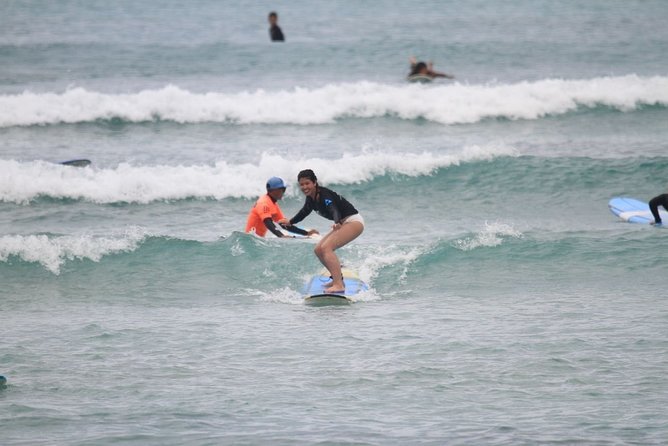
After the beach briefing, you carry the included surfboard and leash to the water. The instructor helps you put the land lesson to work, with the main goal of catching a wave and standing on the board.
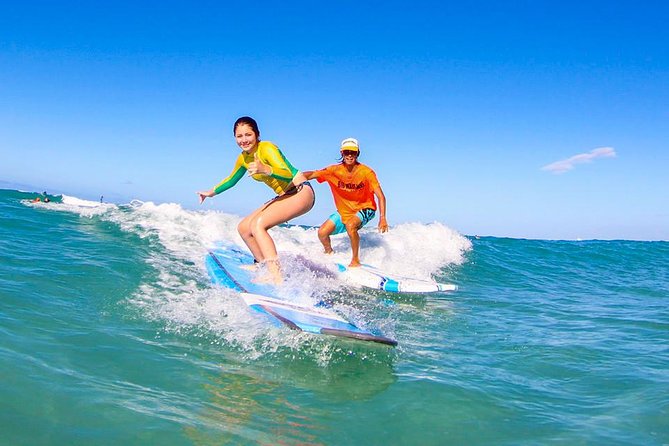
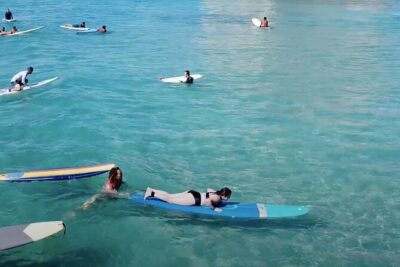
The usual rhythm is simple: paddle into position, wait for a suitable wave, paddle when directed, then push up and find your balance. The coach may help time the wave or give you a push. That assistance is especially valuable for a first lesson because beginners often paddle too late, too softly, or in the wrong direction.
The best sessions appear to give each person several chances, with the instructor reading the waves and helping people take turns. One especially encouraging account described equal attention in a busy area, careful lines for each ride, and water only a few feet deep in a section with little reef. Those details are exactly what you want from a beginner class.
The less successful sessions have allowed only three or four waves per person, with some rides described as poor quality. A group size larger than expected can make this worse. The advertised limit is five people, but some accounts describe groups of six, seven, or even nine. Staffing can offset a larger group, but it is fair to ask about the exact group size before you pay.
You also need to keep an eye on the shoreline and your position in the water. A troubling account described beginners being separated from their instructor in difficult conditions and one participant heading toward a concrete wall without enough energy to turn. I would treat that as a serious warning about supervision, not as a normal part of learning to surf. Waikiki is beginner-friendly, but it is still the ocean. Stay close enough to hear directions and tell the instructor immediately if you feel frightened, exhausted, or out of position.
More hands-on sessions around Oahu:
- Surf Lessons on the North Shore of Oahu
★ 5.0 · 267 reviews - Family, Private & Group Surfing Lessons, Waikiki Courtesy Shuttle
★ 5.0 · 216 reviews - Waikiki 2 Tank World Class Wreck SCUBA Diving – Certified Only
★ 4.5 · 205 reviews - Oahu: Waikiki 2-Hour Beginner Group Surf Lesson
★ 4.9 · 191 reviews
The instructors make or break the lesson
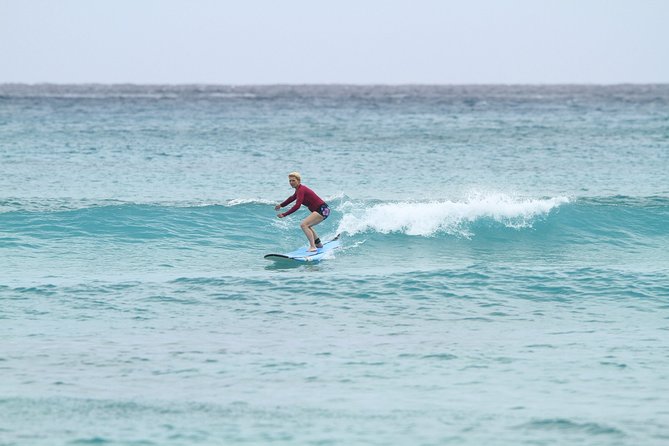
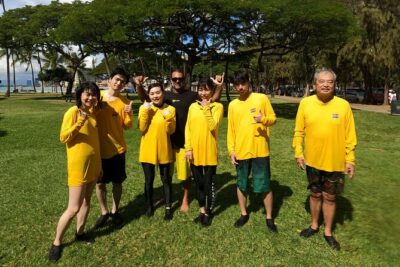
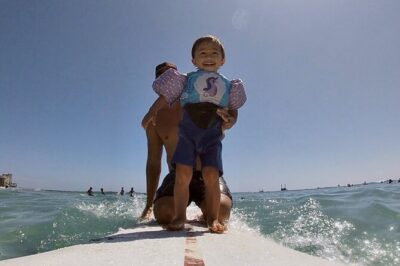
The strongest pattern in this experience is the difference a good coach makes. Patient instructors have helped children, teenagers, older adults, and first-time surfers gain confidence quickly. One older participant received a lesson adjusted to their ability, while families with children aged 10, 15, 16, 17, and 19 described the lesson as a vacation highlight.
That kind of coaching is not just about pushing you into waves. A helpful instructor watches your timing, explains why you missed a wave, and keeps the tone calm after a fall. The best coaches also share useful information about the ocean and marine life, adding a bit of Hawaii beyond the mechanics of surfing.
Names that have drawn particularly positive attention include Josh, Derek, Tanner, Alex, Mouse, and Cody. You cannot always choose your instructor, and the company may use contracted instructors. That makes it wise to confirm who will run your lesson and how many instructors will be in the water.
The service has not been perfect every time. One session involved a coach who was hard to hear and seemed inattentive to struggling beginners. Another person was moved to a different company and received a shorter, non-private lesson. Those issues directly affect value, since the price assumes a properly supervised, personal introduction to surfing.
What the $129 price really buys
At $129 per person, the lesson sits in the premium range for a 90-minute beginner activity. The price includes the surfboard, leash, professional instruction, and locker use. You do not need to arrange a separate board rental, and you avoid learning basic technique from a random beach rental employee.
For a first-time surfer, that convenience has real value. A lesson can help you avoid unsafe habits, understand where to position yourself, and catch a wave sooner than you might alone. Several people have finished feeling ready to practice with a partner or return for more advanced instruction.
Still, the price is harder to justify if you receive only a few weak waves or end up in a group larger than expected. The optional $5 rash guard and $5 lock are small charges, but they add to the total. Photography also costs extra and requires advance reservations.
I would book this at the right point in your trip rather than on your only free morning. If weather cancels the lesson, you can request another date or a full refund. You may cancel for a full refund up to 24 hours before the start time, but cancellations or changes inside that window are not refunded or accepted.
Who will enjoy this most
This is a good fit if you want a structured first taste of surfing and can swim. Families with older children and teenagers should find the format practical, provided everyone has moderate physical fitness and feels comfortable in open water.
It also suits solo visitors. You do not need to assemble your own group, and the small-class format can make it easier to meet people without paying for a private lesson. Older adults can also enjoy it if they are ready for repeated paddling and getting on and off a board.
I would be more cautious if you are a weak swimmer, easily overwhelmed by noisy water instruction, or hoping for a quiet beach. Waikiki is heavily used, and the lesson area can be crowded. If you want guaranteed personal coaching, ask about a private or semi-private option instead of assuming the advertised group size will always be the experience you receive.
Practical ways to improve your session
Arrive early, wear a swimsuit, and bring a rash guard if you have one. Use the locker for valuables, but bring your own lock when possible. Keep the rest of your beach gear simple.
If you are choosing between times, consider what kind of first lesson you want. Morning may bring a higher tide, while afternoon can offer smaller waves. Neither is automatically better, but a nervous beginner may prefer gentler conditions, while someone eager for more wave energy may prefer the morning.
Before entering the water, make sure you can hear the instructor’s voice. Ask where the group will surf, how to return to shore, and what to do if you become tired. If you are surfing with a spouse or friend, agree to tell the instructor if one of you wants to stop. No one should paddle back alone without the coach knowing.
Finally, do not measure success only by standing. Learning to fall safely, paddle correctly, turn the board, and understand ocean spacing are useful wins. If you stand once and finish wanting another lesson, the class has done its job.
Should you book the Waikiki lesson?
I would book this for a first surfing attempt if the small-group limit is confirmed, the instructor assignment is clear, and the weather looks favorable. The setting is forgiving, the equipment is supplied, and strong coaching can get you standing on your first day. Josh, Derek, Tanner, Alex, Mouse, and Cody are names worth requesting if they are available.
I would not book blindly at $129. Ask how many people are in the group, how many instructors will be present, where the class will enter the water, and what happens if conditions become difficult. If the answer is vague, choose another surf school.
For the right session, Waikiki gives you an exciting and approachable introduction to a central part of Hawaiian beach culture. Just remember that a good result depends on both the ocean and the person supervising you.
FAQ
How long does the surfing lesson last?
The experience lasts approximately 1 hour and 30 minutes. About 20 minutes takes place on land, followed by roughly an hour practicing in the water.
Where does the lesson begin and end?
You meet at Big Wave Dave Surf & Coffee, 226 Lewers Street #154 in Honolulu. The activity ends back at the same meeting point.
Is surfing equipment included?
Yes. A surfboard and leash are included, along with professional instruction and use of a locker for your belongings.
Do I need to bring a rash guard or lock?
Neither is required if you choose to rent them. A rash guard rental costs $5, and an optional lock rental costs $5. You may bring your own lock and rash guard.
Do I need to know how to swim?
Yes. You must be able to swim, and the activity recommends a moderate level of physical fitness.
Can I cancel for a full refund?
Yes, if you cancel at least 24 hours before the experience start time. Cancellations and changes made less than 24 hours in advance are not refunded. If poor weather causes the operator to cancel, you can receive a different date or a full refund.
Just added around Oahu
- Koko Head E-Bike Ride and Hike Tour★ 5.0 · 3 reviews
- Waikiki: Sunset Swim & Sailing Experience★ 4.5 · 3 reviews
- Diamond Head Hike [Starts at 7:00 a.m.]★ 3.5 · 3 reviews
- Honolulu’s Waikiki Self-Guided Walking Audio Tour★ 4.5 · 3 reviews
- Oahu : Hanauma Bay Reservation+Equipment Rental★ 3.3 · 3 reviews
- Oahu: Half-Day Sunrise Semi-private Tour from Waikiki★ 3.0 · 3 reviews
- Private Whale Watching Safari from North Shore Oahu★ 5.0 · 3 reviews
- Self Guided Hike Trail to Nature Walk & Waterfall★ 3.2 · 3 reviews
Oahu Surf Lessons, compared.

Beginner-Friendly Waikiki Beach Surfing Lesson
Read our review →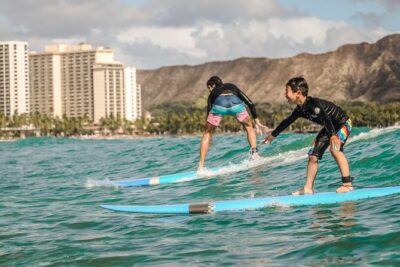

Family, Private & Group Surfing Lessons, Waikiki Courtesy Shuttle
Read our review →
Surf Lesson Without the Crowds Including GoPRO Videos
Read our review →Browse the lists this tour appears in