Reviewed · POLYNESIAN CULTURAL CENTER TOURS
Oahu: Polynesian Cultural Center Island Villages Ticket
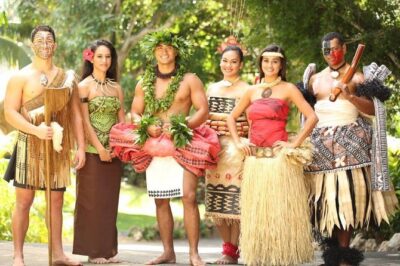
Oahu’s Polynesian Cultural Center gives you six island worlds in one large setting, from Hawaiian games and food to a powerful Haka performance in Aotearoa. The most appealing part is the hands-on approach: you can paddle, throw, weave, fish, dance, and watch traditional skills rather than simply read about them.
I like the range of activities, especially the coconut opening and fire-starting demonstrations in Samoa. I also like the flexible five-hour format, which lets you choose presentations instead of following one fixed group. The main drawback is price: at $103 per person, the ticket covers only the island villages, not transportation, meals, luaus, or evening shows.
In This Review
- Key points to know before you go
- Six Polynesian cultures in one afternoon
- Hawaii: food, hula, games, and fishing
- Aotearoa: the Haka and Maori traditions
- Fiji: music, dance, coconut oil, and village life
- Samoa: coconuts, fire, weaving, and practical skills
- Tahiti: fishing, romance, and spear throwing
- Tonga: music, games, and the outrigger canoe
- How to plan the five-hour visit
- What the $103 ticket includes
- Who will enjoy this experience most
- Making the most of your time
- Should you book the Island Villages ticket?
- FAQ
- How long is the Polynesian Cultural Center Island Villages experience?
- What does the ticket include?
- Does the ticket include a luau?
- Are the evening shows included?
- Is transportation included?
- Are food and drinks included?
- What presentation times are available?
- Is the activity wheelchair accessible?
- What should I bring, and what is not allowed?
Key points to know before you go
- Six island villages: Visit Hawaii, Aotearoa, Fiji, Tahiti, Tonga, and Samoa in one outing.
- Hands-on traditions: Try fishing, spear throwing, canoe paddling, poi games, weaving, and fire starting.
- Scheduled presentations: Plan around approximate show times, since each village follows its own timetable.
- Food is limited: You can taste traditional Hawaiian food, but food and drinks are not included as a general ticket benefit.
- Five hours is useful but finite: Arrive ready to choose priorities rather than trying to catch every presentation.
- Separate evening program: Luaus and shows require another ticket, so check your plans before booking.
Six Polynesian cultures in one afternoon
The Polynesian Cultural Center is designed as a walk-through experience with six separate island villages. Each one focuses on particular customs, performances, games, buildings, and daily skills connected with that culture.
This format works well if you want a broad introduction to Polynesia during one Oahu visit. You will not get the same depth as a trip to each island, of course, but you can compare the music, dances, tools, food traditions, and stories in a single five-hour visit.
I recommend treating the center as a schedule of short cultural presentations, not as one continuous tour. The times are approximate, and each village offers a different mix of demonstrations. Keep the afternoon flexible, but note the presentations you most want to see before you start walking.
The ticket is valid for five hours from the time you first activate it. That sounds generous, and it is, but the clock matters if you want to see several shows and still have time for the hands-on activities.
More Polynesian Cultural Center tickets:
- Polynesian Cultural Center: Islands of Polynesia Admission Ticket
★ 4.5 · 233 reviews - Polynesian Cultural Center: Gateway Buffet Package
★ 4.5 · 105 reviews - Best of Oahu: Pearl Harbor, Arizona Memorial and the Polynesian Cultural Center
★ 4.5 · 66 reviews
Hawaii: food, hula, games, and fishing
The Hawaii village is a natural starting point because it introduces several traditions familiar from the islands while giving them practical context. You can learn ancient dances and games with the village ambassadors, including activities connected with hula.
You also get a taste of traditional Hawaiian food and the chance to try fishing. These details help make the visit feel less like a stage show and more like a look at everyday skills and community life.
The Hawaii presentations are scheduled at approximately 1, 2, 3, 4, and 5 PM. If you arrive around one of those times, you can begin with a presentation, then use the gaps to explore another village.
I like this village for families and first-time visitors because the activities are easy to understand and take part in. The possible weakness is that you may want more time here once you start playing games or watching dance demonstrations, which can make it harder to reach every other village.
Aotearoa: the Haka and Maori traditions

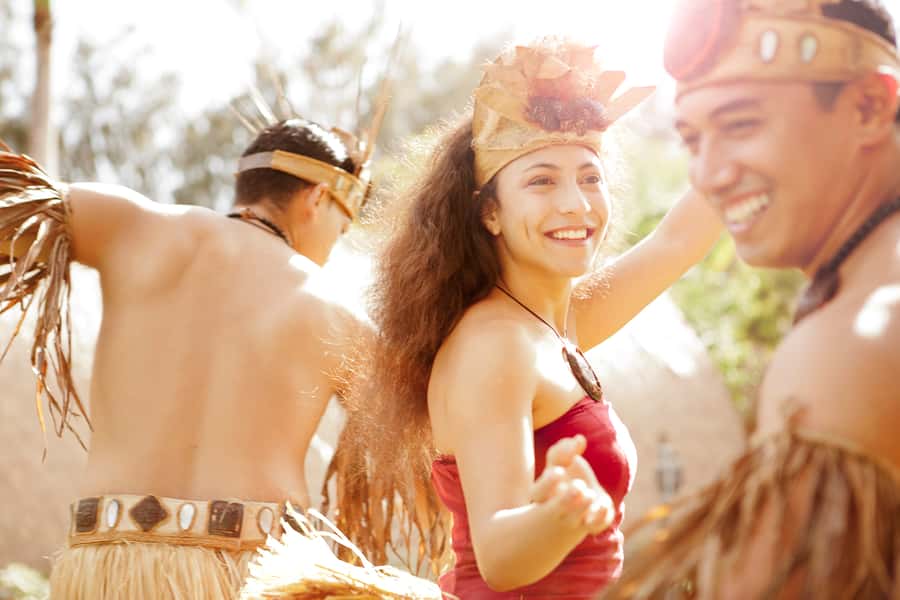
Aotearoa represents New Zealand, and its strongest draw is the Haka warrior dance. The performance brings a direct physical force to the afternoon, with movement and rhythm that are easy to appreciate even if you know little about Maori culture.
You can also learn about Maori tattoos and their symbolism. The focus here is not simply on tattoo designs, but on the meaning attached to them, which gives the presentation more substance than a quick photo opportunity.
The ancient poi ball game adds a playful hands-on element. You can try handling the balls yourself and see why rhythm, timing, and coordination matter.
Aotearoa presentations are listed at about 1:30, 3:30, and 4:30 PM. Because there are fewer time slots than at some other villages, check this schedule early. Missing a presentation may mean waiting until much later in your visit.
Fiji: music, dance, coconut oil, and village life
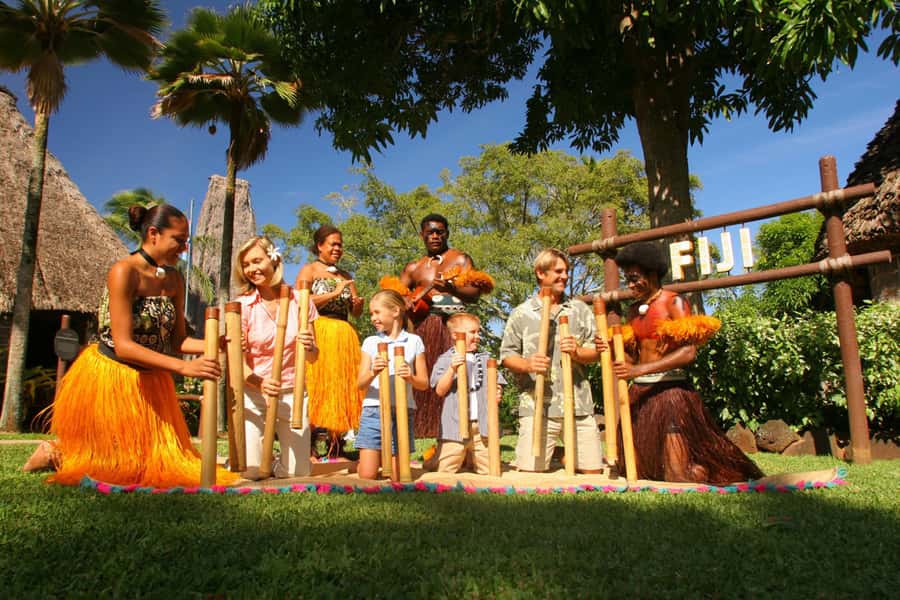
The Fiji village brings in music and dance, with a focus on rhythm and group performance. It also gives you a chance to learn how coconut oil is made, a useful reminder that coconuts have long been part of daily life across the Pacific.
You can receive a temporary tattoo and enter the home of a chief. Those details make Fiji different from the villages centered mainly on games or warrior performances.
The temporary tattoo is not a permanent cultural tattoo, so it works as a light, family-friendly activity. Still, the presentation about tattooing and the demonstration of coconut oil offer a useful chance to ask questions and pay attention to the meaning behind the activity.
Fiji’s approximate presentation times are 1:30, 2:30, 3:30, and 4:30 PM. Its regular schedule gives you several chances to fit it into the day, especially if you arrive after the first presentation.
More Oahu tickets to book ahead:
- Waikiki Luau Buffet with Optional Rock-A-Hula Show Ticket
★ 4.5 · 1,572 reviews - Rock-A-Hula Ticket
★ 4.5 · 448 reviews - Bishop Museum General Admission Ticket
★ 4.5 · 243 reviews - Diamond Head Hike Shuttle with Reservation Tickets Included
★ 5.0 · 223 reviews
Samoa: coconuts, fire, weaving, and practical skills
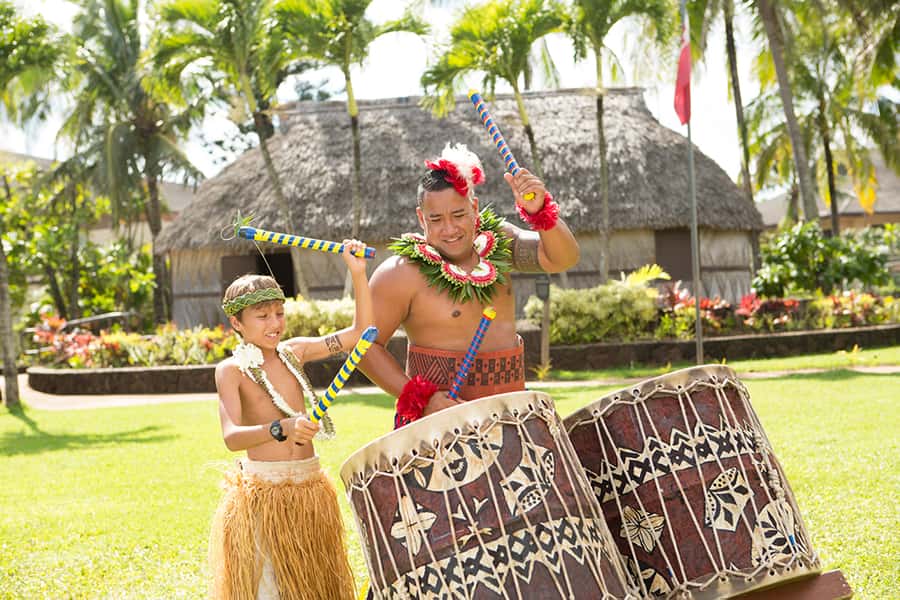
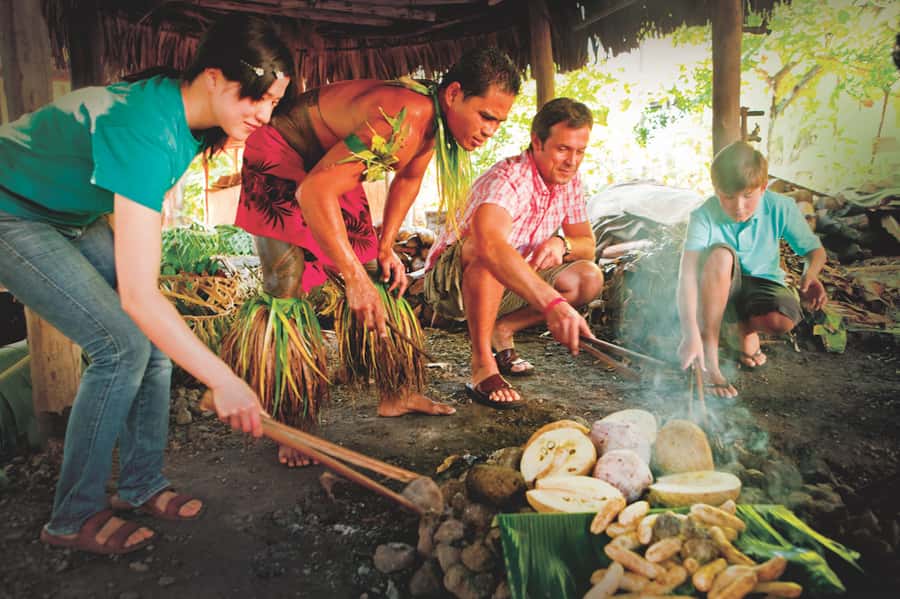
Samoa is one of the most active villages, and the coconut demonstration is a highlight. You can watch a coconut picked fresh, then see it cracked open in front of you.
The village also covers old-fashioned fire starting, weaving a fish, and cooking island food. These are practical skills, not just performance pieces, so Samoa may be especially rewarding if you enjoy seeing how tools and materials are used.
Traditional architecture is part of the experience too. Look at the structure of the village as you move between demonstrations, rather than rushing only from one show to the next.
Samoa has presentations at approximately 1, 2, 3, 4, and 4:30 PM. That gives you more flexibility than Aotearoa or Tahiti, although the 4:30 time leaves little room if you need to catch another late presentation.
Samoa is also a good place to slow down. The activities can take longer than a simple photo stop because you may want to watch the full demonstration and try one of the skills yourself.
Tahiti: fishing, romance, and spear throwing
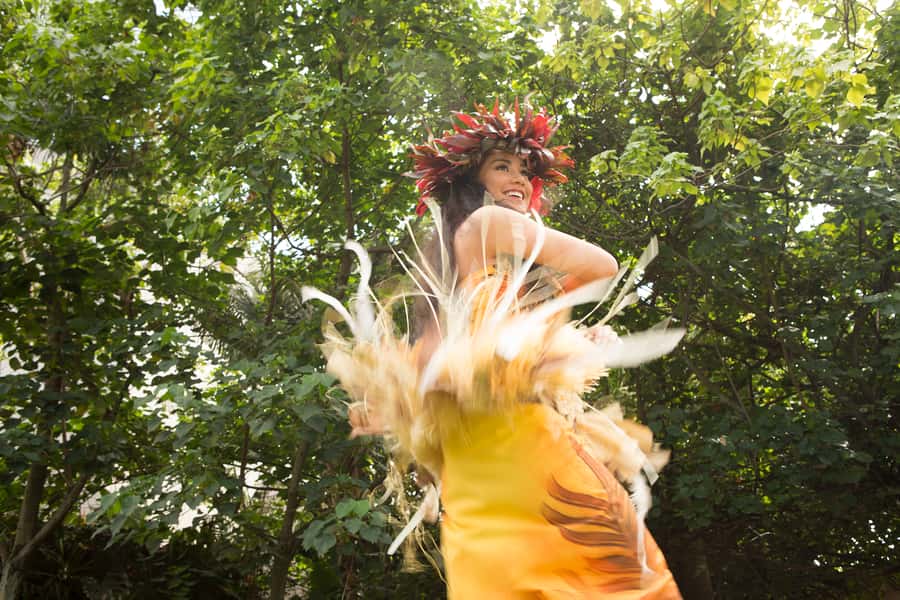
Tahiti offers a different mood. You can try fishing with a pole, learn a romantic dance, and practice spear throwing.
The fishing activity gives the village an easy entry point for children and anyone who prefers a quieter hands-on task. Spear throwing adds more physical action, but the interest is not only in the skill itself. The activity connects to traditional ways of obtaining food and using tools.
You can also hear about pearl farms, tattoos, and Tahitian royalty. That combination links everyday work, personal symbolism, and leadership traditions.
Tahiti’s presentations take place at approximately 1:30, 2:30, 3, and 4 PM. The 3 PM slot is useful if you need to split your time between several villages, but I would still check the day’s exact timing when you arrive.
Tonga: music, games, and the outrigger canoe
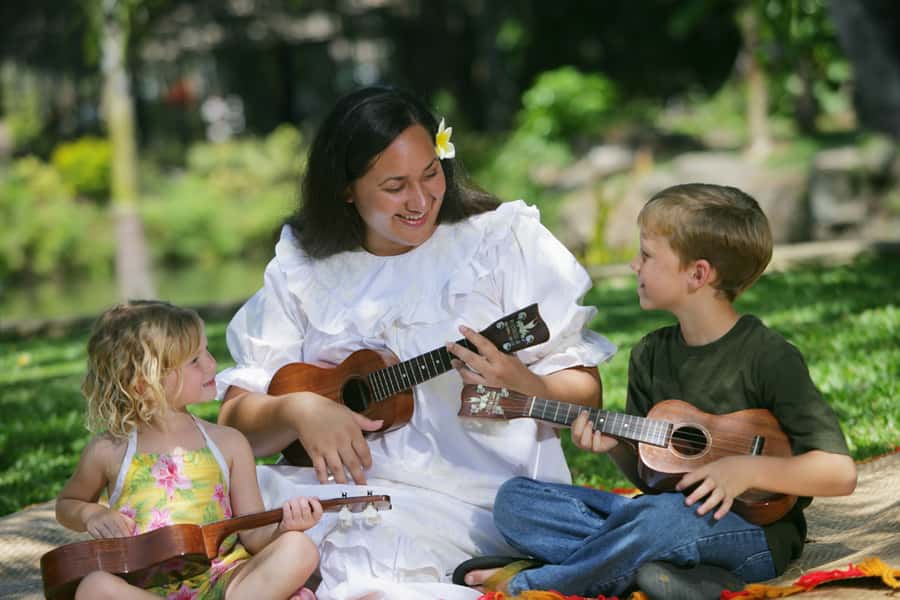
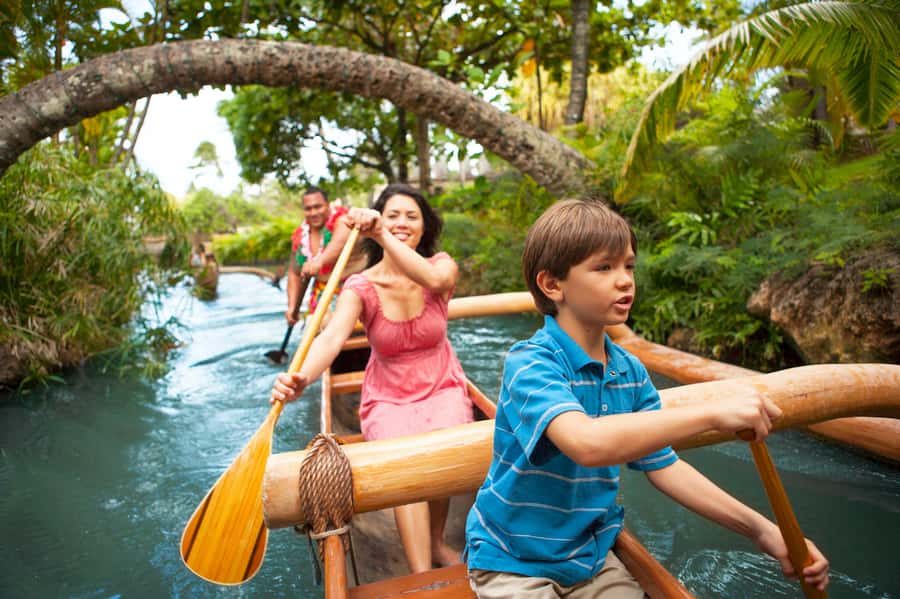
Tonga brings another strong performance element, with a lively presentation and activities built around movement. You can learn how to dance without standing, enjoy Tongan games, and paddle an outrigger canoe.
The canoe activity is one of the best ways to break up the standing and walking involved in the villages. It also gives you a simple physical connection to the importance of water travel in Polynesian cultures.
The village includes a chance to experience what it is like to be a queen. That activity adds a playful side to the presentation and may appeal to children, though adults can enjoy it too.
Tonga’s approximate presentations are at 1:30, 2:30, 3:30, 4:30, and 5 PM. The late 5 PM presentation is useful for anyone who spends the early afternoon in Hawaii or Samoa.
How to plan the five-hour visit

You cannot realistically give every activity equal attention in five hours. I suggest choosing three or four priority villages, then using the remaining time for nearby demonstrations and hands-on activities.
Start by checking the presentation times for Aotearoa and Tahiti, since they have fewer scheduled options. Then fit Hawaii, Samoa, Fiji, and Tonga around those fixed choices.
A practical plan might look like this:
- Begin with Hawaii or Samoa around 1 PM.
- Catch Aotearoa or Tahiti at the next available presentation.
- Use the gaps for Fiji, Tonga, games, food sampling, or hands-on skills.
- Save the 4:30 or 5 PM presentation for a village you most want to revisit.
Do not treat the schedule as exact to the minute. The times are approximate, and you should allow time to walk between villages and find each presentation area.
Comfortable shoes are important. High heels are not allowed, and weapons, sharp objects, alcohol, and drugs are prohibited. The center is wheelchair accessible, but the ticket information does not provide further detail about specific routes or activity access.
What the $103 ticket includes
The $103 price covers admission to the six Island Villages. That is a fair amount of programming for a five-hour visit if you take part in several activities and watch multiple presentations.
The value is weaker if you plan to stay only briefly or mainly take photographs. You get more from the ticket when you use the demonstrations, games, and cultural activities instead of walking through quickly.
Food and drinks are not included, apart from the described taste of traditional Hawaiian food within the village experience. You should also plan separately for transportation, since no transport is provided.
The ticket does not include a luau or the center’s shows. This is the point most likely to cause confusion, so check your booking carefully. If you want dinner and an evening performance, you will need a separate ticket and should budget accordingly.
The activity is non-refundable. That makes advance planning more important, especially since the price is high enough that a last-minute change could be costly.
Who will enjoy this experience most
I would recommend this visit to families, first-time Oahu visitors, and anyone who wants a broad introduction to Polynesian culture without arranging several separate excursions.
It also suits people who prefer active learning. You can play games, paddle, fish, throw a spear, work with poi balls, watch fire starting, and see how coconuts are opened and used.
The center may be less satisfying if you want a quiet museum visit or a single long performance. The format is busy, with several villages and scheduled presentations competing for your attention.
It is also worth considering your interest in staged cultural presentations. The experience is designed for visitors, so it presents traditions in an accessible way. You will see real cultural practices and skills, but within a planned visitor setting rather than an ordinary village or community gathering.
Making the most of your time
Wear comfortable shoes and arrive with a short priority list. I would choose one must-see presentation, two or three activities, and one village where you can slow down.
Bring patience for schedule changes and allow space for the unexpected. You may find that a coconut demonstration, poi game, or canoe activity holds your attention longer than planned.
If you are visiting on a cloudy day, the outdoor village format can still work well. The experience includes performances and activities rather than relying only on sunshine or views, though you should still dress for spending much of the day outside.
English is the listed language for the host or greeter and activity information. If you need detailed cultural explanations in another language, confirm available options before booking.
Should you book the Island Villages ticket?
Book it if you want a structured, active introduction to Hawaii, New Zealand Maori culture, Fiji, Tahiti, Tonga, and Samoa in one five-hour visit. The strongest value comes from using the schedule well and joining the hands-on activities.
Think twice if you are mainly interested in a luau, dinner, or an evening show. Those are not part of this ticket, and adding them increases the total cost.
At $103, I see this as a full afternoon program rather than a quick attraction. If you can stay for most of the five hours, watch several presentations, and take part in the activities, the price is easier to justify. If you only have an hour or two, choose another Oahu plan or book only when you know you can use the full admission period.
FAQ
How long is the Polynesian Cultural Center Island Villages experience?
The ticket is valid for five hours from the time you first activate it.
What does the ticket include?
It includes admission to the six Island Villages at the Polynesian Cultural Center: Hawaii, Aotearoa, Fiji, Tahiti, Tonga, and Samoa.
Does the ticket include a luau?
No. Luaus require a separate ticket.
Are the evening shows included?
No. Shows require a separate ticket.
Is transportation included?
No. Transportation is not included.
Are food and drinks included?
Food and drinks are not included. The Hawaii village does include a taste of traditional Hawaiian food as part of its activities.
What presentation times are available?
Approximate times are Hawaii at 1, 2, 3, 4, and 5 PM; Aotearoa at 1:30, 3:30, and 4:30 PM; Fiji at 1:30, 2:30, 3:30, and 4:30 PM; Samoa at 1, 2, 3, 4, and 4:30 PM; Tahiti at 1:30, 2:30, 3, and 4 PM; and Tonga at 1:30, 2:30, 3:30, 4:30, and 5 PM.
Is the activity wheelchair accessible?
Yes. The activity is listed as wheelchair accessible.
What should I bring, and what is not allowed?
Bring comfortable shoes. High-heeled shoes, weapons, sharp objects, alcohol, and drugs are not allowed.
Just added around Oahu
- Koko Head E-Bike Ride and Hike Tour★ 5.0 · 3 reviews
- Waikiki: Sunset Swim & Sailing Experience★ 4.5 · 3 reviews
- Diamond Head Hike [Starts at 7:00 a.m.]★ 3.5 · 3 reviews
- Honolulu’s Waikiki Self-Guided Walking Audio Tour★ 4.5 · 3 reviews
- Oahu : Hanauma Bay Reservation+Equipment Rental★ 3.3 · 3 reviews
- Oahu: Half-Day Sunrise Semi-private Tour from Waikiki★ 3.0 · 3 reviews
- Private Whale Watching Safari from North Shore Oahu★ 5.0 · 3 reviews
- Self Guided Hike Trail to Nature Walk & Waterfall★ 3.2 · 3 reviews
Polynesian Cultural Center Tours, compared.