
Reviewed · OAHU SURF LESSONS
Oahu: Waikiki 2-Hour Beginner Group Surf Lesson
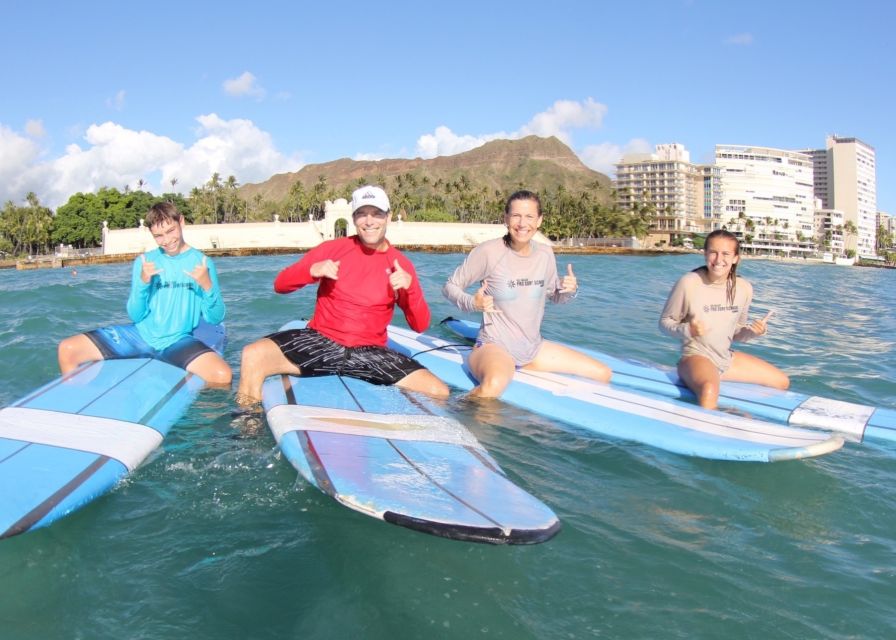
A short ride from Waikiki’s packed main beach, this lesson takes beginners to a quieter surf spot where the waves are easier to manage. You start with about 20 minutes of instruction on land, then spend most of the two hours in the water practicing the basics and chasing small waves.
I like the small six-person limit, which gives the instructor room to help each person rather than simply sending a crowd into the surf. I also like that the instructors are current professional surfers and CPR and lifeguard certified, so the lesson combines real technique with a clear focus on safety.
The main consideration is that surfing is physical work. You may spend much of the lesson paddling, getting back on the board, and moving through waves. Weak swimmers and children under 11 cannot join the group class, and people with mobility impairments or those who are pregnant should choose another activity.
In This Review
- Key points to know before booking
- Why this spot works for first-time surfers
- The first 20 minutes: board basics and safety
- Choosing gear that fits your ability
- The water lesson: from paddling to open waves
- What the instructors add
- Is two hours enough?
- The value of the $103 price
- Who should book this lesson?
- Practical tips for a smoother lesson
- Should you book the Waikiki beginner surf lesson?
- FAQ
- How long is the Waikiki beginner surf lesson?
- Where does the surf lesson take place?
- What equipment is included?
- What should I bring?
- How many people are in the group?
- What is the minimum age for the group lesson?
- Can weak swimmers join the group class?
- Can I cancel the booking?
Key points to know before booking
- A quieter beginner spot: The lesson takes place about one mile outside Waikiki, away from the most crowded and potentially hazardous surf area.
- Most of the time is in the water: The land briefing lasts about 20 minutes, leaving roughly 100 minutes for practice.
- Current pro surfers teach the class: Instructors named in recent bookings include Turner, Kai, Noah, and Noa.
- Equipment is supplied: You get a surfboard, leash, rashguard, and reef booties. Bring your own swimsuit and towel.
- Small groups help beginners: The maximum group size is six people, with coaching aimed at getting you onto open waves quickly.
- A strong record for first-timers: The activity has a 4.9 rating from 191 reviews, with many participants saying they stood up and caught several waves during one lesson.
Why this spot works for first-time surfers
Waikiki is famous for beginner surfing, but the most familiar stretch of beach can also be crowded. This lesson shifts about one mile away from the main Waikiki area to a spot described as beautiful, less crowded, and friendly for first-timers.
That change matters. When you are learning, you need room to listen, turn your board, and fall without worrying about a wall of nearby surfers. A quieter area also lets the instructor watch your group more closely. You still need to respect the ocean, but you are not trying to learn the basics in the middle of a packed lineup.
The lesson is designed for people with little or no surf experience. It does not assume you already know how to read waves, carry a board, or position your body. The instructor first explains the equipment and basic safety, then shows you how to stand and how to move through breaking waves.
I would not expect a polished beach resort setup or a long sightseeing program. This is a focused sports lesson. The payoff is not a tour of Oahu. It is the chance to catch a real wave under the guidance of someone who knows the break.
More surf lessons on Oahu:
- Open Group Surfing Lesson in Waikiki, Hawaii
★ 4.5 · 582 reviews - Oahu: Beginner-Friendly Waikiki Beach Surfing Lesson
★ 4.9 · 425 reviews - Surfing Lessons On Waikiki Beach
★ 4.5 · 317 reviews
The first 20 minutes: board basics and safety
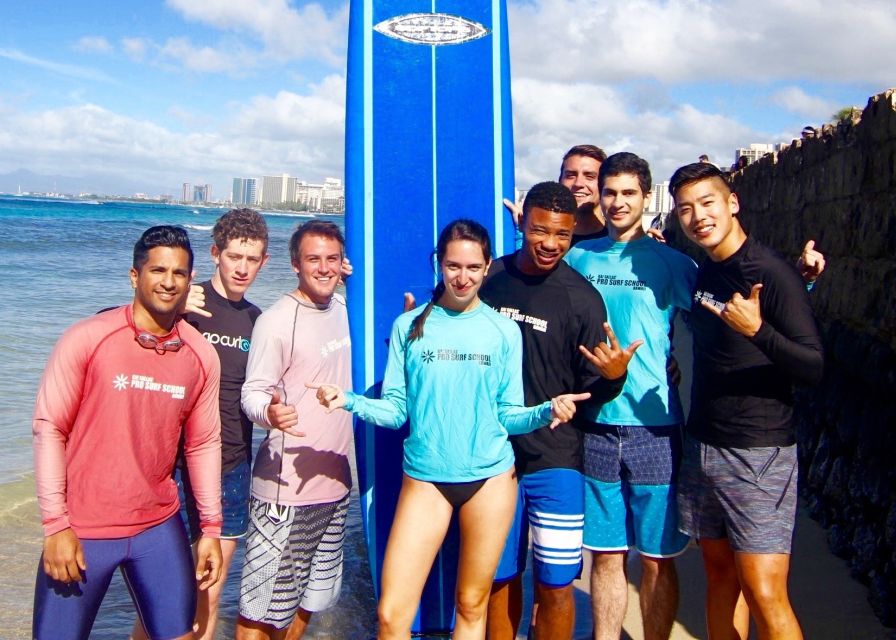
The class begins on land with a short lesson of about 20 minutes. That may sound brief, but it is useful preparation for the part that takes the most energy: getting in the water and trying the skills yourself.
You learn about the different materials used in surfing and how the board and leash work together. The instructor also covers safety techniques, including how to handle the board and what to do around crashing waves. This is the right place to ask basic questions, especially if you have never been in a surf lesson.
You also get an introduction to surf etiquette. That means learning how to share the water, maneuver around waves, and avoid creating problems for other surfers. Etiquette can feel like a small detail, but it is an important part of surfing culture. A beginner who knows when to paddle, where to wait, and how to clear a wave is safer and more welcome.
Then comes the proper surf stance. Your instructor shows you how to position your feet and body on the board before you try to stand on a moving wave. Reviews of this experience repeatedly praise instructors for explaining the basics clearly and offering individual corrections rather than rushing everyone through the same script.
The land portion is also your first chance to meet the instructor. Turner, Kai, Noah, and Noa have all led recent classes, and the feedback attached to their bookings often points to patience, encouragement, and calm coaching. Names and staffing can change, but the school’s main promise is that current professional surfers lead the lessons.
Choosing gear that fits your ability
After the land lesson, you receive the equipment needed for the class. The price includes a surfboard and leash, a rashguard, and reef booties.
The board is chosen according to your skill level. For a beginner, that means the instructor is not sending you out with a board meant for an experienced surfer. The right board makes a major difference when you are trying to balance, paddle, and stand for the first time.
The rashguard helps protect your skin from rubbing against the board. Reef booties add protection for your feet, which is useful in shallow water and on a reef area. You still need to bring a swimsuit and towel. Those items are not included.
Because the gear is provided, you do not need to rent equipment separately or know what to bring beyond swimwear and a towel. I would arrive ready to get wet and avoid bringing anything you cannot secure. The supplied information does not promise storage, changing facilities, transportation, or photos, so check the meeting instructions before you go if those details matter to you.
The water lesson: from paddling to open waves
The bulk of the two-hour class takes place in the water. This is where the short land briefing pays off.
You first work on handling the board and moving over or around breaking waves. That part can be more tiring than expected. You may need to paddle, hold onto the board, reposition yourself, and repeat the process several times before catching a ride. One participant noted that sea sickness made the lesson much harder, despite receiving patient help from the instructor. If you are prone to motion sickness, keep that possibility in mind.
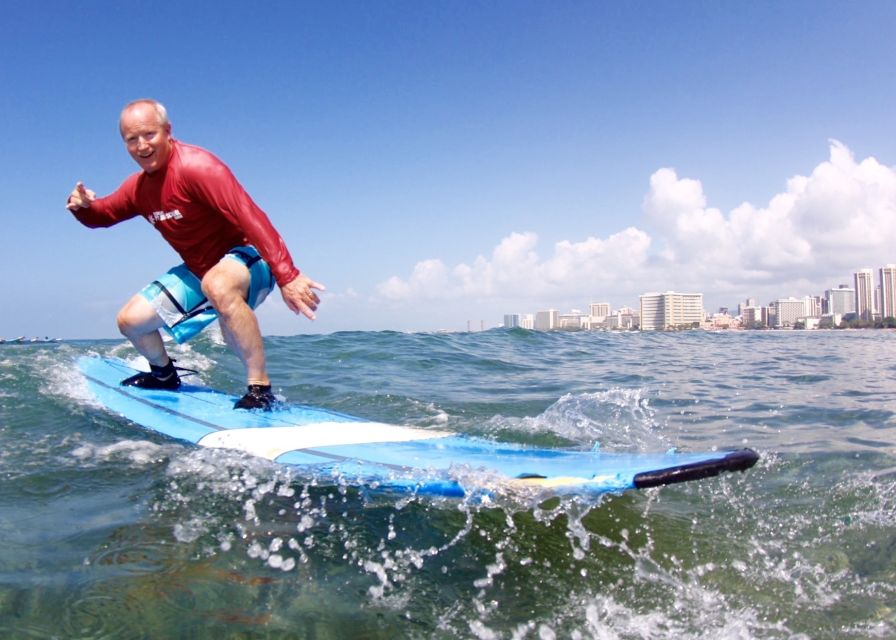
The instructor helps you find the right position on the board and gives you a signal or cue for the wave. You then paddle, push up, and try to reach your feet in the stance you learned on land. The first attempts may end with a splash. That is normal. The lesson is built around repetition, not a single perfect run.
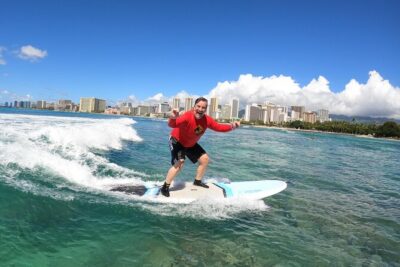
Many customers managed to stand up within the session. Some reported standing within minutes, while others caught several waves by the end. That is encouraging, but it is not a guarantee. Ocean conditions, fitness, balance, and the amount of attention needed by other people in your group all affect how much you accomplish.
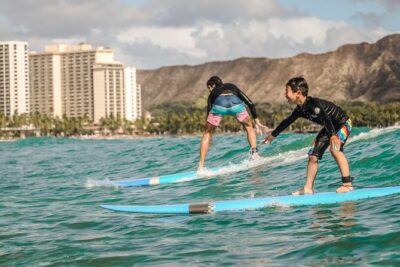
The best part of a small group is that you can receive useful corrections between attempts. A good instructor can tell you if your stance is too narrow, if you are looking down, or if you are trying to stand too early. That kind of quick feedback is much more useful than simply being pushed toward waves without explanation.
The experience is still active even when you are not standing. You learn how a wave lifts the board, how to recover after falling, and how to reset for another attempt. If you approach the class expecting a workout with a chance to surf, you will be better prepared than if you expect two hours of effortless rides.
More hands-on sessions around Oahu:
- Waikiki Private Group Surf Lesson
★ 5.0 · 298 reviews - Surf Lessons on the North Shore of Oahu
★ 5.0 · 267 reviews - Family, Private & Group Surfing Lessons, Waikiki Courtesy Shuttle
★ 5.0 · 216 reviews - Waikiki 2 Tank World Class Wreck SCUBA Diving – Certified Only
★ 4.5 · 205 reviews
What the instructors add
The instructors are the heart of this activity. The school promotes lessons taught by current professional surfers, and the experience is offered by Kai Sallas’ Pro Surf School Hawaii.
That matters because a working surfer can explain more than the mechanics of standing. You also get insight into timing, board control, wave movement, and basic surf manners. The difference between a frustrating first lesson and a rewarding one often comes down to how well the coach reads both the water and the student.
Turner receives especially strong praise for helping complete beginners stand up, catch multiple waves, and stay relaxed. Several families and groups describe him as patient, encouraging, and fun. Kai is praised for calm explanations and for making nervous students feel comfortable. Noah and Noa are also described as friendly, attentive, and helpful with wave timing.
Of course, you cannot select a particular instructor from the information provided. Staff assignments can change. What you can count on is an English-language lesson led by a professional surfer with CPR and lifeguard certification.
I also appreciate the balance between instruction and encouragement. Surfing has a steep learning curve, and a stiff or impatient coach can make beginners freeze. The instructors connected with this class seem to understand that the first goal is confidence. Once you relax, you have a better chance of getting your feet under you.
Is two hours enough?
For a first lesson, two hours is a sensible length. The 20-minute land session gives you the essential information, and the remaining time leaves room for repeated attempts in the water.
A shorter lesson might end just as you begin to understand the timing. A much longer first session could become exhausting, especially for children or anyone not used to paddling. Two hours gives you a real chance to catch waves without turning the activity into an all-day commitment.
The class runs twice a day, though starting times depend on availability. That makes it easier to fit around a beach day or another Honolulu plan. Still, you should not schedule an important activity immediately afterward if you are unsure how tiring the water work will feel.
The lesson has a minimum age of 11 for the group class. Children under 11 must take a private one-on-one lesson for safety reasons. Weak swimmers also need a private lesson. This rule is worth taking seriously. A surfboard is not a substitute for swimming ability, and the ocean can become tiring quickly.
The class is not suitable for pregnant people or those with mobility impairments. The activity requires paddling, climbing onto the board, standing, falling, and moving through waves. If you have concerns about your physical ability, ask the provider before booking.
The value of the $103 price
At $103 per person, this is not the cheapest way to spend two hours in Honolulu. You are paying for instruction, equipment, safety oversight, and access to a less crowded beginner area rather than simply renting a board and trying to figure it out alone.
For a first-timer, that difference is important. Renting a board without instruction may save money, but it can also lead to poor technique, confusion about surf etiquette, and time spent waiting for the right wave without knowing how to catch it. Here, the board, leash, rashguard, and reef booties are included, so the advertised price covers the core items you need for the lesson.
The small group cap adds value. A six-person maximum does not mean constant private coaching, but it is more personal than a large introductory class. Several people in four-person groups said they received enough attention to stand up and ride more than once.
The activity is especially good value if surfing is high on your Hawaii wish list. It gives you a guided first attempt without requiring you to commit to a multiday surf course. If you are mainly looking for a relaxed ocean outing, however, the price may feel high for an activity that demands physical effort and does not guarantee a successful ride.
Free cancellation up to 24 hours before the start time and the option to reserve now and pay later reduce some booking risk. You can hold a spot while keeping your plans flexible, then cancel for a full refund within the stated window.
Who should book this lesson?
I would recommend it to adults and children age 11 or older who can swim, want an active Waikiki experience, and like the idea of learning a real skill instead of only watching the ocean.
It is also a good choice for families. Parents and teenagers can share the same two-hour activity, and the small group format gives the instructor a chance to adjust advice for different ages and confidence levels. Recent family groups included teens and adults, with the class helping nervous participants get onto the board.
Couples and friends should also consider it. Surfing gives you a shared challenge, and even failed attempts become part of the fun. If one person is already an experienced surfer, the beginner class may be too basic for that person, but it is well suited to a group starting together.
I would be cautious if you dislike strenuous activity, get seasick, or are uncomfortable falling into the water. The lesson can be exciting, but it is not passive. You need to paddle, listen, move quickly, and try again after falling.
Practical tips for a smoother lesson
Bring a towel and wear a swimsuit. The provider supplies the surfboard, leash, rashguard, and reef booties, but not swimwear or a towel.
Pay attention during the land instruction. The 20 minutes pass quickly, and the advice about safety, etiquette, and crossing waves will save time once you are in the water.
Keep your expectations realistic. Standing within minutes is possible, and many people in this class have done it. Still, your first lesson may be more about learning to paddle and finding balance than riding a long wave.
Plan your energy. The water portion may feel like a workout, especially if you spend repeated attempts paddling back into position. The class runs twice a day, so choose a time when you are ready to be active rather than squeezing it between exhausting plans.
Check the meeting instructions carefully. One past participant found the location less clear than expected and had trouble finding the staff at first. The available information does not provide full transport or arrival details, so confirm the exact meeting point before setting out.
Should you book the Waikiki beginner surf lesson?
Book it if you want a well-supported first taste of surfing, value a small group, and are willing to work for the reward. The combination of professional-surfing instructors, supplied equipment, safety certification, and a quieter spot makes the $103 price reasonable for many beginners.
I would choose this class over an unguided board rental for a first attempt. You get a safer introduction, learn the rules of the water, and have a better chance of standing up during the session. Turner, Kai, Noah, and Noa have each been praised for patient coaching, though you cannot request a specific instructor.
Skip it if you want a calm, low-effort beach activity, cannot swim confidently, or need an accessible experience. For everyone else, this is one of Oahu’s more memorable ways to spend two hours, especially if catching your first wave has been on your Hawaii wish list.
FAQ
How long is the Waikiki beginner surf lesson?
The lesson lasts two hours. About 20 minutes are spent learning on land, and the rest of the time is spent in the water practicing and riding waves.
Where does the surf lesson take place?
The class takes place at a beginner-friendly surf spot about one mile outside Waikiki, away from the more dangerous crowds in the main Waikiki area.
What equipment is included?
The price includes a surfboard, leash, rashguard, and reef booties.
What should I bring?
Bring a swimsuit and a towel. Swimwear and towels are not included with the activity, while the listed surf equipment is provided.
How many people are in the group?
The group is limited to six participants.
What is the minimum age for the group lesson?
Children must be 11 years old to join the group class. Children under 11 must take a private one-on-one lesson for safety reasons.
Can weak swimmers join the group class?
No. Weak swimmers are required to take a private one-on-one lesson for safety reasons.
Can I cancel the booking?
You can cancel up to 24 hours in advance for a full refund. The activity also offers a reserve-now-and-pay-later option.
More 2-Hour Experiences in Oahu
- 2-Hour Oahu Whale Watch from Ala Wai Harbor, Waikiki
★ 4.5 · 1,929 reviews - Waikiki, Oahu 2-Hour Whale Watching: Guaranteed Sightings
★ 4.5 · 1,064 reviews - Kailua 2-Hour Guided Kayaking Excursion, Oahu
★ 5.0 · 442 reviews - 2 Hour Waikiki Whale Watching in Honolulu
★ 4.5 · 147 reviews
Just added around Oahu
- Koko Head E-Bike Ride and Hike Tour★ 5.0 · 3 reviews
- Waikiki: Sunset Swim & Sailing Experience★ 4.5 · 3 reviews
- Diamond Head Hike [Starts at 7:00 a.m.]★ 3.5 · 3 reviews
- Honolulu’s Waikiki Self-Guided Walking Audio Tour★ 4.5 · 3 reviews
- Oahu : Hanauma Bay Reservation+Equipment Rental★ 3.3 · 3 reviews
- Oahu: Half-Day Sunrise Semi-private Tour from Waikiki★ 3.0 · 3 reviews
- Private Whale Watching Safari from North Shore Oahu★ 5.0 · 3 reviews
- Walk The Deck of The USS Arizona Virtual Reality Experience★ 5.0 · 3 reviews
Oahu Surf Lessons, compared.

Beginner-Friendly Waikiki Beach Surfing Lesson
Read our review →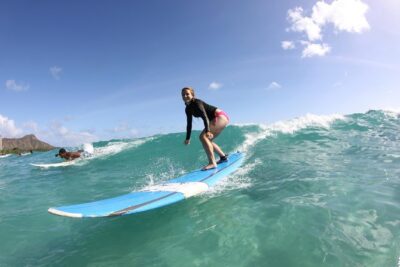

Family, Private & Group Surfing Lessons, Waikiki Courtesy Shuttle
Read our review →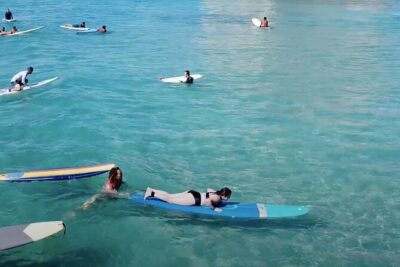
Surf Lesson Without the Crowds Including GoPRO Videos
Read our review →Browse the lists this tour appears in