
Reviewed · NORTH SHORE TOURS
Private Surf Lesson for 3-5 People in North Shore Oahu
The best part of this North Shore lesson is its simple promise: learn the basics on shore, then spend much of the session trying to ride waves. You get a private setting for three to five people, so a family or small group can learn together without sharing the lesson with strangers.
I like the clear safety briefing and the fact that all the main gear is supplied. I also like that no previous experience is needed, and one family group reported that guide James helped a parent and two teenage boys stand up and ride for the first time. The main consideration is the short two-hour format. It gives you a useful first taste, but not a full surf course.
In This Review
- Key points
- A First Surf Lesson at Chun’s Reef
- What You Learn Before Entering the Water
- From Practice to Wave Riding
- Why the North Shore Setting Matters
- Equipment Included, and What That Means
- Private Group Benefits for Families and Friends
- The Two-Hour Time Limit
- Who Will Get the Most From This Lesson
- Value, Flexibility, and the Cancellation Rule
- Should You Book This North Shore Surf Lesson?
- FAQ
- How long is the private surf lesson?
- Where does the activity start?
- Where does the activity finish?
- How many people can join the private lesson?
- Do I need previous surfing experience?
- What equipment is provided?
- Is the lesson offered in English?
- What is the cancellation policy?
Key points
- Private group of three to five: You learn with your own party rather than a mixed class.
- Chun’s Reef meeting point: The lesson starts and ends at North Shore Ohana School of Surfing near Chun’s Reef Beach.
- Shore lesson before wave time: You first practice the steps for standing up and learn basic surf etiquette.
- Safety is part of the lesson: The guide explains how to operate in the line-up before you paddle out.
- All basic equipment is included: You receive a rash guard, leash, and soft-top or epoxy board.
- Good first lesson for families: No previous experience is required, and James has worked successfully with teenagers and adults together.
A First Surf Lesson at Chun’s Reef
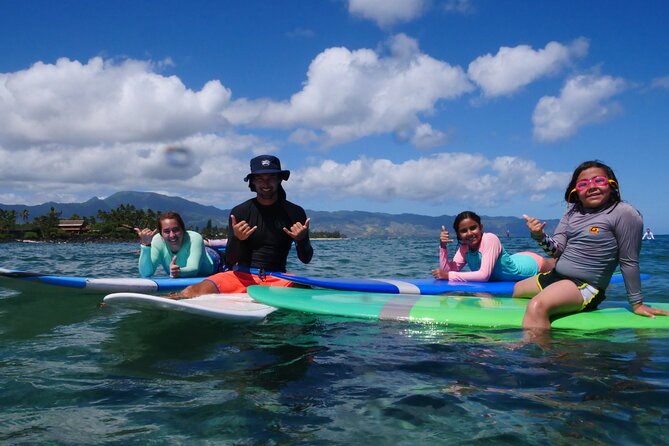
This is a practical introduction to surfing, not a sightseeing trip with a quick photo stop. Your session begins with instructions on land, then moves into the water for repeated attempts at catching waves. That order matters. You need to understand how to position yourself and stand before the ocean starts pushing you around.
The lesson is based at Chun’s Reef Beach in Haleiwa on Oahu’s North Shore. The surrounding stops named for the activity include Pua’ena Point Beach Park and other North Shore areas, but the stated meeting point is North Shore Ohana School of Surfing at Chun’s Reef Beach. Your activity ends back there, which keeps the day easy to manage.
You will not need to bring the main surfing equipment. The provider supplies a rash guard, leash, and either a soft-top or epoxy surfboard. A soft-top board is often a friendly choice for first-timers because it is designed for beginner use, while an epoxy board may be offered depending on the session and equipment available.
The lesson lasts about two hours. That is enough time to learn the basic movement and make several attempts, but you should not expect to master surfing in one morning or afternoon. Think of it as a focused first session that helps you decide if you want to keep going.
More things to do on the North Shore:
- Oahu Grand Circle Island and Haleiwa Tour: 9-Hr Deluxe Experience
★ 5.0 · 17,387 reviews - Tour of North Shore & Waimea Waterfall
★ 5.0 · 3,682 reviews - Oahu’s North Shore: 8-Line Zipline Adventure
★ 5.0 · 3,616 reviews
What You Learn Before Entering the Water
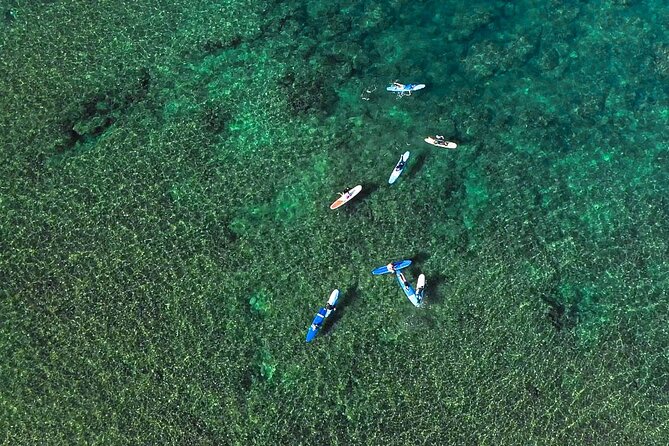
The land portion covers the steps for standing up. This is where you learn the body movement that turns a prone position into a crouched stance on the board. The exact teaching sequence is not specified, so expect instruction on the basic mechanics rather than a long technical seminar.
I like this format because beginners often struggle less with the wave itself than with trying to remember what to do once the board starts moving. A few minutes on land gives you a chance to hear the instructions, watch the movement, and ask questions before attempting it in the surf.
The safety briefing is just as important. You learn about surfing etiquette and how to operate in the line-up. That means the lesson is not only about standing up. You also receive an introduction to the shared rules that help surfers avoid collisions and understand their place in the water.
For a first session, this is valuable. Surfing has its own habits and signals, and a new surfer can easily feel unsure about where to sit, when to go, or how to avoid getting in someone else’s way. The guide’s explanation gives you a safer starting point.
From Practice to Wave Riding
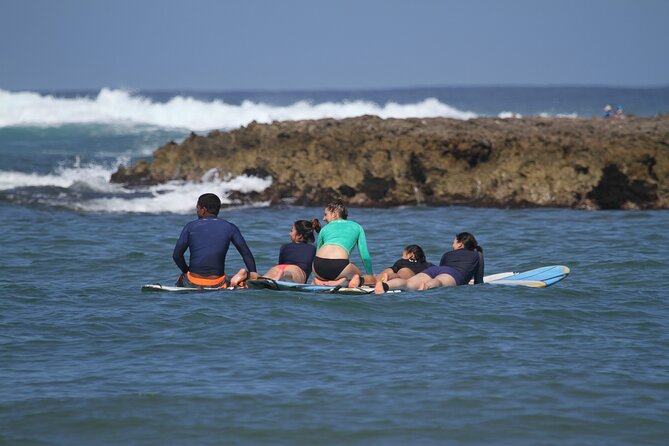
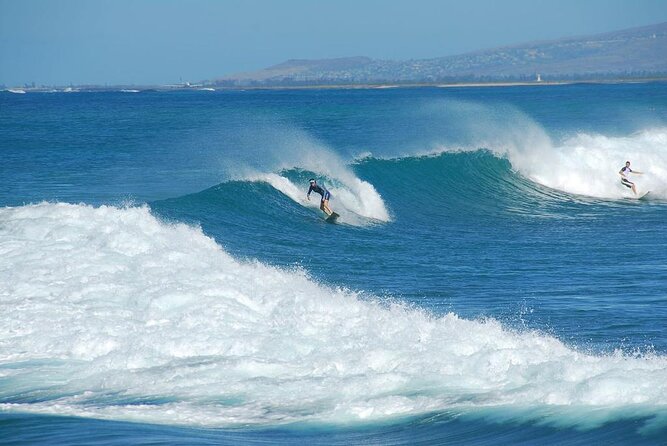
After the shore lesson and safety talk, the focus shifts to wave riding. The description promises a lot of time attempting waves, which is the right balance for a beginner lesson. You are not spending the full session listening to instructions while the water waits.
Your first attempts may involve lying on the board, timing a small wave, and trying to move into the standing position. You may stand briefly, lose your balance, or miss the wave entirely. That is normal for this kind of lesson. The useful part is getting repeated chances to adjust your timing and body position.
A private group can make those attempts less awkward. You already know the people around you, and the instructor can focus on your party rather than dividing attention among a large class. If one person is ready to try standing while another needs more help with balance, the small-group format should allow the lesson to move at a practical pace.
The strongest specific feedback comes from a family session with James. A parent and two teenage boys all managed to get up and ride waves for the first time. That does not guarantee the same result for every group, but it suggests the lesson can work well when adults and teenagers have different confidence levels.
Why the North Shore Setting Matters

The North Shore gives the activity its sense of place. You are not taking a generic indoor lesson or practicing on a machine. You are learning at a real beach on Oahu, with the water, weather, and waves shaping the session.
Chun’s Reef Beach is the named meeting point, while Pua’ena Point Beach Park is also included among the activity’s North Shore stops. The supplied details do not promise a fixed route between beaches or a separate sightseeing stop at each one, so you should treat these names as part of the North Shore setting rather than a scheduled beach tour.
That distinction helps with planning. Book this for the surf lesson, not for a full coastal tour. If you want a broad look at the North Shore, you will need to arrange that separately or allow extra time before or after the activity.
The setting can also affect your experience. Surf lessons depend on ocean conditions, and the information provided does not state a guaranteed wave size or exact water conditions. You should arrive ready for an active session rather than expecting the same kind of ride every day.
More surf lessons on Oahu:
- Open Group Surfing Lesson in Waikiki, Hawaii
★ 4.5 · 582 reviews - Oahu: Beginner-Friendly Waikiki Beach Surfing Lesson
★ 4.9 · 425 reviews - Surfing Lessons On Waikiki Beach
★ 4.5 · 317 reviews - Waikiki Private Group Surf Lesson
★ 5.0 · 298 reviews
Equipment Included, and What That Means
The supplied gear removes one of the main hassles for a first-time surfer. You receive a rash guard, leash, and surfboard, with either a soft-top or epoxy board provided. You do not need to arrange a separate board rental before the lesson.
The rash guard is useful in the water and keeps the session more comfortable than wearing ordinary clothing. The leash connects you to the board, which is essential when you fall or need to recover after a missed wave. The board choice may depend on what suits the lesson and what is available that day.
The information does not list other personal items, so bring anything else you normally need for a beach outing. Since the session returns to the meeting point, you have a clear place to finish, but the tour details do not describe storage, changing rooms, showers, or towel service. Do not assume those extras are included.
The gear is part of the value here. Even without a stated price, you can judge the offering by what it saves you from arranging separately: board, leash, rash guard, basic instruction, and safety coaching are combined in one private session. For a small group, that package may feel more useful than booking separate equipment and trying to teach yourselves.
Private Group Benefits for Families and Friends
The activity is limited to your own group of three to five people. That is a meaningful feature, especially if you are traveling with family members or friends who want to share a first attempt.
A private lesson also makes it easier to ask basic questions. You do not have to worry about slowing down a large class, and the instructor can respond to the group’s needs. A stronger participant may get more wave attempts, while someone less confident can receive extra help with the standing motion.
The family example with James is worth keeping in mind. He worked with a parent and two teenage boys, and all three stood up and rode waves for the first time. For families, that shared success can be the best reason to choose a private lesson. You get a common activity rather than splitting into separate age groups.
Still, private does not mean one instructor gives constant one-on-one attention to every person. The group shares the lesson, and three to five people is the stated size. If each person wants a fully individual coaching session, this format may not go far enough.
The Two-Hour Time Limit
Two hours sounds generous when you are thinking about a first lesson, but the clock includes more than wave riding. You need time for check-in, gear, the land lesson, the safety briefing, getting into the water, and returning equipment.
The good news is that the format appears built around action. The description specifically includes plenty of wave riding after the instructions, so the session is not weighted entirely toward theory.
The practical limit is progression. You may learn how to stand and ride a few waves, but you will not receive a long series of lessons on turning, reading changing conditions, or improving advanced technique. Those subjects are beyond what the supplied details promise.
I would choose this two-hour format for a first try, a family activity, or a small group looking for one active morning on Oahu. If surfing is your main goal for the trip, you may want to ask the provider about additional lessons after this one.
Who Will Get the Most From This Lesson
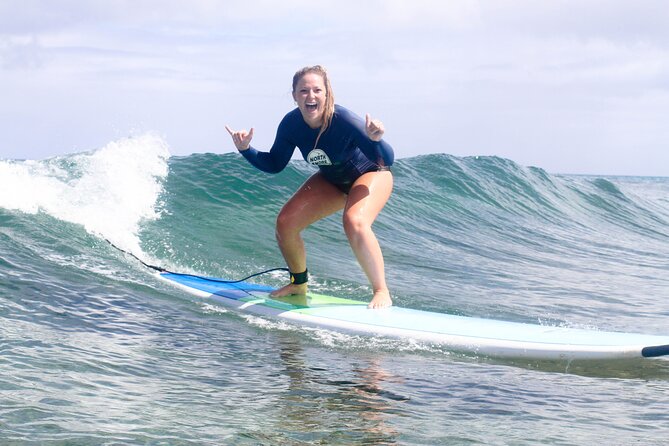
This experience suits adults, teenagers, and families who have never surfed before. No previous experience is required, and the private format lets your group learn at a shared pace.
It also fits people who want the convenience of provided equipment. You meet at the school, receive the board and other listed gear, learn the essentials, and return to the same point at the end.
You should choose it if you value guidance and safety rules as much as the thrill of standing on a board. The line-up briefing is not filler. It helps you begin with a basic understanding of how surfers share the water.
The activity may be less suitable if you want a full North Shore sightseeing program, a long technical course, or guaranteed wave conditions. The supplied details do not promise transportation from Waikiki or another part of Oahu, so plan your own way to the Chun’s Reef meeting point.
The site is near public transportation, and service animals are allowed. Most people can participate, but the information does not give detailed physical requirements or medical guidance. If you have a specific mobility or health concern, contact the provider before booking.
Value, Flexibility, and the Cancellation Rule
No price is provided here, so I cannot judge the exact dollar value. I can judge the structure. A private lesson for three to five people includes instruction, safety coaching, wave time, and several pieces of equipment, which may make it a sensible group purchase compared with arranging these parts separately.
The value is strongest when three or more people take part. You share the private session with family or friends, while everyone gets a chance to learn and attempt waves. For one person, a group lesson elsewhere might offer a lower cost, but that comparison depends on the price available at booking.
The activity offers free cancellation if you cancel at least 24 hours before the local start time. Cancel within 24 hours, and the payment is not refunded. Changes made inside that same window are not accepted, so check your Oahu schedule before the cutoff.
Confirmation arrives at booking, which helps you keep the meeting details handy. The activity is offered in English, and the experience ends at the starting point.
Should You Book This North Shore Surf Lesson?
Book it if you want a straightforward first surf lesson with your own small group, supplied gear, a safety briefing, and real time in the water. The private format is especially appealing for families, and James’s success with a parent and two teenage boys shows how well the session can suit mixed ages.
Keep your expectations in check. This is about learning the first steps and riding some waves, not becoming an expert in two hours. You also need to arrange your own way to Chun’s Reef and allow for the possibility that ocean conditions will shape the session.
For a first North Shore surf experience, I like the combination of practical instruction, shared group time, and a clear meeting point. If standing on a board with your family or friends sounds like a worthwhile Oahu memory, this is a sensible choice.
FAQ
How long is the private surf lesson?
The experience lasts approximately two hours.
Where does the activity start?
It starts at North Shore Ohana School of Surfing at Chun’s Reef Beach, Haleiwa, Hawaii.
Where does the activity finish?
The activity ends back at the meeting point.
How many people can join the private lesson?
The private activity is designed for three to five people, and only your group participates.
Do I need previous surfing experience?
No. Previous experience is not required.
What equipment is provided?
The provider supplies a rash guard, leash, and soft-top or epoxy surfboard.
Is the lesson offered in English?
Yes. The activity is offered in English.
What is the cancellation policy?
You can cancel at least 24 hours before the local start time for a full refund. Cancellations or changes made within 24 hours are not accepted and are not refunded.
Just added around Oahu
- Koko Head E-Bike Ride and Hike Tour★ 5.0 · 3 reviews
- Waikiki: Sunset Swim & Sailing Experience★ 4.5 · 3 reviews
- Oahu : Hanauma Bay Reservation+Equipment Rental★ 3.3 · 3 reviews
- Diamond Head Hike [Starts at 7:00 a.m.]★ 3.5 · 3 reviews
- Honolulu’s Waikiki Self-Guided Walking Audio Tour★ 4.5 · 3 reviews
- Oahu: Half-Day Sunrise Semi-private Tour from Waikiki★ 3.0 · 3 reviews
- Private Whale Watching Safari from North Shore Oahu★ 5.0 · 3 reviews
- Self Guided Hike Trail to Nature Walk & Waterfall★ 3.2 · 3 reviews
North Shore Tours, compared.
Oahu Grand Circle Island and Haleiwa Tour: 9-Hr Deluxe Experience
Read our review →
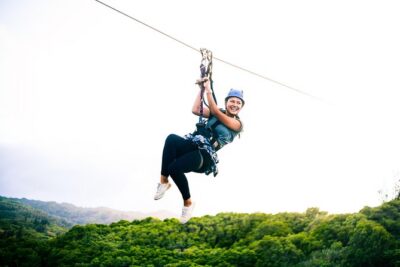
Oahu’s North Shore: 8-Line Zipline Adventure
Read our review →
Oahu North Shore Experience: Activities, Waterfall & Free Time
Read our review →


Full Day Oahu Circle Island -Turtle Beach Snorkel at North Shore
Read our review →
Roundtrip Shuttle From Waikiki to Dole Plantation & Haleiwa
Read our review →Browse the lists this tour appears in