
Reviewed · OAHU SURF LESSONS
Surf lessons for beginners in Waikiki
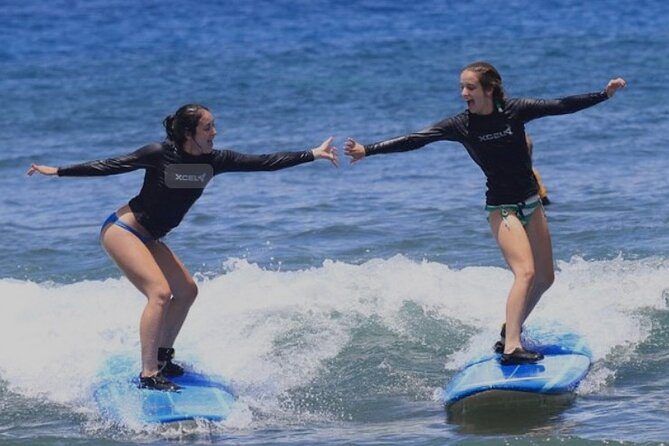
Waikiki is one of the world’s best places to try surfing for the first time, and this private lesson puts you with an instructor instead of in a large beach class. You’ll learn safety and basic technique on shore, then work toward catching small waves with your guide close by. Preston, Jameson, and Scotty are among the instructors named in customer feedback.
I like two things here: the one-on-one format gives you quick corrections, and the school supplies the surfboard, so you can get started without arranging a separate rental. The lesson also suits families well. Children as young as 11 and 12 have been praised for gaining confidence quickly.
The main caution is reliability. Several bookings in 2025 were spoiled when the instructor did not appear, and other customers dealt with double-booked time slots or unclear meeting instructions. The provider explained that permit and booking-system problems affected that period, but I would still confirm your appointment before setting out.
In This Review
- Key points at a glance
- Learning to surf on Waikiki Beach
- What the private format changes
- From sand practice to the first wave
- Why the two-hour lesson may be worth $100
- Waikiki conditions and your first successful ride
- Families, solo beginners, and couples
- Meeting point, timing, and practical details
- A serious note about past no-shows
- How this compares with renting a board
- Should you book this Waikiki surf lesson?
- FAQ
- Where does the surf lesson begin?
- Where does the activity end?
- How long is the surf lesson?
- Is the lesson private?
- Are surfboards provided?
- Is bottled water included?
- Is the activity offered in English?
- What is the cancellation policy?
Key points at a glance
- Private instruction: Only your group participates, so your guide can focus on your balance, paddling, and timing.
- Waikiki Beach setting: You learn on the famous shores near the Duke Kahanamoku Statue, then return to the same meeting point.
- Boards included: A surfboard and guide are provided, while bottled water is not.
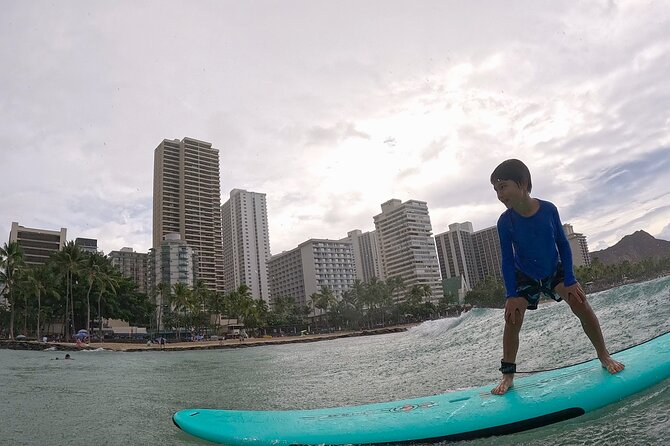
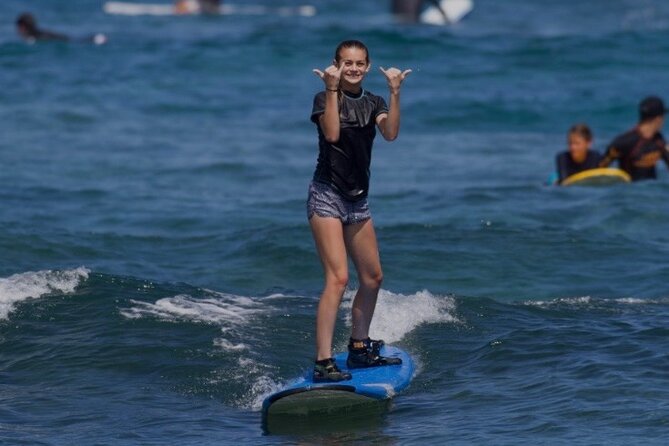
- Good record with children: Families describe 11-, 12-, 13-, 14-, and 15-year-old beginners standing up quickly.
- Two-hour option: The longer session gives you more time to repeat attempts, though some feedback describes lessons lasting about one hour.
- Confirm before you go: Past problems included no-shows, schedule changes, and confusion about where to meet.
Learning to surf on Waikiki Beach
A first surf lesson should do more than push you onto a board and hope for the best. The useful part is learning how to read the water, keep yourself safe, and repeat the basic movement until it feels natural. This experience follows that sensible order.
You meet at the Duke Paoa Kahanamoku Statue on Kalākaua Avenue. The statue is a recognizable public meeting point near Waikiki Beach, but directions have not always been clear to every customer. I would allow extra time to find the exact spot and keep your phone available for messages from the school.
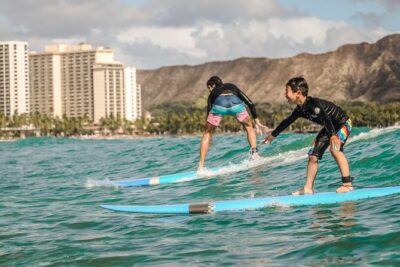
Once you meet your guide, the lesson begins with a beach briefing. Expect an explanation of basic safety, local ocean conditions, and the mechanics of getting from lying down to standing. Several people describe this introduction as short, often around 10 minutes, which leaves most of the session for practice.
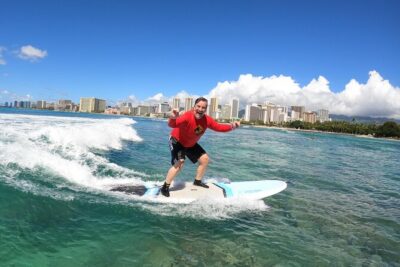
The school’s stated goal is ambitious: to have you standing and surfing your first wave by the end. That is a useful target, not a guarantee of effortless success. Surf conditions change, and one family noted that the waves were not especially good on the day their teenagers attended, yet both children still enjoyed the lesson.
More surf lessons on Oahu:
- Open Group Surfing Lesson in Waikiki, Hawaii
★ 4.5 · 582 reviews - Oahu: Beginner-Friendly Waikiki Beach Surfing Lesson
★ 4.9 · 425 reviews - Surfing Lessons On Waikiki Beach
★ 4.5 · 317 reviews
What the private format changes
Private instruction is the strongest reason to consider this activity. You are not sharing every correction with a large group, and the instructor can watch your stance closely. If your front foot lands too far forward, your knees lock, or you look down instead of ahead, you can receive an adjustment right away.
That attention matters most during the first few attempts. Beginners often need the same movement explained in more than one way. A good instructor can simplify the process, help you reset after a fall, and choose which small waves are manageable for your level.
The private setup also works well for families. The activity is booked for your group alone, though the available information does not specify a fixed maximum group size. Families have used it with children and teenagers, while solo surfers and couples have also booked.
The quality can depend on the individual instructor. Preston receives especially strong praise for calm explanations and patient coaching. Jameson led one lesson as a replacement instructor and was described as friendly and effective, though the customer felt the introduction was too quick. Scotty is also singled out for positive, encouraging instruction.
This variation is worth keeping in mind. A private lesson gives you personal attention, but it does not automatically ensure that every instructor teaches in exactly the same style. If you have a preference, ask who will be teaching before your appointment.
From sand practice to the first wave
The early beach work is short but important. You learn how to position yourself on the board and how to rise into a standing stance. One instructor is described as teaching four simple steps, a useful approach for a movement that can feel awkward when you first try it.
After the shore briefing, you carry on to the water with your guide. In one account, the instructor handled most of the board carrying. That is practical because surfboards can be awkward on the beach, but one customer had hoped to carry the board and wax it personally as part of the experience.
If those small details matter to you, say so. The school’s response explained that instructors often carry the boards to the water as a matter of good beach etiquette, but they would allow a student to help if asked. Waxing is not listed as part of the included activity, so do not book this expecting a traditional surf-shop lesson about preparing your own board.
In the water, the instructor helps you get positioned and watches for suitable waves. The goal is not simply to send you out alone. You receive help with timing and placement, then try to repeat the movement yourself.
That balance is important. One successful stand is exciting, but several attempts teach you more. The best accounts describe students catching multiple waves, sometimes standing on the second attempt or riding four waves during a session. Other feedback says the lesson felt too light on instruction and more like a board rental with assistance. I would ask questions as you go and request a correction whenever you are unsure what went wrong.
Why the two-hour lesson may be worth $100
The price is $100 per person for approximately two hours. Surfboards and a guide are included, while bottled water is not. At first glance, that may seem high compared with renting a board, but the comparison is not quite fair.
A rental gives you equipment and freedom to practice. This activity gives you help with safety, wave selection, body position, and timing. For a first attempt, those corrections can save a great deal of wasted time. Several customers felt confident enough to rent a board and continue surfing after the lesson, which is where the instruction begins to pay off.
The length matters. A two-hour session gives you time to hear the basics, make several attempts, rest briefly, and try again. One customer specifically preferred the longer lesson because it allowed more room to improve. If you are traveling with children, the extra time may also help them settle into the water instead of feeling rushed.
There is an important wrinkle: some customer accounts refer to a one-hour lesson, including one person who said the water practice lasted about an hour. The advertised experience is approximately two hours, but I would confirm the actual length when you book. If you are comparing this with another school, ask whether two hours means two full hours in the water or includes the beach orientation and time getting organized.
The private format is the real value here. If you already surf and only want a board, rent one. If you are new and want to stand up safely, the additional cost can make sense.
More hands-on sessions around Oahu:
- Waikiki Private Group Surf Lesson
★ 5.0 · 298 reviews - Surf Lessons on the North Shore of Oahu
★ 5.0 · 267 reviews - Family, Private & Group Surfing Lessons, Waikiki Courtesy Shuttle
★ 5.0 · 216 reviews - Waikiki 2 Tank World Class Wreck SCUBA Diving – Certified Only
★ 4.5 · 205 reviews
Waikiki conditions and your first successful ride
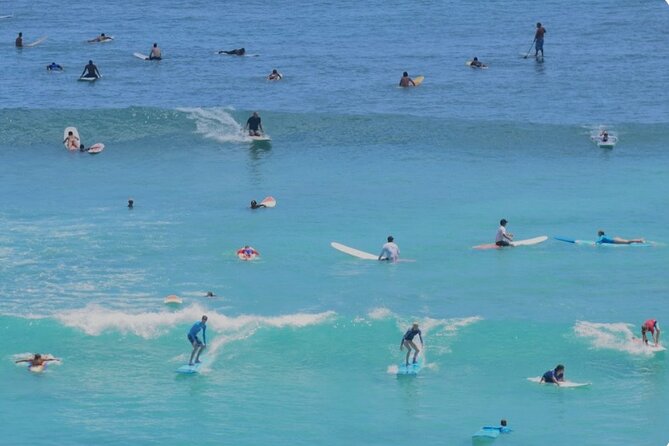
Waikiki is a sensible place for beginners because the experience is built around learning on a famous surf beach rather than taking you to a remote break. The activity description promises instruction in ocean conditions, so your guide should help you understand where and when to attempt a wave.
Still, no instructor controls the ocean. One family had a good time despite small or weak waves, while other sessions produced repeated rides. This is why I would avoid treating the promise of standing on a first wave as a reason to expect a perfect surf day.
The reviews also give you a useful picture of what success can look like. Some children were standing within 30 minutes. One 12-year-old became confident enough to surf independently after two sessions. A 14-year-old on a second surfing experience caught many waves. Those outcomes suggest that the lesson can quickly build confidence, especially for young people who respond well to upbeat coaching.
Adults can do well too. Beginners have described standing on their second attempt and catching several waves during a two-hour session. You should arrive ready to listen, accept a few falls, and repeat the same basic motion many times.
A private guide can also make the experience feel less intimidating. Surfing has a steep-looking learning curve, but the first lesson is mostly about getting comfortable on the board and making a controlled attempt. The instructor’s job is to keep the process simple.
Families, solo beginners, and couples
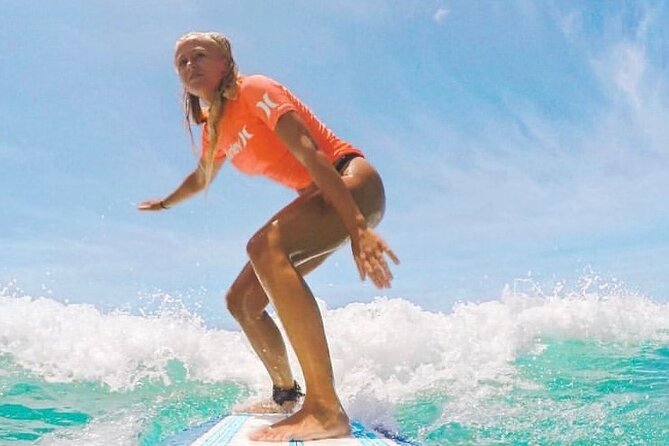
This is best for a first-time surfer who wants direct help rather than a large group class. Solo visitors benefit from having the instructor’s attention throughout. Couples can book together, although the supplied information does not explain how the instructor divides coaching between two people.
Families are a particularly strong match. The activity has worked well for children and teenagers, with positive feedback about patient instruction and confidence-building. Parents should still use their judgment about each child’s comfort in the ocean. The activity says most participants can take part, but it does not provide a detailed age, swimming, or fitness requirement.
If your child is nervous, tell the instructor at the start. A calm first attempt is more useful than rushing for a dramatic ride. The strongest family experiences came from guides who explained the steps clearly and stayed encouraging after each try.
This may also suit you if you want to learn enough to continue on your own. Several people rented boards after the lesson and surfed again later that day or the next morning. That makes the session more than a one-time photo opportunity. You can use it to decide if you enjoy surfing before paying for more equipment or lessons.
Meeting point, timing, and practical details
The meeting point is the Duke Paoa Kahanamoku Statue on Kalākaua Avenue in Honolulu. The activity ends back at that same meeting point. It is near public transportation, which helps if you are staying in Waikiki and do not want to arrange a car.
Bring your own drinking water because bottled water is not included. The supplied information does not list storage as an included feature. One customer expected a dedicated place for belongings but found there was no private storage arrangement. The provider later explained that items are generally left at a concession stand with a desk attendant, while beach lockers require payment.
I would travel light. Keep valuables in your room or hotel safe, and bring only what you can manage while changing for the beach. Do not assume that the surf school provides a locker.
The activity is offered in English and uses a mobile ticket. Confirmation is sent at booking. Since several past problems involved contact and scheduling, save the confirmation details and check for messages before leaving your hotel.
The school has also had reports of double-booked times. In one case, the customer was contacted a day before and agreed to shift the appointment by an hour. If your schedule is tight, do not book this directly before a flight, dinner reservation, or other fixed plan.
A serious note about past no-shows
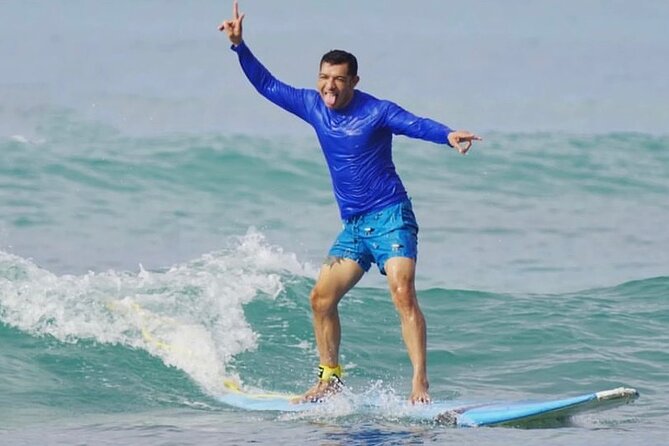
Most of the available feedback is positive, but the poor experiences are too serious to ignore. Three customers in 2025 described arriving at the meeting point and finding no instructor. They reported unanswered calls and messages, with at least one person still waiting for a full refund at the time of writing.
The provider attributed those incidents to beach-permit work and temporary problems accessing the online booking system. That explanation gives useful context, but it does not erase the impact on someone who has driven across Oahu for a missed lesson.
The later feedback is much more encouraging, with strong comments about instructors, private coaching, and children learning quickly. Even so, I would take three simple steps:
- Confirm the time and meeting point shortly before the lesson.
- Ask for the instructor’s name and a direct contact number.
- If you cannot reach anyone, do not leave for Waikiki until the appointment is confirmed.
The cancellation policy allows a full refund if you cancel at least 24 hours before the start time. Cancellations within 24 hours are not refundable, and last-minute changes are not accepted. That makes confirmation especially important if your plans may shift.
How this compares with renting a board
Board rental is cheaper, but it assumes you already know how to stay safe and choose a manageable wave. For a complete beginner, the first hour alone can be spent figuring out where to sit, how to paddle, and how to stand.
This lesson gives you a structured start. You get a board, a guide, a beach briefing, and repeated attempts in the water. You also have someone watching the conditions and giving feedback instead of trying to work everything out from nearby surfers.
I would rent instead if you have surfed several times and mainly want water time. I would choose this lesson if you have never surfed, are bringing a child, or want a better chance of standing during your first Waikiki session.
The price is also easier to justify if you use the lesson as a foundation for another day of independent surfing. If you stop after one attempt and never touch a board again, the cost may feel steep. If you leave ready to rent confidently, it becomes a more useful part of your trip.
Should you book this Waikiki surf lesson?
I would book it for a beginner who values private coaching, especially a family with children or teenagers. The best evidence points to patient instructors, fast progress, and a real chance of standing on several small waves. Preston receives particularly strong praise, while Jameson and Scotty are also associated with good instruction.
I would not book without confirming the appointment. The past no-show reports, unclear directions, time changes, and mixed lesson length are genuine concerns. Ask who will teach, how long you will spend in the water, where belongings can go, and whether the meeting point is still the Duke Kahanamoku Statue.
If those details are settled, $100 is a fair price for two hours of private beginner coaching with a board included. Go in expecting practice rather than guaranteed perfection, and this could be one of the most rewarding active experiences in Waikiki.
FAQ
Where does the surf lesson begin?
The lesson begins at the Duke Paoa Kahanamoku Statue on Kalākaua Avenue, Honolulu, near Waikiki Beach.
Where does the activity end?
The activity ends back at the meeting point near the Duke Kahanamoku Statue.
How long is the surf lesson?
The advertised duration is approximately two hours. Some customer accounts describe sessions of about one hour, so confirm the exact duration when booking.
Is the lesson private?
Yes. Only your group participates in the private activity.
Are surfboards provided?
Yes. Surfboards are included in the price, along with a guide.
Is bottled water included?
No. Bottled water is not included, so bring your own.
Is the activity offered in English?
Yes. The activity is offered in English.
What is the cancellation policy?
You can cancel at least 24 hours before the start time for a full refund. Cancellations or changes made within 24 hours are not accepted for a refund.
Just added around Oahu
- Waikiki: Sunset Swim & Sailing Experience★ 4.5 · 3 reviews
- Koko Head E-Bike Ride and Hike Tour★ 5.0 · 3 reviews
- Diamond Head Hike [Starts at 7:00 a.m.]★ 3.5 · 3 reviews
- Honolulu’s Waikiki Self-Guided Walking Audio Tour★ 4.5 · 3 reviews
- Oahu : Hanauma Bay Reservation+Equipment Rental★ 3.3 · 3 reviews
- Oahu: Half-Day Sunrise Semi-private Tour from Waikiki★ 3.0 · 3 reviews
- Private Whale Watching Safari from North Shore Oahu★ 5.0 · 3 reviews
- Self Guided Hike Trail to Nature Walk & Waterfall★ 3.2 · 3 reviews
Oahu Surf Lessons, compared.

Beginner-Friendly Waikiki Beach Surfing Lesson
Read our review →

Family, Private & Group Surfing Lessons, Waikiki Courtesy Shuttle
Read our review →
Browse the lists this tour appears in