
Reviewed · HISTORICAL TOURS
Historical Tour of Downtown Honolulu in Red Light District
Honolulu’s Chinatown has a past that rarely appears in beach brochures. This one-hour walk through the former red-light district begins at the Old Blaisdell Hotel, where working girls checked in with the Chief of Police, then visits six former brothels dating from the 1930s through 1944. Jackie and Jim lead the tour with a lively mix of facts, hard truths, and personal stories.
I like the small maximum of eight people, which gives you a better chance to ask questions. I also like the focus on actual buildings, not just a general talk about vice in old Honolulu. The main drawback is the short length: six sites in one hour means the stories move at a brisk pace, and this may not satisfy you if you want a long architectural or museum-style tour.
In This Review
- Key points to know before booking
- Why Honolulu’s red-light district matters
- Starting at the Old Blaisdell Hotel
- Six former brothels, six pieces of the story
- Jackie and Jim’s approach to difficult history
- A brisk hour in downtown Honolulu
- What the $60 price really buys
- Accessibility and timing details that matter
- Who will enjoy this walk most
- Booking, group size, and cancellation
- Should you book the Honolulu Red Light Tour?
- FAQ
- Where does the tour begin?
- Where does the tour end?
- How long does the tour last?
- How much does the tour cost?
- What language is the tour offered in?
- How many people can join the tour?
- Is the route wheelchair accessible?
- Are service animals allowed?
- What is the cancellation policy?
Key points to know before booking
- Six former brothels anchor the route, giving the story a clear sense of place.
- The Blaisdell Hotel sets the tone, with its connection to police check-ins by working girls.
- Jackie and Jim bring a direct, unsanitized approach to Honolulu’s past, including the pressures faced by both women and men.
- Groups are capped at eight, making this more personal than a large city walk.
- The entire route is wheelchair friendly, though the historic elevator stops running at 4:30 p.m.
- The $60 price pays for a focused, unusual history lesson, not a long sightseeing circuit.
Why Honolulu’s red-light district matters
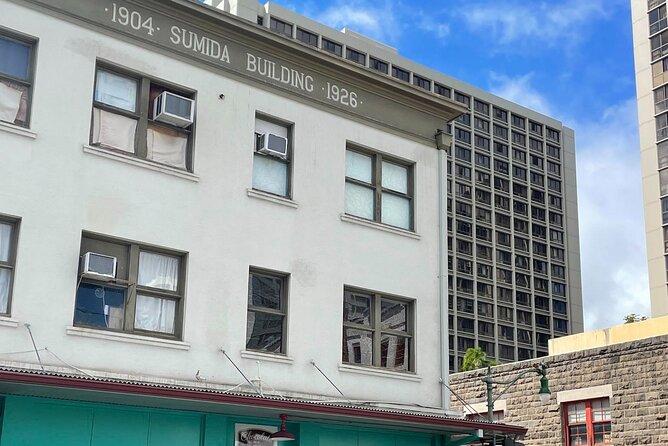
This tour looks at Chinatown during its prostitution era from the 1930s to 1944. That time frame matters. You are not hearing a vague story about old Honolulu nightlife. You are examining a specific period, tied to named buildings and the systems that allowed prostitution to operate.
The setting also gives the subject more weight. Downtown Honolulu can feel modern at street level, but the route points out places connected to an older social order. The tour asks you to consider who had power, who worked within the system, and who paid the price.
The tone is not designed to make the past seem glamorous. Instead, it presents prostitution as part of a wider story involving police oversight, money, gender, and control. One especially useful theme is the gap between the people doing the work and the people making the rules. That makes this more than a collection of spicy anecdotes.
If you prefer your history softened for easy consumption, this may feel blunt. If you want the less polished version of Honolulu, that directness is part of the value.
More history trips on Oahu:
- Oahu: Mauka Warriors Luau Honoring Polynesia’s Forgotten History
★ 5.0 · 3,013 reviews - Pearl Harbor History Remembered Tour from Ko Olina
★ 5.0 · 1,009 reviews - Pearl Harbor with USS Arizona and Hawaiian Kingdom History Tour
★ 4.5 · 184 reviews
Starting at the Old Blaisdell Hotel
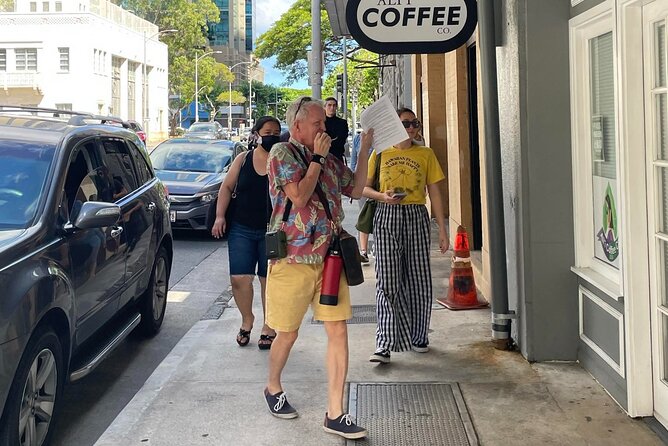
Meet your guide at the Old Blaisdell Hotel, 1154 Fort Street Mall. This is not just a convenient corner for the start. It is the first important address on the route.
The hotel is connected to the process by which working girls checked in with the Chief of Police. That detail immediately shows how prostitution was handled as a controlled part of city life rather than something entirely hidden from officials.
Your guide uses this first stop to establish the basic setting for the walk. From there, you move into the former red-light district and begin linking the history to specific buildings. Because the tour is only about an hour, expect the opening explanation to be concise.
I like this beginning because it gives you a fact to hold onto. You are not simply told that Chinatown once had brothels. You start at a building tied to police administration, then walk through the area where the system operated.
The practical point is simple: arrive at the stated meeting address, not merely somewhere in Chinatown. The Old Blaisdell Hotel is the tour’s historical starting point and its ending point as well.
Six former brothels, six pieces of the story
The route includes six former brothels. The tour does not treat them as anonymous stops. At each building, Jackie or Jim explains the site’s part in the district’s past and shares stories connected to the people who used or worked there.
The supplied details do not provide the individual names or specific architectural features of the six buildings, so you should not expect a precise building-by-building guide in advance. What you can expect is a series of short stops that build a picture of how the district functioned.
That format has a clear advantage. You can see the places while hearing about them, which gives the subject more presence than a talk held in a room. The buildings become evidence. Even if some have changed over time, the addresses help connect the past to the downtown streets around you.
There is also a tradeoff. Six locations in roughly sixty minutes leaves little room for long pauses. You will spend part of the hour walking between sites, so the experience is best understood as a compact historical walk rather than a full tour of each building.
I would pay close attention to the transitions between stops. The connections among police, brothel operators, customers, and working women are likely to matter as much as any one address. The tour’s power comes from seeing the district as a working system, not from collecting isolated scandals.
Jackie and Jim’s approach to difficult history
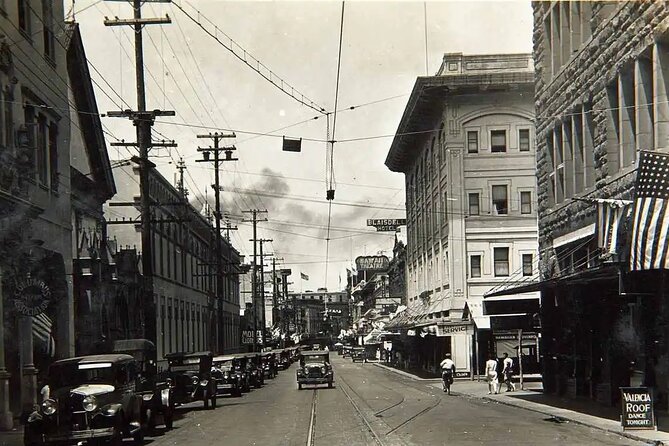
Jackie and Jim are identified as the guides for this experience. Their approach is described as entertaining and educational, but the subject itself is not light. The strongest material appears to come from the tension between those two qualities.
You can expect stories that make the period easier to follow without turning it into a joke. At the same time, the tour does not appear to offer a watered-down version of events. It deals with the hard realities of prostitution and with the unequal power held by people with money and authority.
That balance matters. A red-light district tour can easily become a parade of colorful stories, with the women who worked there reduced to scenery. Here, the historical framing points toward a broader view of what earlier generations went through, both male and female.
I especially value that the tour can make you think about agency and limits at the same time. The people involved made choices, but those choices existed within rules set by police, landlords, customers, and people with money. You do not need a long lecture to see why that tension remains important.
The guides also welcome questions. With no more than eight people, the walk should feel less like a speech delivered over your head and more like a small discussion. Still, the one-hour limit means you may need to choose your questions carefully.
Same island, a completely different kind of day:
- Oahu Grand Circle Island and Haleiwa Tour: 9-Hr Deluxe Experience
★ 5.0 · 17,387 reviews - Oahu: Grand Tour Around Island 16 Locations plus Snorkeling
★ 5.0 · 8,669 reviews - Parasailing Experience in Waikiki, HI
★ 5.0 · 7,692 reviews - Salute to Pearl Harbor Including USS Arizona
★ 4.5 · 7,433 reviews
A brisk hour in downtown Honolulu
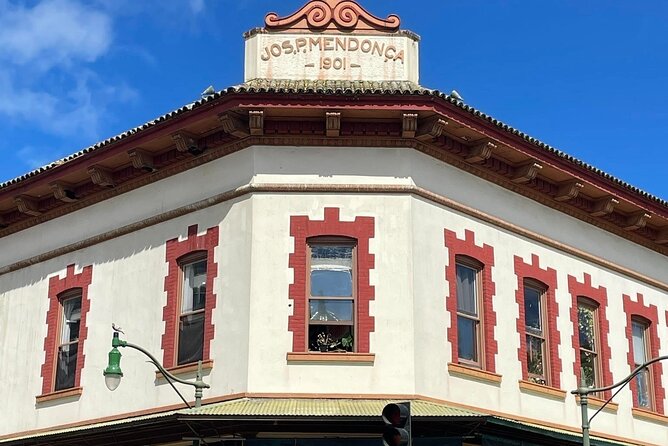
One hour is enough to introduce the district, visit the six former brothels, and return you to the meeting point. It is not enough to cover every angle of Chinatown’s past, and the tour does not pretend otherwise.
This short format works well if you are building a day around downtown Honolulu. You can fit it between other plans without giving up half a day. It also keeps the subject focused. The tour has one period, one district, and a limited number of addresses.
The drawback is pace. You may want more time at a particular building, especially if a guide raises questions about law enforcement, working conditions, or the business side of prostitution. The route has to keep moving.
I would treat this as a strong introduction rather than the final word on the subject. If the stories catch your interest, you will leave with several questions for further reading or with a sharper eye for the older parts of downtown.
Because the activity ends back at the meeting point, you do not have to arrange a pickup or figure out where the walk leaves you. That makes the hour easy to slot into a sightseeing plan.
What the $60 price really buys
The price is $60 per person. For a one-hour activity, that is not a bargain in the usual sense. You are paying more than you would for a self-guided walk through the same downtown streets.
The value comes from access to a focused interpretation of places you might otherwise pass without noticing. Six former brothels, the police connection at the Blaisdell Hotel, and the period from the 1930s to 1944 give the tour a clear subject. You are paying for the guide’s selection and explanation of those details.
The small group helps the price make more sense. With a maximum of eight people, the guide can respond to questions and keep the walk personal. A large group would make a sensitive subject harder to discuss and could make it difficult to hear at each stop.
I would book it if you enjoy social history, urban history, or tours that challenge the polished version of a destination. I would skip it if you are judging value only by duration or hoping for a broad tour of all downtown landmarks.
There is also a simple comparison to make. A self-guided walk costs less, but you would not automatically know which buildings matter or how the police and prostitution systems fit together. The $60 fee is reasonable if that context is the main reason you are going.
Accessibility and timing details that matter
The entire route is wheelchair friendly, and the experience is designed with all physical abilities in mind. That is an important practical strength for a historic downtown walk.
There is one timing detail to watch. The historic elevator stops running at 4:30 p.m., so wheelchair users should choose an earlier tour. The route itself is wheelchair friendly, but late timing could affect access to the historic building.
Service animals are allowed. The tour is also near public transportation, which makes it easier to reach without arranging a private car.
The information provided does not state the exact walking distance, the number of stairs along the route, or the availability of seating. If those details are important for your planning, ask before booking. The stated accessibility information is positive, but it does not answer every mobility question.
Who will enjoy this walk most
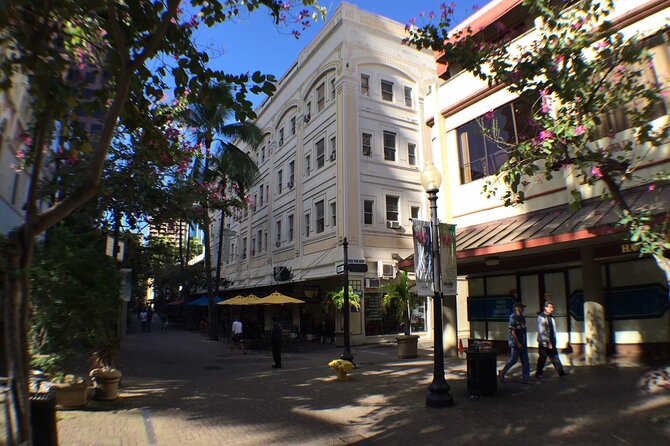
This experience is a good fit for you if you like history that deals with ordinary people, city rules, and uncomfortable subjects. It suits visitors who want to understand downtown Honolulu beyond restaurants, shopping, and famous landmarks.
It is also a good choice for couples or small groups who enjoy discussing what they see. The subject naturally raises questions about gender, money, law enforcement, and public morality. A small group makes those conversations easier.
History-minded visitors will appreciate the dates and locations. The tour focuses on 1930s to 1944 Honolulu, including the underside of life during the WWII era. That narrow period gives the walk a firm frame.
You may want to choose another activity if you are looking for sweeping views, major monuments, food tasting, or a long cultural program. This is a street-level history lesson with a mature subject. Children are not specifically addressed in the supplied details, so families should use their judgment about whether the material is suitable.
The tour is offered in English only. You should be comfortable following a spoken explanation in English for the full hour.
Booking, group size, and cancellation
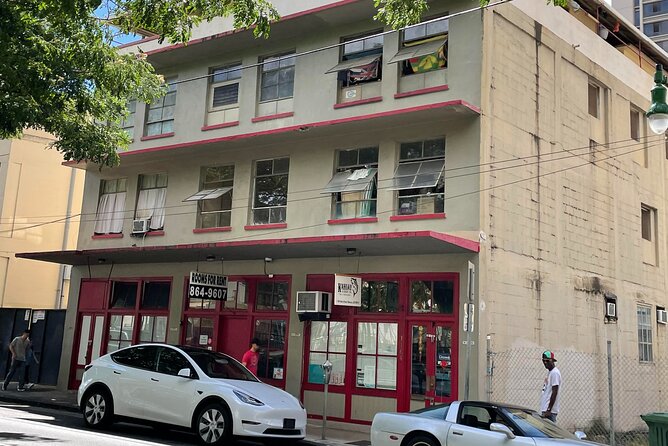
The experience uses mobile tickets, and confirmation is provided at booking. It is booked an average of 71 days ahead, which suggests you should not assume you can always arrange it at the last minute, especially if your schedule is fixed.
The maximum group size is eight. That limit is one of the tour’s best features because the topic benefits from a quieter setting and room for questions.
You can cancel for a full refund up to 24 hours before the start time. Cancellations or changes made within 24 hours are not accepted for a refund, and the cut-off follows local Honolulu time.
The price is $60 per person. The activity ends where it begins at 1154 Fort Street Mall, so plan the rest of your downtown schedule from that point.
Should you book the Honolulu Red Light Tour?
Book this walk if you want a compact and candid look at Honolulu’s past and are willing to spend $60 for interpretation rather than a long list of sights. The six former brothels and the Blaisdell Hotel connection give the hour a strong structure, while Jackie and Jim add a human side to a difficult subject.
I would especially recommend it to repeat Oahu visitors and history fans who have already seen the beaches and major sights. You will come away with a different way to read downtown Honolulu.
Skip it if you want a family-friendly attraction with broad appeal, or if a one-hour walk feels too short for the price. For everyone else, the small group, wheelchair-friendly route, and unsanitized look at the 1930s to 1944 red-light district make this an unusual and worthwhile addition to a Honolulu itinerary.
FAQ
Where does the tour begin?
The tour begins at the Old Blaisdell Hotel, located at 1154 Fort Street Mall, Honolulu, Hawaii 96813.
Where does the tour end?
The activity ends back at the meeting point at the Old Blaisdell Hotel.
How long does the tour last?
The walking tour lasts approximately one hour.
How much does the tour cost?
The price is $60 per person.
What language is the tour offered in?
The tour is offered in English.
How many people can join the tour?
The maximum group size is eight people.
Is the route wheelchair accessible?
Yes. The entire route is wheelchair friendly. For wheelchair users, earlier tours are recommended because the historic elevator stops running at 4:30 p.m.
Are service animals allowed?
Yes, service animals are allowed on the tour.
What is the cancellation policy?
You can cancel at least 24 hours before the experience for a full refund. Cancellations or changes made less than 24 hours before the start time are not accepted for a refund.
Just added around Oahu
- Koko Head E-Bike Ride and Hike Tour★ 5.0 · 3 reviews
- Waikiki: Sunset Swim & Sailing Experience★ 4.5 · 3 reviews
- Diamond Head Hike [Starts at 7:00 a.m.]★ 3.5 · 3 reviews
- Honolulu’s Waikiki Self-Guided Walking Audio Tour★ 4.5 · 3 reviews
- Oahu : Hanauma Bay Reservation+Equipment Rental★ 3.3 · 3 reviews
- Oahu: Half-Day Sunrise Semi-private Tour from Waikiki★ 3.0 · 3 reviews
- Private Whale Watching Safari from North Shore Oahu★ 5.0 · 3 reviews
- Self Guided Hike Trail to Nature Walk & Waterfall★ 3.2 · 3 reviews
Historical Tours, compared.

Mauka Warriors Luau Honoring Polynesia’s Forgotten History
Read our review →

Through A Glass Darkly The Strange and Tragic History Of Honolulu
Read our review →
Best Oahu Self-Guided Driving Audio Tour: Beaches, History & More
Read our review →
Honolulu Historic District a Smartphone Audio Walking Tour
Read our review →Browse the lists this tour appears in