
Reviewed · HISTORICAL TOURS
Through A Glass Darkly The Strange and Tragic History Of Honolulu
Honolulu’s best history lesson may be the one that takes you away from the beach. This 90-minute walk follows the city’s royal and civic core, where conquest, missionary power, monarchy, American rule, courtroom drama, and ghost stories all meet within a few blocks. Guide Terry tells the story with humor and the perspective of a retired history professor.
I like the way the tour links Iolani Palace to the people and institutions around it, rather than treating the palace as an isolated sight. I also like the small group limit of 20, which lets Terry answer questions and adjust the level of detail. The main drawback is that you spend more time standing than walking, and some of the stories are dark, so this is not a light sightseeing stroll.
In This Review
- Key points to know before you book
- Honolulu’s royal district in 90 minutes
- Stop 1: Kamehameha’s victory at the statue
- Stop 2: Iolani Palace and the end of the monarchy
- Stop 3: Kawaiaha’o Church and missionary power
- Stop 4: Hawaiian Mission Houses
- Stops 5 and 6: Honolulu Hale and the State Capitol
- Stop 7: Washington Place and Queen Liliuokalani
- Stop 8: St. Andrew’s Cathedral and a royal tragedy
- Stop 9: Capitol Modern and the original Royal Hawaiian Hotel
- Stop 10: Ali’iolani Hale and the Massie Affair
- Ghost stories, humor, and the darker tone
- What the $39 price really covers
- Heat, shade, pace, and group size
- Who will get the most from this walk
- Should you book Through A Glass Darkly?
- FAQ
- Where does the tour start?
- Where does the tour end?
- What time does the tour start?
- How long does the tour last?
- Is admission to Iolani Palace included?
- Is admission to Capitol Modern included?
- Can people who need help with stairs or inclines participate?
Key points to know before you book
- Conquest comes first: Begin at the King Kamehameha statue with the difficult story of Oahu’s unification.
- The monarchy is the heart of the walk: Iolani Palace, Washington Place, the State Capitol, and St. Andrew’s Cathedral each reveal a different part of royal Honolulu.
- Terry shapes the experience: His teaching background supports a detailed, thoughtful talk, with room for questions in a small group.
- Ghost stories are part of the mix: The tour includes local tales and reported sightings, though one stop can feel more spooky than expected.
- Expect standing in the heat: Terry tries to keep the group in the shade, but you should still plan for outdoor conditions.
- The $39 fee buys context, not admission: Most stops are viewed from outside, and entry fees for Iolani Palace and Capitol Modern are not included.
Honolulu’s royal district in 90 minutes
The tour starts at 10:45 am beside the King Kamehameha I statue on South King Street. That meeting point puts you in the middle of Honolulu’s government district, not far from the buildings that shaped Hawaii’s political future.
This is a walking tour, but the distance is modest. The bigger demand is attention. You stop often, listen to stories, and move between landmarks at an easy pace. I would not book it expecting a fast march through downtown. Think of it as a moving history class with buildings as the visual aids.
Terry is the guide to look for. He brings an academic grasp of the subject but presents it in an approachable way. The best use of the tour is to ask questions as you go. A larger group could make that harder, but the maximum of 20 people keeps the setting fairly personal. It can be even more flexible when the group is small.
More history trips on Oahu:
- Oahu: Mauka Warriors Luau Honoring Polynesia’s Forgotten History
★ 5.0 · 3,013 reviews - Pearl Harbor History Remembered Tour from Ko Olina
★ 5.0 · 1,009 reviews - Pearl Harbor with USS Arizona and Hawaiian Kingdom History Tour
★ 4.5 · 184 reviews
Stop 1: Kamehameha’s victory at the statue
The first stop introduces King Kamehameha and the conquest of Oahu. The five-minute visit is brief, but the subject is not simple. The statue is an easy photo stop, while Terry supplies the harder context behind the king’s rise and the violence that accompanied the unification of the islands.
That opening matters. Many visitors know Kamehameha as the imposing figure in front of the government buildings, yet the story behind the statue includes warfare, power, and the painful cost of conquest. Starting here gives the rest of the walk a political frame.
You will not spend long at the statue, so do not expect an extended study of its design or symbolism. The value is in hearing what the monument leaves out when you view it on your own.
Stop 2: Iolani Palace and the end of the monarchy
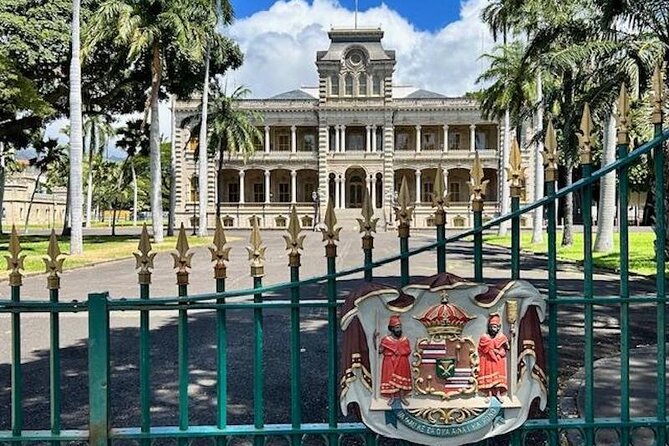
Iolani Palace is the tour’s central stop, even though the scheduled visit is only about 10 minutes and admission is not included. The building is remarkable for a simple reason: Hawaii had a true royal palace in what is now the United States. The palace connects the Hawaiian Kingdom to the wider political world and makes the loss of the monarchy feel concrete.
Terry explains how the palace came to be and leads you toward the tragic overthrow of Queen Liliuokalani. That story is more useful than a quick exterior photograph because it shows how a modern royal government was pushed aside. You get a closer look at the people, pressures, and political shifts that shaped the change.
If you want to see the palace rooms, furnishings, and interior displays, budget separately for admission. This walking experience gives you the setting and the story, but it is not a substitute for a palace visit. I would happily pair the two, using Terry’s account first and the interior tour later to put the rooms in context.
Stop 3: Kawaiaha’o Church and missionary power
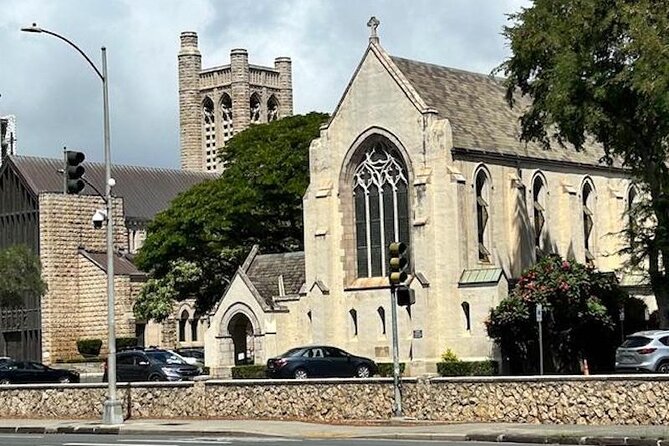
Kawaiaha’o Church introduces a different kind of influence. It was designed by missionary Hiram Bingham and is often called a stone church by Hawaiians. The wording points to a clash of cultures and materials, not just an architectural detail.
The stop lasts roughly 10 minutes. You hear how missionary work changed Hawaiian society and how a building intended for worship also reflected outside ideas, authority, and labor. That makes the church more than a pretty facade.
The tour does not treat missionary history as a simple story of good intentions. Its darker view asks what happened when outsiders arrived claiming to help, then gained money and power. This is one reason the walk suits people who want the parts of Hawaiian history that are often softened for visitors.
Same island, a completely different kind of day:
- Oahu Grand Circle Island and Haleiwa Tour: 9-Hr Deluxe Experience
★ 5.0 · 17,387 reviews - Oahu: Grand Tour Around Island 16 Locations plus Snorkeling
★ 5.0 · 8,669 reviews - Parasailing Experience in Waikiki, HI
★ 5.0 · 7,692 reviews - Salute to Pearl Harbor Including USS Arizona
★ 4.5 · 7,433 reviews
Stop 4: Hawaiian Mission Houses
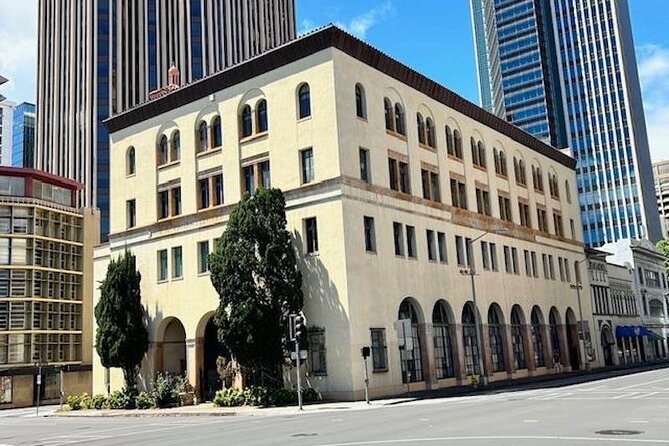
The nearby Hawaiian Mission Houses Historic Site and Archives adds another layer to the missionary story. The stop itself is short, about five minutes, and admission is listed as free. You may not have time for an extensive visit inside, but the site helps connect the people, beliefs, and institutions introduced at Kawaiaha’o Church.
The larger point is the change in power. Missionaries did not only preach. They became part of the social and economic structure of the islands. Terry’s presentation puts that shift beside the Hawaiian point of view, which keeps the story from becoming a tidy account of progress.
If your interest is early contact, religion, or the political rise of foreign residents, listen closely here. The stop is short, so this is another place where a follow-up visit could reward you.
Stops 5 and 6: Honolulu Hale and the State Capitol
Honolulu Hale, the city hall, brings the story into the era of municipal government. Its Italianate Spanish Colonial Revival design is attractive, but the building’s past is less pleasant. That contrast is a recurring theme on this walk: elegant architecture can sit on top of difficult political history.
You then reach the Hawaii State Capitol, described as an expression of the aloha spirit. The building is paired with a statue of Queen Liliuokalani, whose life gives the stop its emotional weight. You are not just looking at a government building. You are considering the gap between Hawaii’s political identity and the fate of its last reigning monarch.
Both stops last about five minutes. That is enough for a focused explanation, but not for a full architectural tour. I like the quick rhythm here because the buildings work best as chapters in the larger story.
Stop 7: Washington Place and Queen Liliuokalani
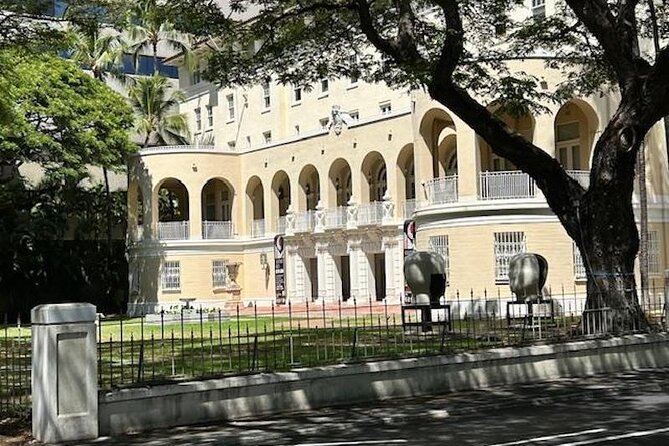
Washington Place was Queen Liliuokalani’s home. It is tied to both her private unhappiness, including an unhappy marriage, and her return after the overthrow of the Hawaiian monarchy.
This stop gives the queen a human scale. Political history can turn people into symbols, but a home brings attention back to a woman living through personal and national distress. The building’s meaning comes from those overlapping stories.
The tour does not reduce Liliuokalani to a tragic figure. Her association with aloha and her place in Hawaii’s memory remain central. If you have read about the overthrow, this stop helps you connect the political event to the person who endured it.
Stop 8: St. Andrew’s Cathedral and a royal tragedy
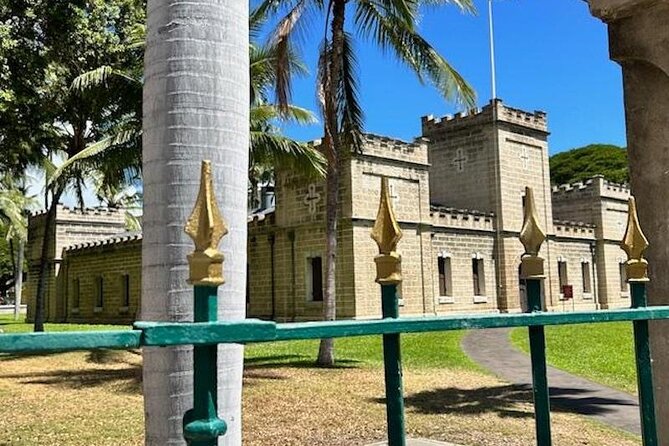
The Cathedral of St. Andrew is a striking architectural pause. Its sandstone blocks were cut in England and shipped to Hawaii, and its stained-glass nave gives the building a scale and visual drama that you cannot get from a street summary.
The story attached to the cathedral is tragic: a king and his young son. Terry uses the church to show how royal life, faith, family, and grief intersected. As with the palace, the building is not only scenery. It is a place where the emotional side of Hawaiian history becomes easier to grasp.
This stop is free to view according to the tour details, but the time allotted is about five minutes. You should not expect a long interior visit or quiet architectural study. Still, it is one of the more memorable points on the route.
Stop 9: Capitol Modern and the original Royal Hawaiian Hotel
Capitol Modern, also known as the Hawaii State Art Museum, occupies a building with a surprising earlier life. It was the original Royal Hawaiian Hotel, built in 1872. Its success led to the construction of a second Royal Hawaiian on Waikiki Beach, the famous Pink Palace.
That fact changes how you read the building. The Royal Hawaiian name did not begin with Waikiki luxury. It began here, in central Honolulu, before the beach hotel became the better-known symbol.
Admission is not included, and the scheduled stop is about five minutes. You will get the historical connection rather than a full art museum visit. If modern Hawaiian art interests you, set aside separate time for the museum. The tour gives you a reason to return.
Stop 10: Ali’iolani Hale and the Massie Affair
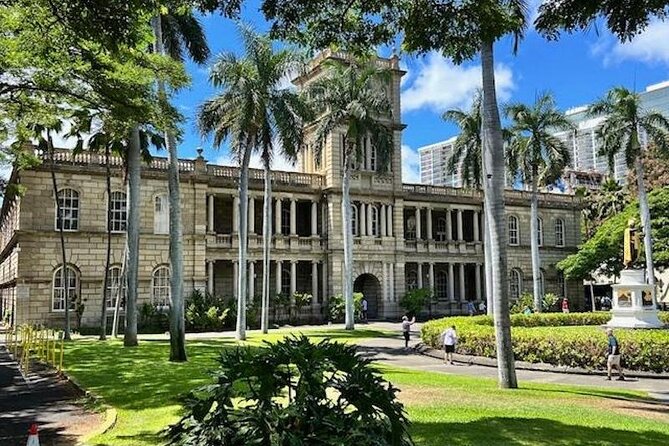
The final major stop is Ali’iolani Hale, now the Judiciary Building and home of the Hawaii State Supreme Court. Here the tour turns from monarchy and missionary influence to law and public scandal.
The Massie Affair is presented as a major event in Hawaiian legal history. You hear about the case in the building where the drama played out, which gives the story a strong sense of place. The subject is serious and complicated, so Terry’s longer explanation is more useful than a passing mention in a guidebook.
After this stop, the walk returns to the King Kamehameha statue. That circular route is practical. You finish where you began, rather than needing to arrange transport from another part of downtown.
Ghost stories, humor, and the darker tone
The title promises a strange and tragic history, and the tour does include ghost stories and local accounts of sightings. Terry adds humor, which can keep the material from becoming relentlessly grim.
You should know the balance before booking. The historical content is the main event, but the supernatural stories are not a tiny extra. If you prefer a strictly academic talk, you may find the ghost material distracting. If you enjoy folklore and stories tied to old buildings, it adds atmosphere without replacing the history.
The best approach is to treat those tales as part of how places are remembered. They offer a glimpse into local storytelling, while the political facts provide the structure underneath.
What the $39 price really covers
At $39 per person, the tour is priced as a guided interpretation of downtown Honolulu, not as an admissions package. Most of the stops are viewed from public areas, while Iolani Palace and Capitol Modern do not include entry.
I think the fee is fair for the right audience. You are paying for Terry’s preparation, the route, and the connections between sites that are easy to miss on your own. Without a guide, you could see the statue, palace, churches, and government buildings yet miss how conquest led to monarchy, how missionaries gained influence, and how the overthrow shaped modern Hawaii.
The value is weaker if you want extensive interior access. In that case, the tour works best as a context-setting walk before you pay for separate visits. It is also a good choice if you have limited time in Honolulu and want a serious introduction without committing half a day.
Heat, shade, pace, and group size
The tour runs around an hour and a half and includes a lot of standing. Terry tries to place the group in the shade, but you are still outdoors in Honolulu. Wear comfortable shoes, bring water, and plan for sun even if the forecast looks uncertain. One group completed the walk despite rain being predicted, but weather can still affect comfort.
The route is near public transportation, and most people can take part. Assistance is available for those who need help with stairs or inclines. Service animals are allowed. The operator limits the group to 20, which is small enough for questions but not necessarily private or quiet.
The 10:45 am start is useful if you want a history activity before an afternoon at the beach or museum. It is less suitable if you are hoping for a late start or a completely sheltered outing.
Who will get the most from this walk
I would choose this for history lovers, repeat visitors to Oahu, and anyone who wants more than a beach-centered trip. It also works well for families with older children or several generations, since the guide can explain difficult subjects at different levels.
The walk has enough range to suit people interested in architecture, religion, politics, law, royal biography, and folklore. You do not need to be an expert. Curiosity is enough.
I would hesitate if you dislike standing, want a relaxed photo tour, or expect a palace interior visit to be included. I would also ask yourself how you feel about ghost stories. They are part of the experience, not a surprise side note.
Free cancellation is available if you cancel at least 24 hours before the 10:45 am start time. Within 24 hours, refunds are not provided and changes are not accepted.
Should you book Through A Glass Darkly?
Book it if you want Honolulu’s difficult stories told plainly, with enough time to connect the buildings to the people who shaped Hawaii. Terry’s detailed explanations, humor, and willingness to expand on the usual talk are the strongest reasons to choose it.
Skip it if your priority is sightseeing with minimal standing or included admission to major interiors. For everyone else, $39 is a sensible price for a focused walk through the royal district, especially when you pair it with a separate visit to Iolani Palace or Capitol Modern. You finish with a sharper understanding of why central Honolulu matters, and why Hawaii’s past cannot be reduced to palm trees and surf.
FAQ
Where does the tour start?
The tour starts at the King Kamehameha I Statue, 447 South King Street, Honolulu, Hawaii 96813.
Where does the tour end?
The activity ends back at the King Kamehameha I Statue, the same place where it begins.
What time does the tour start?
The scheduled start time is 10:45 am.
How long does the tour last?
The walking tour lasts approximately one hour and 30 minutes.
Is admission to Iolani Palace included?
No. Admission to Iolani Palace is not included in the tour price.
Is admission to Capitol Modern included?
No. Admission to Capitol Modern, also known as the Hawaii State Art Museum, is not included.
Can people who need help with stairs or inclines participate?
Assistance is available for people who need help with stairs or inclines. Service animals are also allowed, and the tour is near public transportation.
Just added around Oahu
- Koko Head E-Bike Ride and Hike Tour★ 5.0 · 3 reviews
- Waikiki: Sunset Swim & Sailing Experience★ 4.5 · 3 reviews
- Oahu : Hanauma Bay Reservation+Equipment Rental★ 3.3 · 3 reviews
- Diamond Head Hike [Starts at 7:00 a.m.]★ 3.5 · 3 reviews
- Honolulu’s Waikiki Self-Guided Walking Audio Tour★ 4.5 · 3 reviews
- Oahu: Half-Day Sunrise Semi-private Tour from Waikiki★ 3.0 · 3 reviews
- Private Whale Watching Safari from North Shore Oahu★ 5.0 · 3 reviews
- Self Guided Hike Trail to Nature Walk & Waterfall★ 3.2 · 3 reviews
Historical Tours, compared.

Mauka Warriors Luau Honoring Polynesia’s Forgotten History
Read our review →


Best Oahu Self-Guided Driving Audio Tour: Beaches, History & More
Read our review →
Historical Tour of Downtown Honolulu in Red Light District
Read our review →

Honolulu Historic District a Smartphone Audio Walking Tour
Read our review →Browse the lists this tour appears in